Convatec
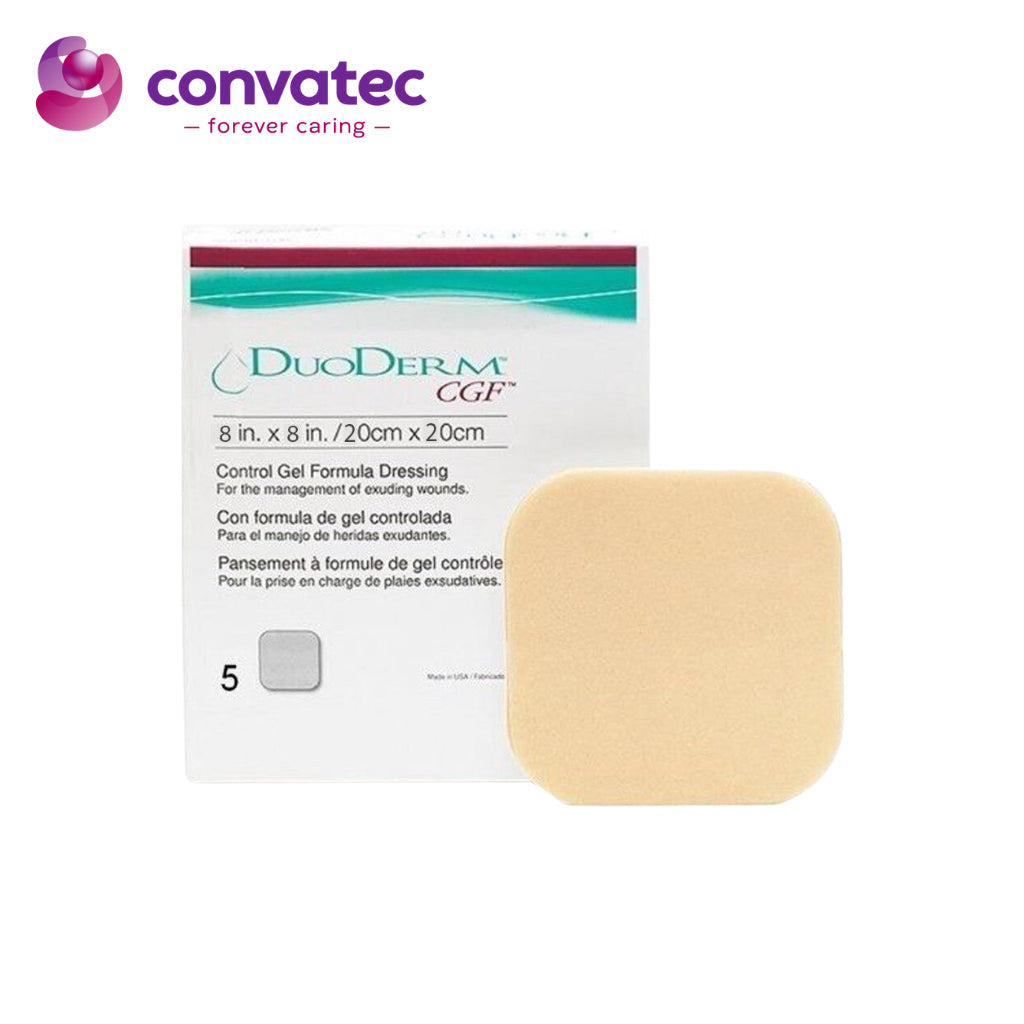
Convatec Duoderm CGF Dressing 20x20cm
Convatec Duoderm CGF Dressing 20x20cm
Couldn't load pickup availability
ConvaTec DuoDERM® CGF® Dressing 20×20 cm — Product Overview
DuoDERM® CGF® (Control Gel Formula) is ConvaTec's hydrocolloid technology platform that has defined moist wound healing practice since its commercial introduction. The formulation contains hydrocolloid particles dispersed in an adhesive matrix; these particles absorb wound exudate, swell, and transform into a gel that maintains optimal wound moisture, lowers wound pH to inhibit bacterial proliferation, and creates the physiochemical conditions that support the four overlapping phases of wound healing. The 20 cm × 20 cm format (REF 187662) is designed for large surface area wounds or wounds in anatomical locations where a standard 10 cm × 10 cm dressing provides inadequate coverage.
The outer film layer is waterproof and impermeable to bacteria and viruses (in accordance with EN 13795 splash test requirements), permitting bathing and reducing cross-contamination risk without compromising the integrity of the primary wound interface. The dressing is indicated for extended wear of up to 7 days, subject to the level of exudate and clinical assessment at each change. DuoDERM CGF carries HCPCS code A6235 for US reimbursement purposes and is widely used in Singapore restructured hospitals, community nursing programmes, and home care settings under MOH Medisave-claimable wound care codes.
Specifications
| Manufacturer | ConvaTec (Formerly Bristol-Myers Squibb) |
|---|---|
| Reference Number | 187662 |
| Dimensions | 20 cm × 20 cm (8 in × 8 in) |
| Dressing Type | Hydrocolloid (Control Gel Formula) |
| Exudate Level | Light to moderate |
| Sterility | Sterile (gamma-irradiated), single use |
| Latex Content | Not made with natural rubber latex |
| Wear Time | Up to 7 days (exudate-dependent) |
| Regulatory Status | CE-marked, EU MDR 2017/745; FDA 21 CFR Part 880; ISO 13485:2016; HCPCS A6235 |
| Pack Quantity | 1 piece (per unit) |
Clinical Indications
- Pressure ulcers Stage II–IV: Provides moist wound bed, reduces friction, and supports autolytic debridement in sacral, ischial, and heel pressure injuries as referenced in EPUAP/NPIAP/PPPIA International Pressure Ulcer Prevention and Treatment Guidelines 2019.
- Venous and arterial leg ulcers: Used as a primary dressing under compression therapy in accordance with Singapore MOH Clinical Practice Guidelines on Wound Care (2021) and EWMA wound management consensus documents.
- Diabetic foot ulcers (non-infected, superficial): Maintains moist environment for neuropathic ulcers with light-to-moderate exudate, suitable for use in Singapore multidisciplinary diabetic foot teams per IWGDF 2023 guidance.
- Superficial partial-thickness burns: Applied to first and second degree burns after initial cooling; the gel-forming interface minimises dressing-change trauma in burns outpatient settings.
- Surgical donor sites and post-excision wounds: Provides haemostatic environment and bacterial barrier for split-thickness graft donor areas and minor surgical excisions.
- Skin tears and abrasions: Low-trauma removal and bacterial barrier function make it appropriate for fragile skin in elderly patients managed in Singapore community hospitals and long-term care facilities.
Frequently Asked Questions
How does DuoDERM CGF differ from standard hydrocolloid dressings?
The Control Gel Formula (CGF) designation distinguishes ConvaTec's proprietary hydrocolloid blend, which forms a more cohesive gel during fluid absorption compared with conventional hydrocolloids. This reduces the risk of gel residue on the wound bed at dressing change and lowers the incidence of periwound maceration, as documented in clinical comparison studies (J Wound Care, 2003).
What does the gel and colour change at dressing change indicate?
Yellow-brown gel is the expected product of exudate absorption by the hydrocolloid particles and does not indicate infection. The odour associated with this gel is also not indicative of infection. Clinical infection signs (periwound erythema, warmth, purulent discharge, increasing pain) should be assessed independently. If wound exudate exceeds dressing capacity before day 7, the dressing should be changed sooner.
What size should I select for a pressure ulcer covering the entire sacral area?
The 20 cm × 20 cm REF 187662 is appropriate for large sacral, buttock, or trochanteric wounds up to approximately 15 cm diameter, allowing a minimum 2 cm periwound adherence margin on all sides. Smaller wounds (up to 10 cm) are better served by the 10 cm × 10 cm variants (REF 187643 or 187660) to reduce material cost.
Is this product reimbursable under Singapore Medifund or Medisave for home wound care?
Wound dressings dispensed by registered healthcare institutions in Singapore may be claimable under Medisave for approved chronic wound care procedures. Clinic procurement managers and home care coordinators should verify current MOH Medisave claimable procedure codes with the relevant institutional billing team, as coverage criteria are periodically updated.
How should DuoDERM CGF be removed to minimise trauma to fragile skin?
Lift one corner of the dressing and slowly stretch it parallel to the skin surface (horizontal removal) rather than pulling perpendicular. This technique reduces adhesive-related skin stripping. Moistening the periwound skin with a medical-grade adhesive remover spray (such as ConvaTec Sensi-Care or 3M Cavilon) prior to removal is recommended for patients with severe skin fragility or on long-term corticosteroid therapy.
Why Buy From EMIS+
EMIS+ (emis.asia) is a Singapore nurse-led medical supply store. We focus on genuine, quality products, clear guidance, and reliable islandwide delivery for patients, caregivers, and healthcare professionals.
Ordering & Delivery FAQ
Where can I buy Convatec Duoderm CGF Dressing 20x20cm in Singapore?
You can order Convatec Duoderm CGF Dressing 20x20cm online from EMIS+ at emis.asia, a Singapore nurse-led medical supply store offering fast islandwide delivery.
How quickly will my EMIS+ order be delivered?
EMIS+ dispatches orders across Singapore, with standard delivery typically arriving within a few working days. Order tracking is provided once your order ships.
Can I get advice before ordering from EMIS+?
Yes. EMIS+ is a nurse-led store and our team can help with product selection. For medical advice specific to your condition or treatment, please consult your doctor or pharmacist.
Share