B. Braun
B. Braun Prontosan® Debridement Pad: Advanced Wound Care for Chronic Wounds
B. Braun Prontosan® Debridement Pad: Advanced Wound Care for Chronic Wounds
Couldn't load pickup availability
Product Overview
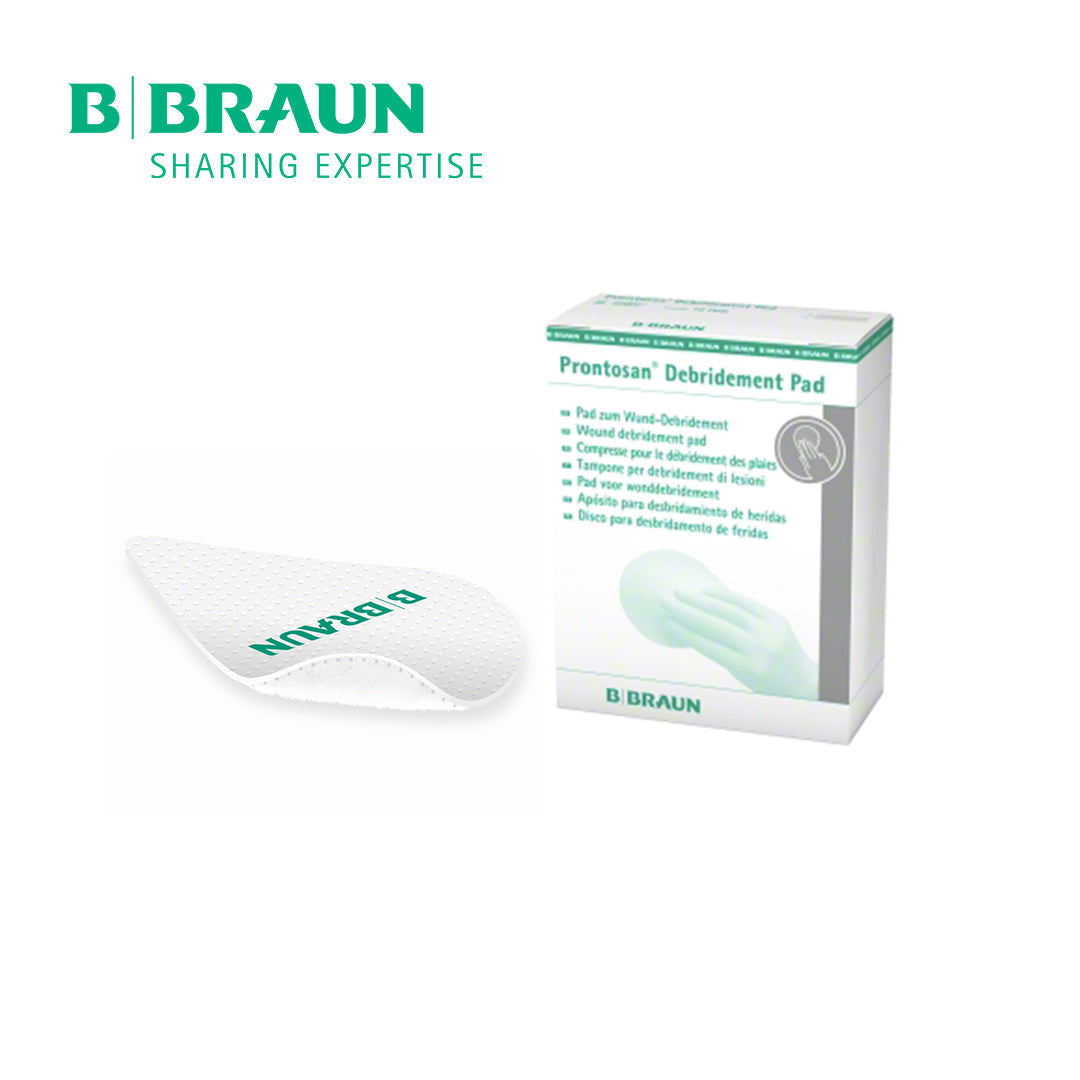
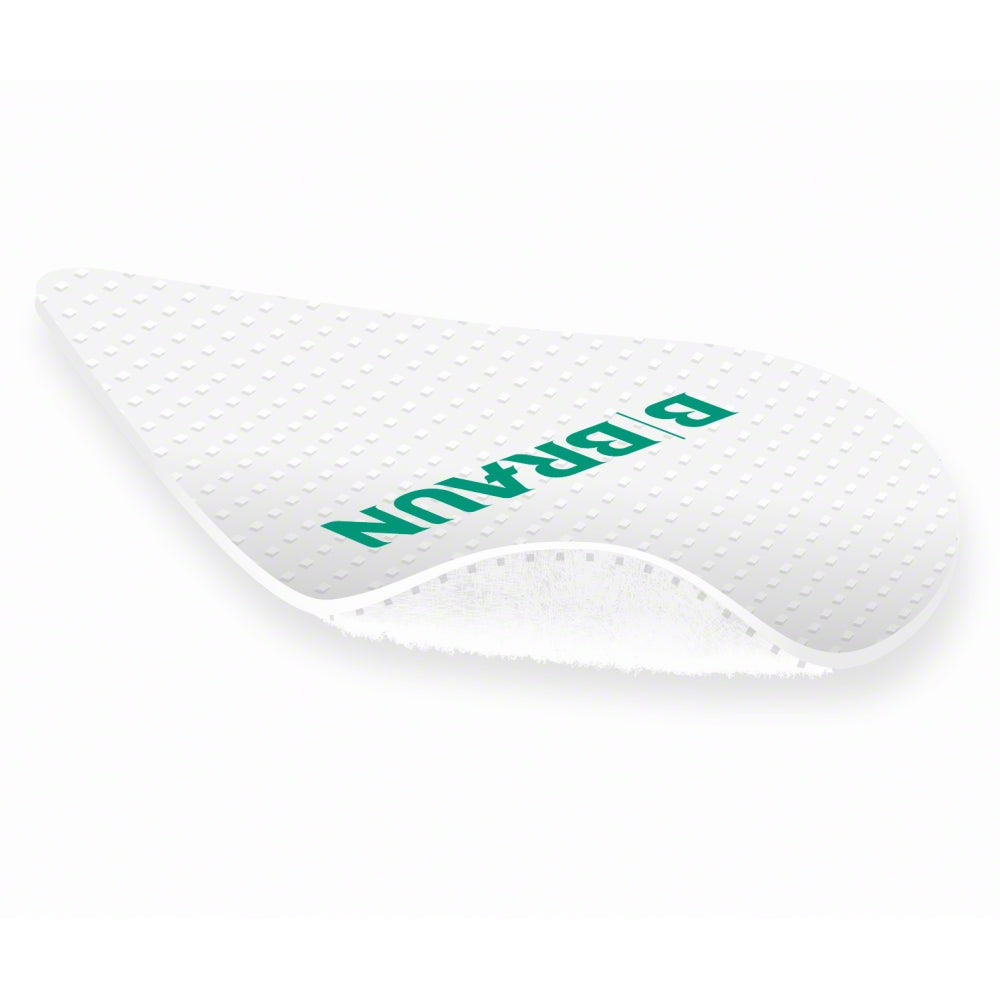
The Prontosan Debridement Pad is a single-use, non-woven microfibre pad engineered by B. Braun for atraumatic mechanical debridement of chronic and hard-to-heal wounds. The pad features a proprietary teardrop-shaped design with dual functional ends: a broad rounded surface for efficient debridement of larger wound areas, and a narrow tapered end that facilitates precise access into wound cavities, sinus tracts, and undermined wound margins where slough and biofilm accumulate.
The microfibre technology operates through gentle abrasive action that mechanically disrupts wound biofilm and loosens devitalised tissue while the absorbent outer layer simultaneously captures and contains wound exudate and debrided material. When used as part of the Prontosan wound bed preparation system alongside Prontosan Wound Irrigation Solution (containing polyhexanide 0.1% and undecylenamidopropyl betaine 0.1%), the debridement pad delivers superior wound cleansing outcomes compared to gauze-based methods, as demonstrated in published clinical evaluations.
Specifications
| Manufacturer | B. Braun Melsungen AG, Germany |
| Product Name | Prontosan Debridement Pad |
| Material | Non-woven microfibre with absorbent outer layer |
| Design | Teardrop shape with rounded end and tapered end |
| Mechanism | Soft mechanical debridement via microfibre abrasion |
| Sterility | Non-sterile (for use with sterile irrigation solution) |
| Latex Content | Latex-free |
| Single Use | Yes — dispose after each debridement session |
| Regulatory | CE marked Class IIa medical device under EU MDR 2017/745; manufactured under ISO 13485:2016 quality management system |
| Companion Product | Prontosan Wound Irrigation Solution (polyhexanide 0.1% + betaine 0.1%) |
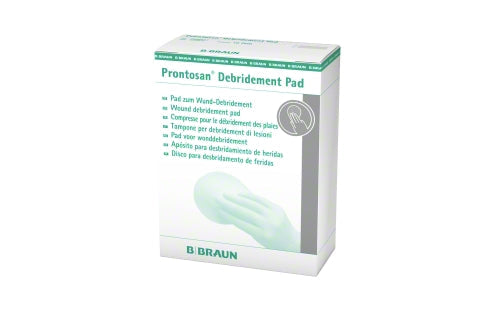
| Packaging | Box of 10 pads |
Clinical Indications
- Mechanical debridement of chronic wounds including venous leg ulcers, diabetic foot ulcers, and pressure injuries (stages II-IV per NPUAP/EPUAP classification)
- Removal of slough, fibrin, wound biofilm, and devitalised tissue from the wound bed during wound bed preparation
- Debridement of acute traumatic wounds, surgical wound dehiscence, and post-operative wound complications
- Wound cleansing in hard-to-reach anatomical locations including wound cavities, sinus tracts, and undermined wound edges
- Adjunctive wound bed preparation prior to application of advanced wound dressings, skin grafts, or negative pressure wound therapy (NPWT)
Frequently Asked Questions
How does the Prontosan Debridement Pad differ from standard gauze-based wound cleansing?
The Prontosan Debridement Pad utilises engineered microfibre technology that provides significantly more effective mechanical disruption of wound biofilm compared to standard cotton gauze or non-woven swabs. The microfibre structure creates a larger effective surface area for debris capture, while the teardrop shape enables access to wound areas that conventional swabs cannot reach. The European Wound Management Association (EWMA) position document on wound bed preparation supports the use of purpose-designed debridement devices over improvised methods.
Should the Prontosan Debridement Pad be used wet or dry?
B. Braun recommends moistening the pad with Prontosan Wound Irrigation Solution prior to use. The polyhexanide and betaine in the irrigation solution work synergistically with the mechanical action of the pad — the surfactant (betaine) disrupts the biofilm matrix while the antimicrobial (polyhexanide) reduces bacterial burden. This combined approach aligns with the Wound Bed Preparation paradigm described in the TIME framework (Tissue management, Infection/Inflammation control, Moisture balance, Edge advancement).
Is the Prontosan Debridement Pad suitable for all wound types?
The pad is indicated for most acute and chronic wound types requiring mechanical debridement. It is not suitable for wounds with hard necrotic eschar requiring sharp or autolytic debridement, or for wounds with exposed tendon, bone, or prosthetic material without specialist wound care assessment. Clinicians should follow local wound care formulary guidelines and refer to the B. Braun product IFU for complete contraindication information.
How can healthcare facilities in Singapore procure Prontosan Debridement Pads?
In Singapore, Prontosan Debridement Pads are available through EMIS (Essential Medical International Supplies Pte Ltd) as an authorised B. Braun distributor. Healthcare facilities, wound care clinics, and home nursing agencies can order directly through emis.asia with delivery across Singapore. The product is registered with the Health Sciences Authority (HSA) Singapore for distribution as a medical device.
What is the recommended frequency of debridement with the Prontosan Pad?
Debridement frequency depends on wound assessment findings and should be determined by the treating clinician. For chronic wounds with persistent biofilm or slough, debridement at each dressing change (typically every 2-3 days) may be appropriate during the initial wound bed preparation phase. The International Wound Infection Institute (IWII) recommends regular biofilm-based wound management for chronic non-healing wounds.
Share