SkinCeuticals
SkinCeuticals Blemish + Age Defense (30ml)
SkinCeuticals Blemish + Age Defense (30ml)
Couldn't load pickup availability
Product Overview
SkinCeuticals Blemish + Age Defense addresses the clinically common co-presentation of acne-prone or seborrhoeic skin with early signs of photoaging—a pattern particularly prevalent in Singapore's adult population aged 25–45, where high UV index exposure accelerates actinic damage while persistent sebaceous hyperactivity and post-adolescent comedonal acne remain active. The formulation's cornerstone active, LHA (lipo hydroxy acid), is a lipophilic C8 acyl ester of salicylic acid developed by L'Oréal Research. Its lipophilic character confers preferential affinity for sebum-laden follicular canals and impaction plugs, enabling targeted keratolytic and desquamative action within comedones at lower effective concentrations than free salicylic acid, reducing the risk of perilesional irritation and post-inflammatory hyperpigmentation (PIH) common in Fitzpatrick type III–V skin.
Dioic acid (C9H16O4, nonanedioic acid) is a dicarboxylic acid with a dual pharmacological profile: it inhibits 5-alpha reductase type I in sebocytes (reducing dihydrotestosterone-driven sebum overproduction) and selectively inhibits tyrosinase in melanocytes (reducing pigmentary post-inflammatory sequelae). The fruit acid complex—comprising glycolic acid (alpha-hydroxy acid, C2H4O3) alongside citric and tartaric acids—provides corneocyte desquamation and superficial exfoliation that improves skin texture, reduces comedone depth, and enhances absorption of subsequent corrective actives. This oil-free, low-emollient vehicle is appropriate for patients who cannot tolerate the occlusive textures of conventional anti-aging moisturisers. The formulation is manufactured under ISO 22716:2007 Cosmetics GMP.
Product Specifications
| Parameter | Details |
|---|---|
| Manufacturer | SkinCeuticals (L'Oréal Group, USA) |
| Product Name | Blemish + Age Defense |
| Volume | 30 mL |
| Form | Oil-free corrective serum (low-viscosity fluid) |
| Key Actives | 2% Dioic Acid, 0.2% LHA (Lipo Hydroxy Acid), Glycolic Acid, Citric Acid, Tartaric Acid |
| Primary Mechanism | Keratolysis & comedolysis (LHA); sebum regulation & anti-melanogenesis (dioic acid); surface exfoliation & texture refinement (AHA complex) |
| Indicated Skin Types | Oily, combination, acne-prone; all Fitzpatrick types (I–VI); suitable for skin with concurrent early photoaging |
| Contraindicated | Dry or sensitised skin; known hypersensitivity to salicylates or AHAs; pregnancy (consult physician regarding AHA/BHA use) |
| Application Site | Face (avoid eye contour and mucous membranes) |
| Usage Frequency | Twice daily (AM and PM); introduce once daily in first 2 weeks if sensitive |
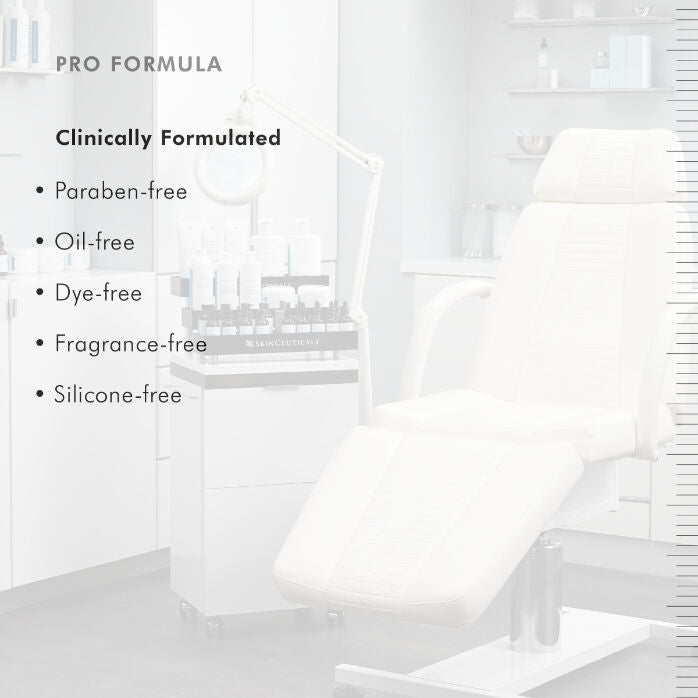
| Vehicle | Oil-free (non-comedogenic) |
| Regulatory – Singapore | Cosmetic product; mandatory notification via HSA PRISM portal under Health Products (Cosmetic Products) Regulations; ingredient concentrations within HSA permitted limits for AHAs and BHA derivatives |
| Regulatory – EU | Compliant with EU Cosmetics Regulation (EC) No 1223/2009; LHA & glycolic acid within Annex III restricted-substance limits for leave-on cosmetics |
| Manufacturing Standard | ISO 22716:2007 (Cosmetics GMP) |
| Dermatological Testing | Dermatologist-tested; non-comedogenic; patch-tested (48–96 h occlusive challenge) |
| Retail Price (Singapore) | SGD $185 per 30 mL |
Clinical Indications and Key Applications
- Adult acne with concurrent early photoaging (25–45 years): Primary indication for patients presenting with persistent comedonal or mild inflammatory acne alongside fine lines, surface texture irregularity, and early photodamage — the "blemish + age" co-phenotype most prevalent in Singapore's adult population with high cumulative UV exposure.
- Seborrhoeic skin with post-inflammatory hyperpigmentation (PIH): Dioic acid's dual sebum-suppressive and anti-tyrosinase activity addresses both the sebaceous trigger and the pigmentary sequelae of inflammatory lesions, making this formulation particularly suited to Fitzpatrick III–V patients where PIH is a common complication of conventional BHA treatments.
- Comedonal acne and follicular hyperkeratosis: LHA's lipophilicity enables preferential follicular penetration and keratolytic desquamation at the infundibulum, addressing microcomedone formation (the precursor lesion for all acne subtypes) per acne pathogenesis guidelines from the International Dermal Institute.
- Oily skin texture refinement and pore minimisation: AHA complex (glycolic, citric, tartaric acids) provides surface corneocyte loosening and desquamation, reducing superficial pore prominence and uneven skin texture without the occlusive risk associated with emollient-based anti-aging products.
- Pre-procedure skin preparation: AHA pre-treatment improves epidermal permeability for subsequent clinical procedures (superficial chemical peels, laser resurfacing, microneedling) by reducing stratum corneum thickness and comedone burden. Use should be discontinued 5–7 days before ablative procedures per standard pre-treatment protocols.
- Post-isotretinoin maintenance: Following completion of systemic isotretinoin therapy, Blemish + Age Defense provides a low-concentration exfoliative and sebum-regulatory maintenance regimen to reduce relapse risk, per post-isotretinoin management guidelines advocated by the Singapore Dermatological Society (SDS).
Frequently Asked Questions
Q: How does LHA (0.2%) in Blemish + Age Defense compare clinically to standard 2% salicylic acid formulations?
A: Salicylic acid (BHA) at 2% is lipophilic, penetrates sebum-filled follicles, and provides keratolytic activity at the infundibular level. LHA (lipo hydroxy acid) is a C8-chain ester of salicylic acid with 8-fold greater lipophilicity than its parent molecule, enabling deeper follicular penetration at just 0.2% concentration. Its ester structure requires enzymatic hydrolysis by skin esterases to release active salicylic acid directly within the comedone, producing a localised, controlled-release keratolytic effect with reduced risk of perilesional irritation. Clinical studies comparing LHA to equivalent BHA show comparable comedolytic efficacy with significantly improved tolerability, measured by reduced transepidermal water loss (TEWL) increase and lower erythema index scores during 8-week use.
Q: Can Blemish + Age Defense be used alongside retinoids or prescription topical acne treatments?
A: Concurrent use with retinoids (tretinoin, adapalene, retinol) is possible but requires protocol management to avoid cumulative irritation. Best practice is to separate application: use Blemish + Age Defense in the AM (after cleansing, before SPF) and retinoid in the PM, or alternate evenings. Avoid concurrent use with other AHA-containing toners or exfoliating cleansers. Combination with benzoyl peroxide is generally avoided as oxidising agents may reduce LHA stability. For patients using prescription clindamycin or azelaic acid topicals under dermatological supervision, introduce Blemish + Age Defense gradually (once daily for 2 weeks) to assess cumulative tolerability before escalating to twice-daily use.
Q: Is Blemish + Age Defense appropriate for use in patients with darker skin tones (Fitzpatrick IV–VI) where AHAs carry PIH risk?
A: Standard AHA formulations (glycolic acid ≥5%) carry documented PIH risk in Fitzpatrick IV–VI patients due to UV-induced melanogenesis triggered by increased post-exfoliation photosensitivity. Blemish + Age Defense mitigates this risk through three mechanisms: (1) dioic acid's tyrosinase inhibitory action reduces baseline melanogenic activity; (2) the AHA concentration in this formulation is calibrated to cosmetic rather than clinical exfoliation thresholds; (3) the formulation does not contain photosensitising retinoids. Strict daily SPF 50+ broad-spectrum photoprotection is mandatory throughout treatment, per Singapore Dermatological Society post-AHA care guidelines, particularly given Singapore's year-round UV Index 10–14.
Q: What are the Singapore HSA requirements for AHA/BHA-containing cosmetics?
A: Under Singapore HSA Health Products (Cosmetic Products) Regulations, alpha-hydroxy acids are subject to concentration limits for leave-on cosmetic products (generally ≤10% AHA at pH ≥3.5 for leave-on products). The formulation must be notified via HSA PRISM portal; the notifying entity confirms ingredient compliance with Annex III of the EU Cosmetics Regulation and HSA's equivalent restricted substances framework. LHA (as a salicylic acid ester) falls under BHA-derivative considerations; the 0.2% concentration is within permitted cosmetic limits. Aesthetic practices and dermatology clinics sourcing for resale must verify HSA notification status with the authorised distributor and request the notification reference number.
Q: Should patients discontinue Blemish + Age Defense before travelling or sun exposure during Singapore holidays abroad?
A: AHA and BHA-containing products increase photosensitivity due to reduced stratum corneum barrier after exfoliation. Patients should not discontinue use but must apply SPF 50+ broad-spectrum sunscreen every morning without exception, reapplying every 2 hours during prolonged sun exposure. In Singapore's climate, this is already a year-round requirement (UV Index ≥10 throughout the year). For beach holidays or extended outdoor exposure, patients may temporarily reduce application to once daily (PM) and ensure robust photoprotection. Discontinuation and re-introduction causes cyclical skin adaptation challenges; consistent use with adequate photoprotection is preferable to interruption.
Share