Buzud
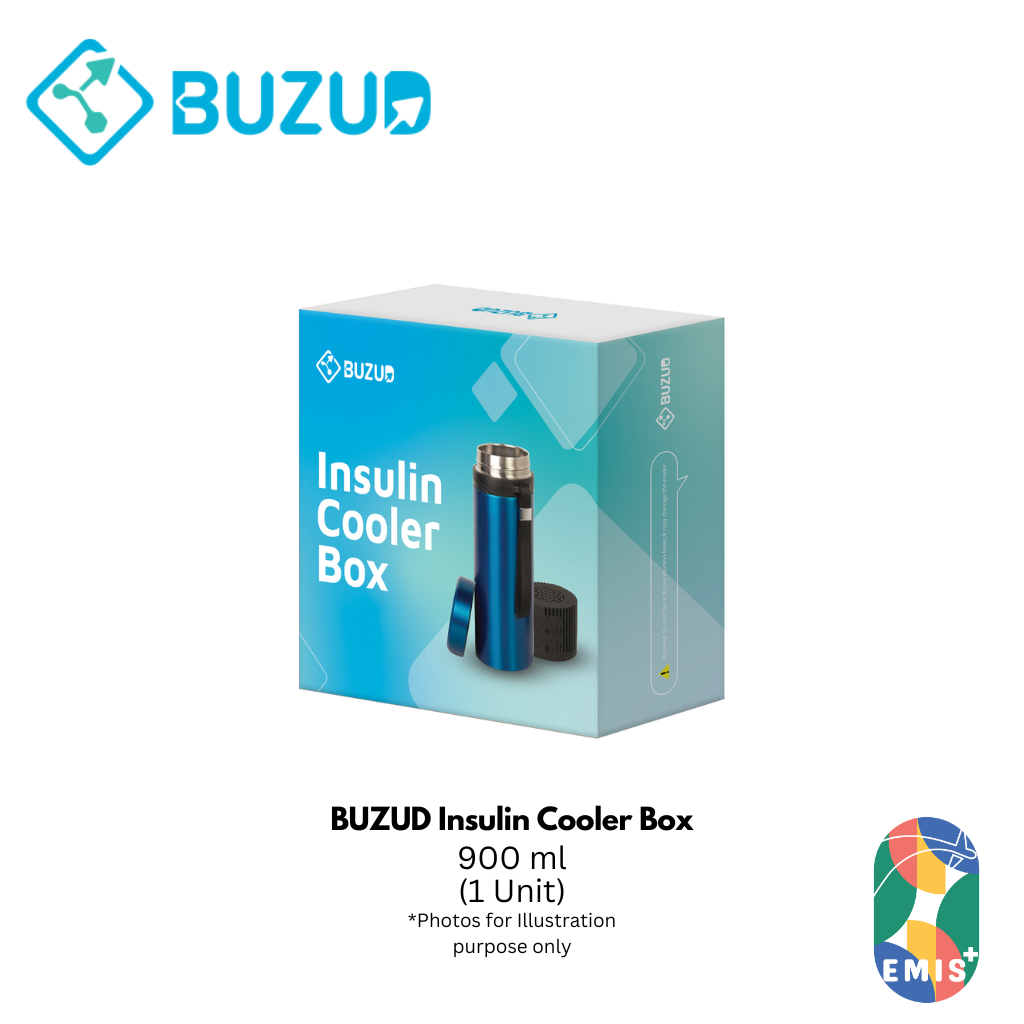
BUZUD Insulin Cooler Box
BUZUD Insulin Cooler Box
Couldn't load pickup availability
Product Overview
The BUZUD Insulin Cooler Box is a medical-grade portable refrigeration device designed for ambulatory storage and transportation of insulin and other temperature-sensitive biologic medications. Unlike passive ice-based cold packs which deliver uncontrolled and often transient cooling, the BUZUD unit uses active thermoelectric or compressor-based cooling with a digital temperature display, allowing continuous monitoring of the internal chamber temperature. This is clinically significant because insulin potency is materially degraded when ambient temperatures exceed 30 degrees Celsius or drop below 0 degrees Celsius, and uncontrolled excursions can reduce glycaemic control.
For Singapore healthcare professionals dispensing insulin to travelling or home-care patients, and for clinics managing multi-site delivery of temperature-sensitive inventory, the cooler provides a reproducible cold-chain solution compliant with USP General Chapter 1079 guidance on the storage and transportation of pharmaceuticals. Patients with type 1 and type 2 diabetes on intensive basal-bolus regimens, GLP-1 receptor agonist therapy (semaglutide, liraglutide, tirzepatide), or biologic injectables requiring 2-8 degrees Celsius storage are primary users.
Specifications
| Manufacturer | BUZUD (Singapore) |
|---|---|
| Product Category | Portable medical refrigeration device |
| Cooling Mechanism | Thermoelectric (Peltier) or mini-compressor with digital thermostat |
| Operating Temperature Range | 2-8 degrees Celsius (configurable per unit) |
| Display | Integrated digital LCD temperature readout |
| Power Input | AC adapter (100-240V), USB-C/DC for portable power banks and vehicle 12V outlet |
| Capacity | Multiple compartments for insulin pens, vials, cartridges and accessories |
| Material | Medical-grade ABS exterior, insulated interior lining |
| Latex Content | Latex-free construction |
| Regulatory | Sold by a HSA-licensed Singapore medical device dealer; manufacturer compliance with ISO 13485 quality management standards and CE marking for electrical safety (IEC 60601-1 family) |
| Intended Use | Ambulatory storage of insulin and temperature-sensitive injectables per USP 1079 and WHO PQS cold-chain guidance |
Clinical Indications and Key Applications
- Ambulatory storage of basal, bolus and premixed insulins (glargine, detemir, degludec, aspart, lispro, glulisine) requiring 2-8 degrees Celsius cold-chain compliance
- GLP-1 receptor agonist storage (semaglutide, liraglutide, dulaglutide, tirzepatide) during patient travel or extended outdoor work
- Growth hormone, biologic and fertility injectable transport (follicle-stimulating hormone, etanercept, adalimumab) for home-care patients
- Clinic and home-care nurse courier use where insulin stability must be maintained between dispensing pharmacy and point of administration
- Diabetic patients travelling through high-ambient-temperature environments (Southeast Asian climate, Middle East) where passive cooling is inadequate
- Disaster-preparedness stockpiles where continuous mains refrigeration may be interrupted
Frequently Asked Questions
Why use active thermoelectric cooling instead of gel-pack insulin wallets?
Gel-pack insulin wallets provide passive evaporative cooling for a limited duration (typically 45-72 hours) and do not display the internal temperature, which creates clinical uncertainty. The US Pharmacopeia (USP General Chapter 1079) and the American Diabetes Association Standards of Care emphasise that insulin exposed to temperatures outside 2-8 degrees Celsius for extended periods loses potency unpredictably. An active cooler with a digital readout allows the patient or nurse to verify cold-chain compliance before each dose.
How should the device be powered during international travel?
The BUZUD unit accepts AC mains (100-240V universal), vehicle 12V DC outlets, and USB-C/DC input for high-output power banks. For flights, International Air Transport Association (IATA) dangerous-goods guidance permits lithium power banks up to 100 Wh in carry-on baggage without prior approval; 100-160 Wh requires airline approval. Patients should consult their airline before travel and carry a doctor's letter documenting the medical-device status of the cooler.
Is this device suitable for long-term vaccine storage?
No. Vaccines, particularly mRNA and adenoviral vector platforms, have narrower temperature tolerance windows (for example -90 to -60 degrees Celsius for certain mRNA products) and require validated ultra-low-temperature or purpose-built vaccine refrigerators compliant with WHO Performance, Quality and Safety (PQS) prequalification. The BUZUD cooler is appropriate for 2-8 degrees Celsius storage of insulin and similar injectables, not for long-term vaccine cold-chain.
What regulatory framework governs insulin coolers in Singapore?
Medical devices in Singapore are regulated by the Health Sciences Authority (HSA) under the Health Products Act. Insulin cooler boxes are classified based on intended use and incorporated active components; products from HSA-licensed dealers are supplied with appropriate documentation. Essential Medical International Supplies Pte Ltd is a Singapore-registered medical device dealer.
How do I validate that the cooler is maintaining correct temperature?
The integrated digital display provides real-time temperature monitoring. For clinical-grade documentation (for example, auditable cold-chain records for home-care nursing), users may supplement with a calibrated data logger compliant with CDC Vaccine Storage and Handling Toolkit standards. Recalibrate or service the unit annually and replace the device if the displayed temperature deviates from the set point by more than plus or minus 1 degree Celsius.
Share