Dr Berg
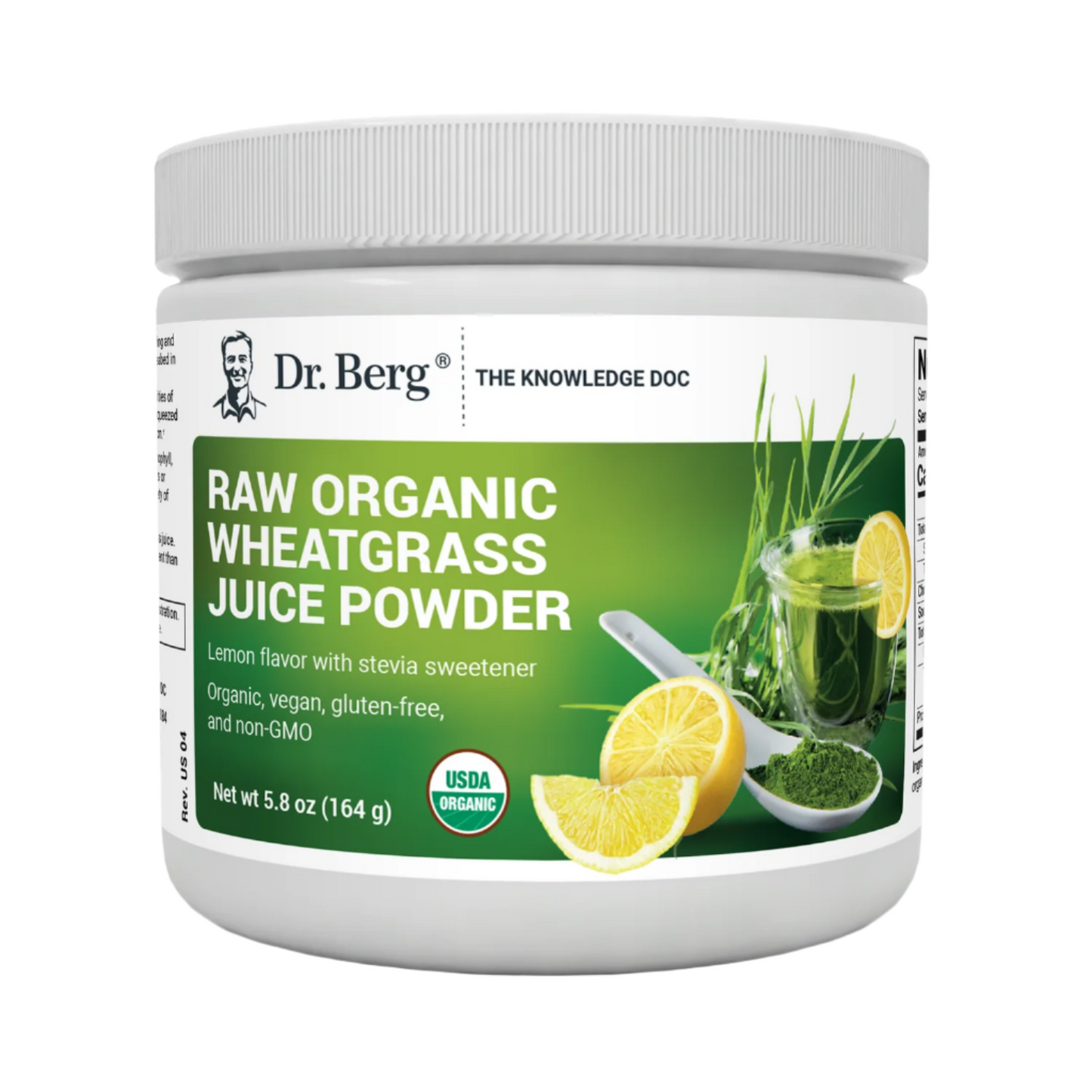
Dr Berg Raw Organic Wheatgrass Juice Powder with Lemon USDA Certified Nutrient Dense Superfood Drink
Dr Berg Raw Organic Wheatgrass Juice Powder with Lemon USDA Certified Nutrient Dense Superfood Drink
Couldn't load pickup availability
Product Overview
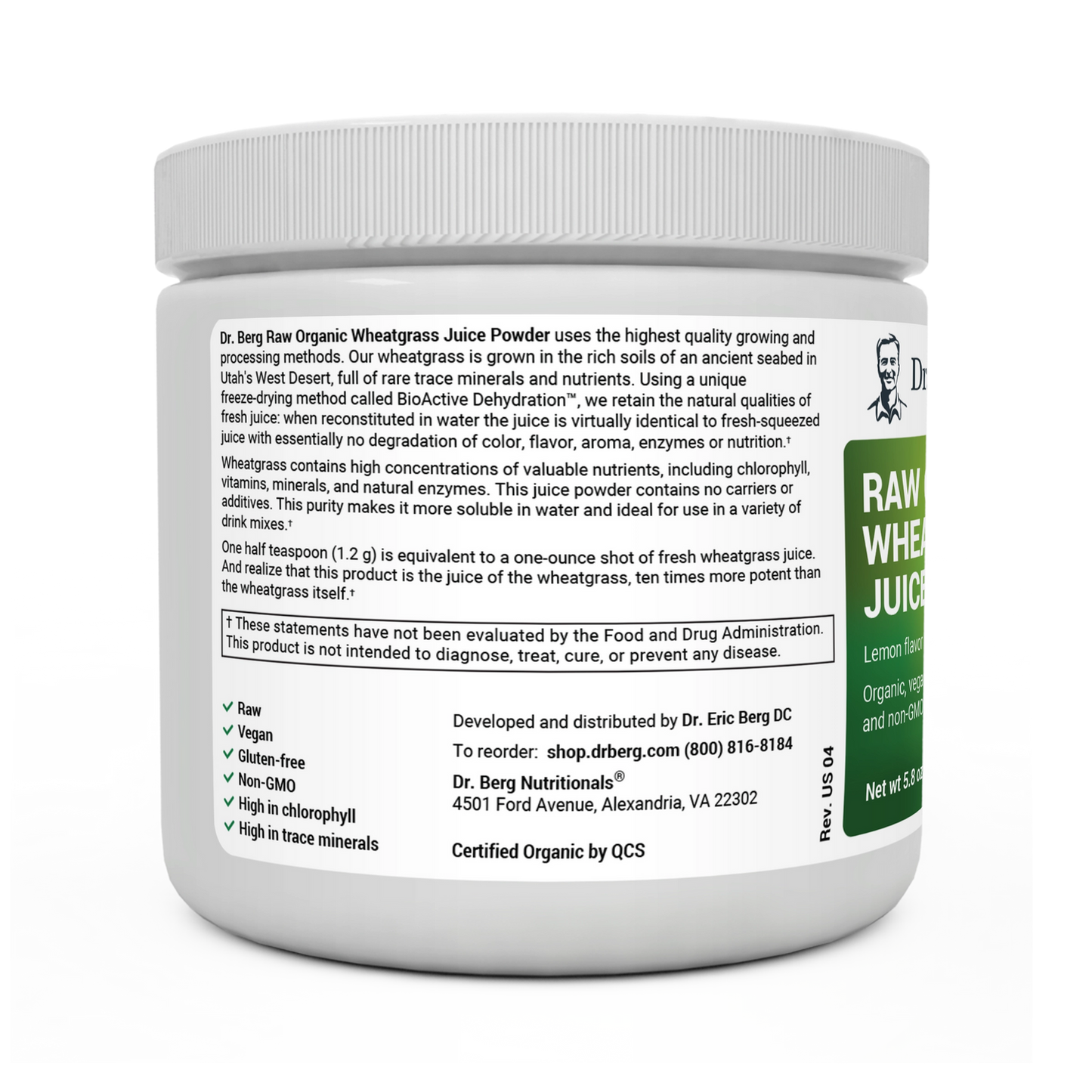
Dr. Berg Raw Organic Wheatgrass Juice Powder with Lemon is the concentrated, cold-juiced form of fresh wheatgrass — distinct from whole wheatgrass powder in that the fibre-rich cellular matrix has been removed, leaving a concentrated liquid that is then dehydrated using Dr. Berg's proprietary Bioactive Dehydration System at temperatures not exceeding 106°F. This temperature ceiling is significant: conventional spray drying at 150–200°C degrades heat-labile enzymes (peroxidase, SOD, catalase), denatures chlorophyll to pheophytin, and reduces bioavailable nutrient density. By cold-processing below the enzyme-denaturing threshold, this product preserves the full phytochemical profile of fresh raw wheatgrass juice — including chlorophyll, trace minerals, naturally occurring vitamins, and wheatgrass-specific flavonoids — in a stable, shelf-storable powder format.
The product uses two wheatgrass varieties: Triticum aestivum (common wheatgrass) and Kamut® brand Triticum turanicum, an ancient grain species selected for its broader mineral profile and absence of modern hybridisation-associated modifications. Both are cultivated in the nutrient-rich sedimentary soils of ancient Lake Bonneville, Utah — soils naturally enriched with trace mineral deposits from historical lacustrine geology, providing a mineral-dense growth substrate without synthetic fertiliser input. Lemon flavour and organic stevia leaf extract are added for palatability without artificial sweeteners, colours, or preservatives. The powder is certified USDA Organic, non-GMO, vegan, gluten-free (despite being wheat-derived, the juicing process removes the gluten-containing protein fraction), and Halal certified.
Specifications
| Manufacturer | Dr. Berg Nutritionals (USA) |
|---|---|
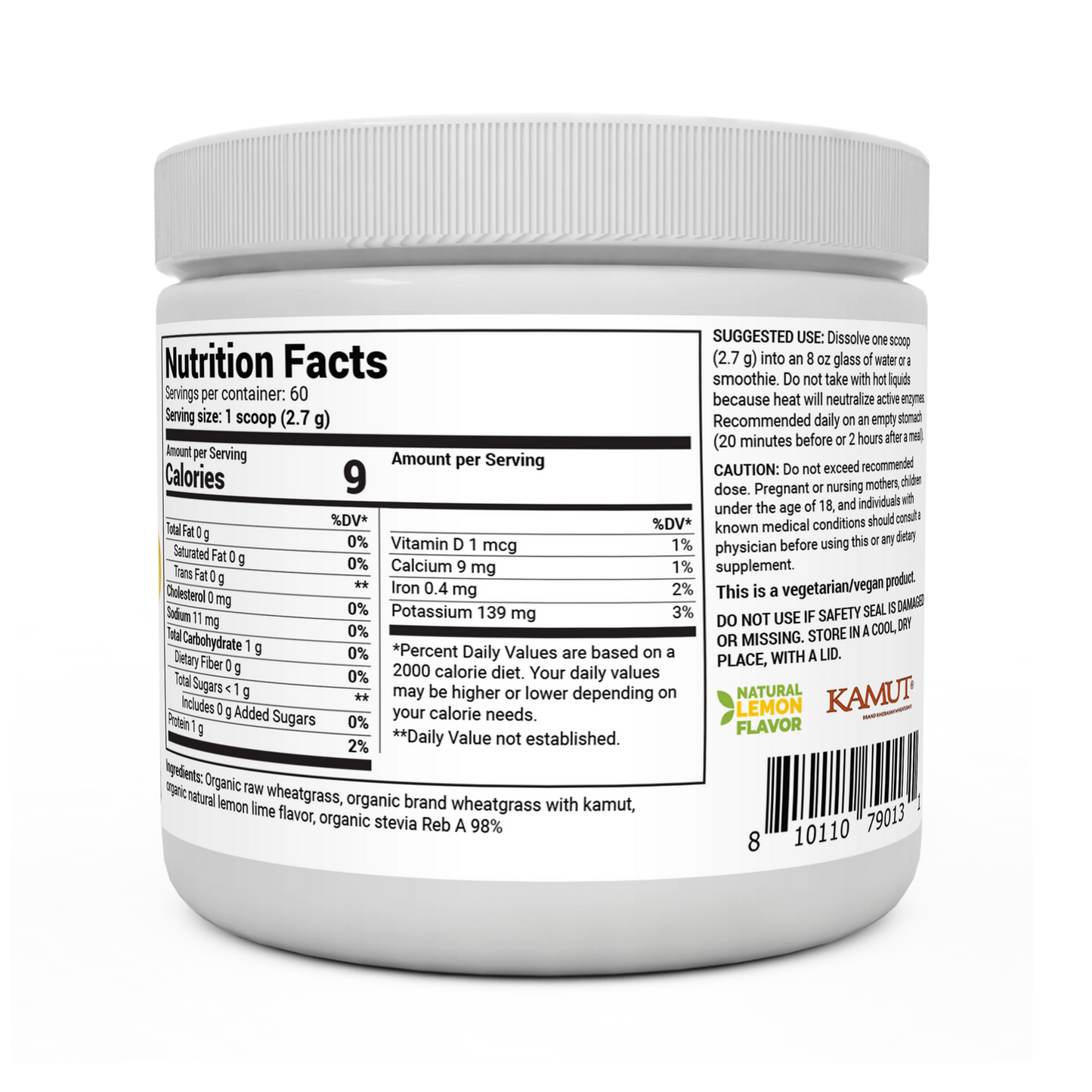
| Serving Size | 1 scoop (2.7 g); 60 servings per container (5.3–5.8 oz / 150–164 g) |
| Wheatgrass Species | Organic Triticum aestivum (common wheatgrass) + Organic Kamut® brand Triticum turanicum |
| Cultivation | Ancient Lake Bonneville soils, Utah, USA — naturally mineral-enriched; no synthetic fertilisers |
| Processing Method | Bioactive Dehydration System — cold-juiced and dehydrated below 106°F; enzyme and chlorophyll activity preserved |
| Key Phytonutrients | Chlorophyll; trace minerals; natural enzymes (peroxidase, SOD); carotenoids; wheatgrass flavonoids; naturally occurring vitamins |
| Flavouring | Organic lemon lime flavour; Organic stevia leaf extract (no sucralose, aspartame, or artificial sweeteners) |
| Certifications | USDA Certified Organic; Non-GMO; Vegan; Gluten-free; Halal certified |
| Quality Testing | NSF-certified manufacturing facility; third-party COA for heavy metals (lead, arsenic, cadmium, mercury) and microbial contaminants per batch |
| Additives | No fillers, binders, artificial colours, or preservatives |
| Regulatory (Singapore) | Health supplement under HSA Singapore notification framework; Health Products Act (Cap 122D) compliant |
| Usage | 1 scoop in 240 ml water or cold beverage; consume on empty stomach (20 min before or 2 hours after meals); avoid hot liquids — heat inactivates native enzymes |
| Storage | Below 25°C in a dry location; seal lid tightly after each use; avoid humidity and direct sunlight |
Key Applications
- Alkalising nutritional support — chlorophyll-rich green foods contribute to dietary acid-base balance, of interest in high-protein or ketogenic dietary contexts common in Singapore's health-conscious consumer segment
- Antioxidant supplementation — native SOD, peroxidase, and carotenoids in raw wheatgrass juice support cellular defence against reactive oxygen species
- Micronutrient replenishment — naturally occurring trace minerals (magnesium, potassium, iron, zinc, calcium) and vitamins from a food-matrix source, supporting nutritional adequacy in restricted dietary patterns
- Detoxification and liver support protocols — chlorophyll has demonstrated hepatoprotective properties in in-vivo models, supporting glutathione synthesis and biliary function
- Adjunct to weight management or metabolic optimisation programmes, providing high-density micronutrition with negligible caloric load per serving
- Daily wellness supplementation as a convenient green food equivalent for patients with low vegetable intake, particularly those in high-demand clinical and corporate environments in Singapore
Frequently Asked Questions
Is wheatgrass juice powder safe for patients with gluten intolerance or coeliac disease?
Young wheatgrass harvested before the seed head develops contains minimal detectable gluten protein; the juicing process further separates the water-soluble phytonutrients from the fibrous gluten-containing cell wall fraction. Third-party testing of Dr. Berg's wheatgrass powder has shown gluten content below the 20 ppm threshold required for EU and FDA gluten-free labelling. However, individuals with confirmed coeliac disease or severe wheat allergy should consult their gastroenterologist before use, as cross-contamination risk in manufacturing cannot be entirely excluded despite NSF-certified facility standards.
Why is the 106°F processing temperature limit clinically significant?
Wheatgrass enzymes — including superoxide dismutase (SOD), peroxidase, and catalase — begin to denature irreversibly at temperatures above approximately 107–115°F (42–46°C). High-temperature spray drying (typically 150–180°C inlet temperature) destroys these enzymes and converts native chlorophyll to pheophytin, reducing both enzyme bioactivity and chlorophyll potency. By maintaining dehydration below 106°F, Dr. Berg's Bioactive Dehydration System preserves the enzymatic and phytochemical profile of the original juice, a distinction that is nutritionally and commercially meaningful compared with conventional dried green powders.
What differentiates juice powder from whole wheatgrass powder?
Whole wheatgrass powder includes the complete dehydrated plant — including cellulose, hemicellulose, and insoluble fibre — which dilutes the concentration of soluble bioactives (chlorophyll, enzymes, minerals) per gram and reduces bioavailability of these nutrients due to the physical fibre matrix. Juice powder removes the fibre fraction before drying, concentrating the soluble phytochemical fraction into a smaller, more bioavailable form. The trade-off is loss of the prebiotic fibre component, which is retained in whole-plant powders.
Can this be taken alongside prescription medications?
Wheatgrass juice powder has limited documented drug interaction data. The high vitamin K content of chlorophyll-rich green foods is the primary clinical consideration: patients on warfarin (Coumadin) or other vitamin K antagonist anticoagulants should maintain consistent green food intake to avoid fluctuations in INR. Patients with hypothyroidism should note that raw brassica-related goitrogenic compounds are not a concern with wheatgrass specifically. Patients on cytochrome P450-metabolised medications should confirm suitability with their prescribing physician.
How is this product regulated for sale in Singapore?
Dr. Berg Raw Organic Wheatgrass Juice Powder is classified as a health supplement in Singapore under the HSA notification framework, governed by the Health Products Act (Cap 122D). The product's ingredient list — organic wheatgrass, Kamut wheatgrass, organic lemon lime flavour, and organic stevia leaf extract — is compliant with HSA's permitted ingredient schedule for health supplements. EMIS+ distributes from verified authorised Dr. Berg supply channels with batch-level certificate of analysis documentation.
Why Buy From EMIS+
EMIS+ (emis.asia) is a Singapore nurse-led medical supply store. We focus on genuine, quality products, clear guidance, and reliable islandwide delivery for patients, caregivers, and healthcare professionals.
Ordering & Delivery FAQ
Where can I buy Dr Berg Raw Organic Wheatgrass Juice Powder with Lemon USDA Certified Nutrient Dense Superfood Drink in Singapore?
You can order Dr Berg Raw Organic Wheatgrass Juice Powder with Lemon USDA Certified Nutrient Dense Superfood Drink online from EMIS+ at emis.asia, a Singapore nurse-led medical supply store offering fast islandwide delivery.
How quickly will my EMIS+ order be delivered?
EMIS+ dispatches orders across Singapore, with standard delivery typically arriving within a few working days. Order tracking is provided once your order ships.
Can I get advice before ordering from EMIS+?
Yes. EMIS+ is a nurse-led store and our team can help with product selection. For medical advice specific to your condition or treatment, please consult your doctor or pharmacist.
Is this supplement safe for me to take?
Dietary supplements are not a substitute for a balanced diet or medical treatment. Always consult your doctor or pharmacist before starting any new supplement, especially if you are pregnant, breastfeeding, on medication, or managing a health condition.
Share