SkinCeuticals
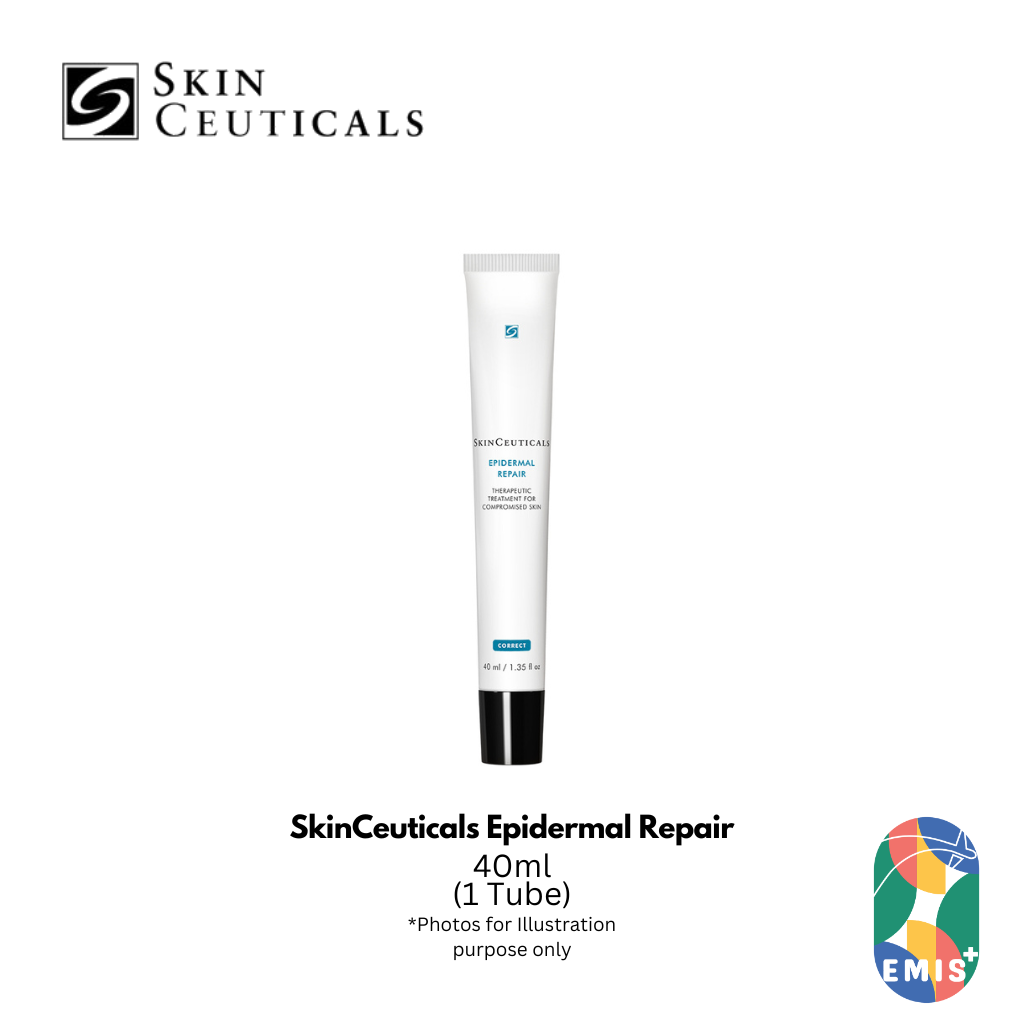
SkinCeuticals Epidermal Repair
SkinCeuticals Epidermal Repair
Couldn't load pickup availability
Product Overview
SkinCeuticals Epidermal Repair is a clinically tested barrier-recovery moisturiser designed to restore compromised epidermal function following dermatological procedures or exposure to sensitising agents. The formulation combines beta glucan (a polysaccharide immunomodulator derived from yeast cell walls) with titrated extract of Centella asiatica (TECA) — a standardised botanical extract containing asiaticoside and madecassoside, which have demonstrated wound-healing and collagen-synthesis-promoting properties in peer-reviewed dermatological literature.
The product’s lipid-replenishment matrix includes ceramide NG, linoleic acid, and linolenic acid, which mirror the endogenous lipid composition of the stratum corneum intercellular lamellae. Sodium palmitoyl proline and Nymphaea alba (white water lily) flower extract provide anti-inflammatory and anti-redness activity. SkinCeuticals, a division of L’Oréal Dermatological Beauty, develops all formulations under pharmaceutical-grade quality systems and subjects products to clinical testing in accordance with ISO 22716 Good Manufacturing Practice for cosmetics.
Specifications
| Manufacturer | SkinCeuticals (L’Oréal Dermatological Beauty), United States |
| Product Code | Epidermal Repair (SKU S27) |
| Volume | 40 ml (1.35 fl. oz.) |
| Key Active: Beta Glucan | Yeast-derived β-1,3/1,6-glucan — immunomodulatory polysaccharide for barrier protection and wound healing support |
| Key Active: Centella Asiatica (TECA) | Titrated extract containing asiaticoside and madecassoside — collagen synthesis promotion and anti-inflammatory activity |
| Key Active: Ceramide NG | Stratum corneum lipid analogue — intercellular lamellae restoration |
| Additional Actives | Sodium Palmitoyl Proline, Nymphaea Alba Flower Extract, Linoleic Acid, Linolenic Acid |
| Skin Type | Sensitised, compromised, dehydrated, post-procedure skin |
| Texture | Lightweight, non-comedogenic lotion |
| Fragrance | Fragrance-free |
| Manufacturing Standard | ISO 22716 Good Manufacturing Practice for Cosmetics; L’Oréal Dermatological Beauty quality system |
| Regulatory Status | Cosmetic product compliant with EU Cosmetics Regulation (EC) No 1223/2009; HSA Singapore cosmetic product notification |
| Clinical Testing | Clinically tested for reduction in TEWL, redness, and irritation on sensitised skin |
Clinical Indications and Key Applications
- Post-procedure barrier recovery following laser resurfacing (fractional CO2, erbium), intense pulsed light (IPL), and non-ablative laser treatments
- Epidermal restoration after chemical peels (glycolic, salicylic, TCA) and microdermabrasion procedures
- Barrier support for skin sensitised by prescription retinoid therapy (tretinoin, adapalene, tazarotene) during the initial adaptation phase
- Management of transepidermal water loss (TEWL) in dehydrated or environmentally compromised skin
- Reduction of visible erythema and blotchiness in rosacea-prone or reactive skin types
- Daily maintenance moisturiser for patients with impaired barrier function secondary to atopic dermatitis or contact dermatitis in remission
Frequently Asked Questions
Q: When should Epidermal Repair be applied after a cosmetic procedure?
A: Application timing depends on the procedure performed and the treating physician’s post-care protocol. For non-ablative laser treatments and superficial chemical peels, Epidermal Repair may typically be applied within 24 hours. For ablative laser resurfacing or deep chemical peels, clinicians generally recommend waiting until the initial wound-healing phase is complete (typically 48–72 hours) before introducing occlusive moisturisers. Always follow your dermatologist’s specific post-procedure instructions.
Q: How does beta glucan support barrier recovery?
A: Beta glucan (β-1,3/1,6-glucan) is a polysaccharide that activates Langerhans cells and macrophages in the skin, stimulating innate immune responses involved in wound healing. Published dermatological research demonstrates that topical beta glucan application reduces inflammatory cytokine expression, promotes fibroblast proliferation, and accelerates re-epithelialisation. These mechanisms collectively support faster restoration of the epidermal barrier after trauma or procedural compromise.
Q: Is this product suitable for acne-prone or oily skin?
A: Epidermal Repair is formulated as a lightweight, non-comedogenic lotion that has been tested on sensitised skin without exacerbating comedone formation. The ceramide and essential fatty acid profile supports barrier function without introducing heavy occlusives. However, patients with active inflammatory acne should consult their dermatologist regarding appropriate post-procedure moisturiser selection, as individual tolerance may vary.
Q: Is SkinCeuticals Epidermal Repair registered for sale in Singapore?
A: SkinCeuticals products are classified as cosmetic products under Singapore Health Sciences Authority (HSA) regulations and comply with the ASEAN Cosmetic Directive notification requirements. The product is manufactured in accordance with ISO 22716 Good Manufacturing Practice for Cosmetics and EU Cosmetics Regulation (EC) No 1223/2009. It is distributed in Singapore through authorised channels including EMIS at emis.asia.
Q: Can Epidermal Repair be used in combination with SkinCeuticals antioxidant serums?
A: In a standard SkinCeuticals regimen, Epidermal Repair is applied after antioxidant serums (such as C E Ferulic or Phloretin CF) and before sunscreen. During the immediate post-procedure recovery period, clinicians may recommend simplifying the regimen to Epidermal Repair and broad-spectrum SPF only, reintroducing active serums gradually as the barrier restores. Consult your treating dermatologist for procedure-specific layering guidance.
Share