Byra
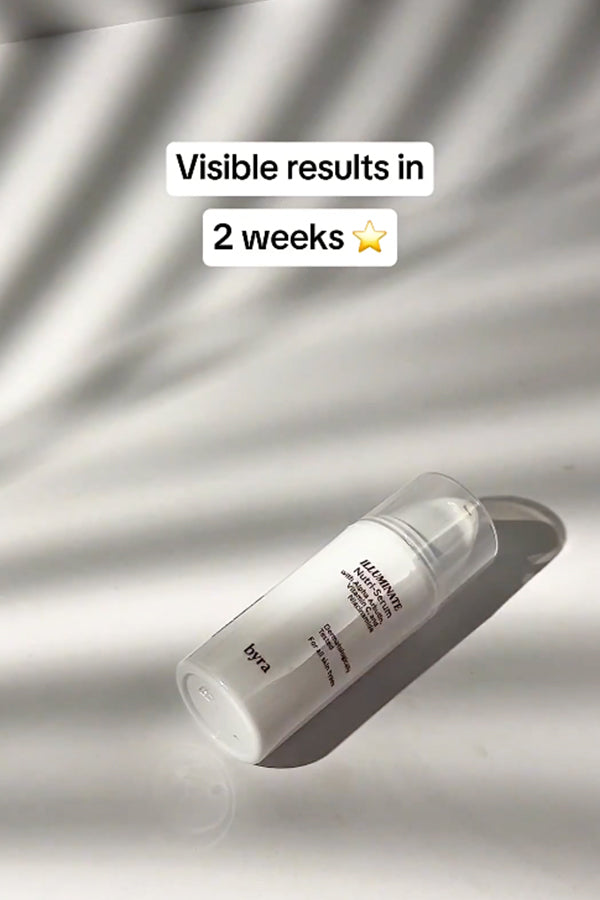
Illuminate Nutri Serum Concentrate for Skin Brightening and Even Tone 30ml
Illuminate Nutri Serum Concentrate for Skin Brightening and Even Tone 30ml
Couldn't load pickup availability
Product Overview
Illuminate Nutri-Serum Concentrate is part of the Byra cosmetic skincare range and is positioned as adjunctive cosmetic support for visible pigmentary unevenness associated with photoaging, postinflammatory pigment change, and ambient UV exposure. The serum combines four well-characterised pigment-modulating actives at concentrations balanced for daily, twice-daily use on cleansed skin: magnesium ascorbyl phosphate (MAP, a non-irritating Vitamin C derivative stable at neutral pH), niacinamide (an inhibitor of melanosome transfer from melanocyte to keratinocyte), alpha-arbutin (a competitive tyrosinase substrate), and ferulic acid (an antioxidant adjunct that stabilises ascorbates and tocopherols).
The supporting matrix delivers Camu Camu (Myrciaria dubia) fruit extract, white mulberry (Morus alba) root extract, and lavender oil at trace cosmetic concentrations, formulated under ASEAN Cosmetic Directive Annex restrictions and stabilised with a Leucidal-class preservative system. The product does not contain hydroquinone, kojic acid above ACD limits, or topical retinoids.
Specifications
| Brand / Manufacturer | Byra (Byra Beauty Pte Ltd, Singapore) |
|---|---|
| Format | 30 mL leave-on facial serum, glass dropper bottle |
| Key Actives | Magnesium Ascorbyl Phosphate (Vitamin C derivative); Niacinamide; Alpha-Arbutin; Ferulic Acid; Glycyrrhiza glabra (Licorice) root extract; Morus alba (White Mulberry) root extract; Camu Camu fruit extract |
| Preservative System | Leuconostoc / Radish Root Ferment Filtrate, Sodium Levulinate, Sodium Anisate, Sodium Phytate |
| Free of | Hydroquinone; topical retinoids; mineral oils; parabens; phenoxyethanol; synthetic fragrance; sulfates |
| pH | Approximately 5.5–6.5 (compatible with niacinamide and Vitamin C MAP without ascorbic acid pH conflict) |
| Manufacturing Standard | ISO 22716:2007 cosmetic Good Manufacturing Practice |
| Regulatory Status (Singapore) | Notified to the Singapore HSA via the ASEAN Cosmetic Notification system under the Health Products (Cosmetic Products—ASEAN Cosmetic Directive) Regulations 2007 |
| EU Compliance | EU Cosmetic Regulation (EC) No 1223/2009 ingredient-restriction alignment; alpha-arbutin permitted up to 2% (face) per SCCS Opinion SCCS/1642/22 |
| Storage | Store below 25°C; protect from direct light to preserve magnesium ascorbyl phosphate stability; PAO 12M after opening |
Clinical Indications & Use Cases
- Adults with diffuse photoaging-related pigmentation seeking a non-hydroquinone topical option
- Post-inflammatory hyperpigmentation (PIH) following acne, eczema, or non-ablative procedures (per dermatology consensus, eg, AAD acne PIH guidance)
- Daily morning use as an antioxidant/pigment-modulating step preceding broad-spectrum SPF 50+ for tropical UV (Singapore UV index commonly 11+)
- Adjunctive maintenance after office-based pigment treatments (eg, Q-switched 1064 nm, picosecond, or chemical peels) under the supervising dermatologist’s protocol
- Sensitive skin populations who cannot tolerate strong AHA/BHA exfoliants or high-strength ascorbic acid serums
- Pregnancy and lactation contexts requiring a hydroquinone-free, retinoid-free pigmentation regimen (clinician confirmation recommended)
Frequently Asked Questions
Q: Why magnesium ascorbyl phosphate (MAP) instead of L-ascorbic acid?
A: L-ascorbic acid requires a pH below 3.5 to remain stable and to penetrate the stratum corneum, which can be irritating. MAP is a phosphate ester of ascorbic acid that is hydrolysed by skin enzymes to release Vitamin C and is stable at near-physiological pH (5.5–7.0). MAP is well tolerated, demonstrates antioxidant activity comparable to ascorbic acid in cell-based assays, and pairs more reliably with niacinamide without the pH-driven incompatibility seen historically with ascorbic acid.
Q: How does alpha-arbutin compare with hydroquinone for pigment management?
A: Hydroquinone (typically 2–4% prescription strength) remains the dermatology gold standard for melasma and recalcitrant PIH, with rapid onset but potential for ochronosis with chronic use. Alpha-arbutin acts as a competitive substrate inhibitor of tyrosinase, releasing hydroquinone in a slow, controlled fashion at trace levels. The SCCS Opinion SCCS/1642/22 supports alpha-arbutin up to 2% on the face as safe in cosmetic use, making it a sustainable maintenance alternative.
Q: Can I use Illuminate alongside Rejuvenate Nutri-Serum or vitamin A products?
A: Yes—Illuminate is typically used in the morning routine for pigment and antioxidant cover, while Rejuvenate (bakuchiol-based) is used in the evening routine for retinol-functional renewal. If using a prescription retinoid, layer Illuminate in the morning only and keep retinoid use to evenings to minimise irritation.
Q: Is the product appropriate during pregnancy?
A: Illuminate contains no hydroquinone, no topical retinoids, and no salicylates above ASEAN Cosmetic Directive permitted use limits. Niacinamide, alpha-arbutin, and MAP have a reassuring topical safety profile, but obstetric and dermatology consensus recommends individual clinician confirmation in pregnancy and lactation prior to introducing any active topical regimen.
Q: How is the product regulated for sale in Singapore?
A: Cosmetic products in Singapore are regulated by HSA under the Health Products (Cosmetic Products—ASEAN Cosmetic Directive) Regulations 2007. Each Byra SKU is notified to HSA via the ASEAN Cosmetic Notification System, complies with ASEAN Cosmetic Directive Annex restrictions on ingredients such as alpha-arbutin and licorice extract, and is manufactured under ISO 22716. EMIS+ retains supplier notification numbers and Certificates of Analysis.
Why Buy From EMIS+
- Nurse-led expertise — guidance from healthcare professionals who understand clinical needs.
- Genuine, authorised products sourced through legitimate Singapore supply channels.
- Fast local delivery across Singapore.
- Responsive support for product selection and after-sales questions.
Frequently Asked Questions
Where can I buy Illuminate Nutri Serum Concentrate for Skin Brightening and Even Tone 30ml in Singapore?
Illuminate Nutri Serum Concentrate for Skin Brightening and Even Tone 30ml is available from EMIS+ (emis.asia), a Singapore nurse-led medical supply store offering fast, reliable local delivery and genuine, authorised products.
How quickly will my order be delivered?
EMIS+ ships across Singapore with prompt local delivery. Most in-stock orders are dispatched quickly so you receive your medical supplies without delay. Contact our team via emis.asia for current delivery timelines.
Is Illuminate Nutri Serum Concentrate for Skin Brightening and Even Tone 30ml suitable for me?
Individual needs vary. Always read the product label and consult your doctor or pharmacist before starting any new supplement, especially if you are pregnant, breastfeeding, taking medication, or managing a health condition.
Are EMIS+ products genuine and locally supported?
Yes. EMIS+ is a Singapore-based, nurse-led supplier. All products are sourced from authorised channels and backed by knowledgeable local support.
Order today from EMIS+ (emis.asia) — Singapore's trusted nurse-led medical supply store.
Share