Molnlycke
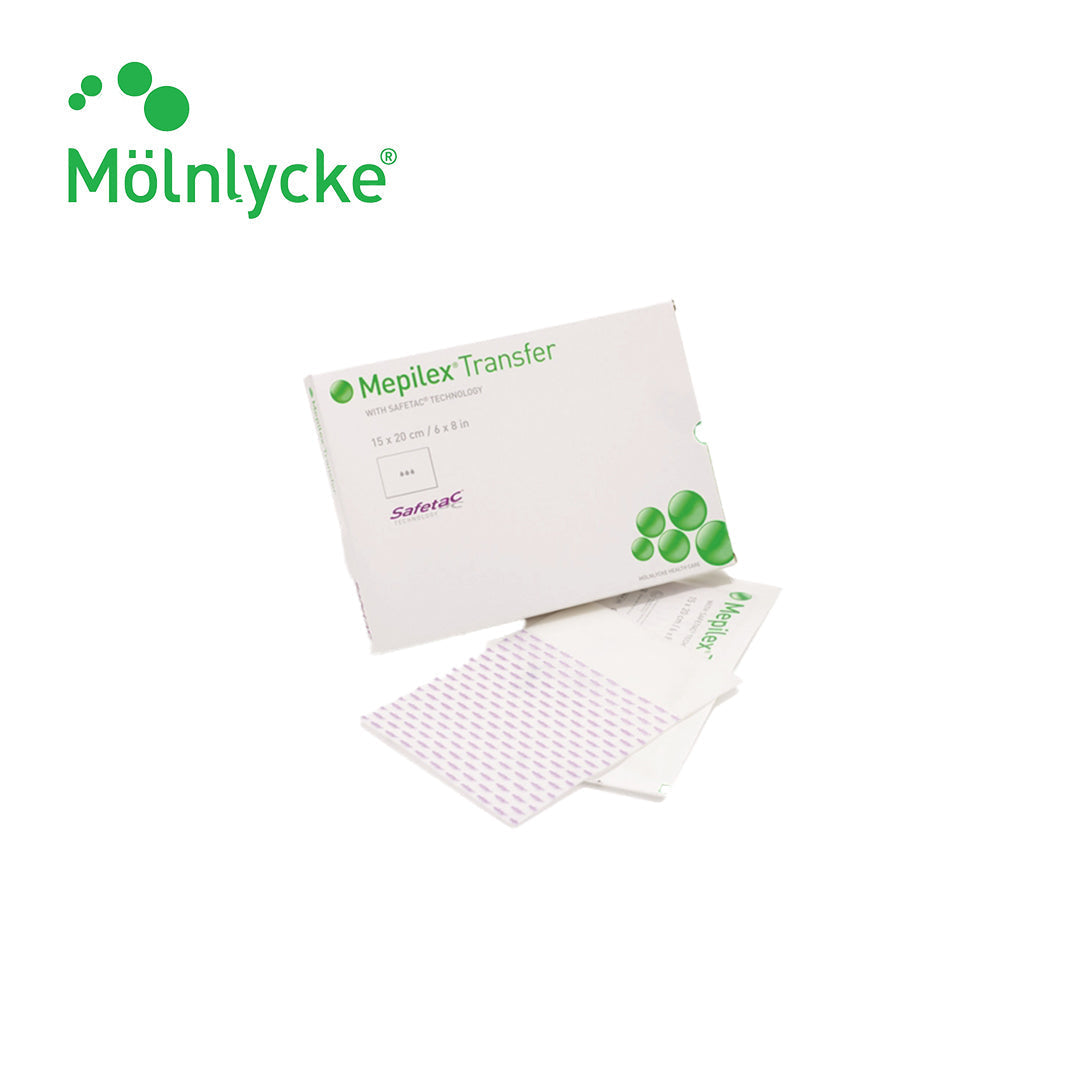
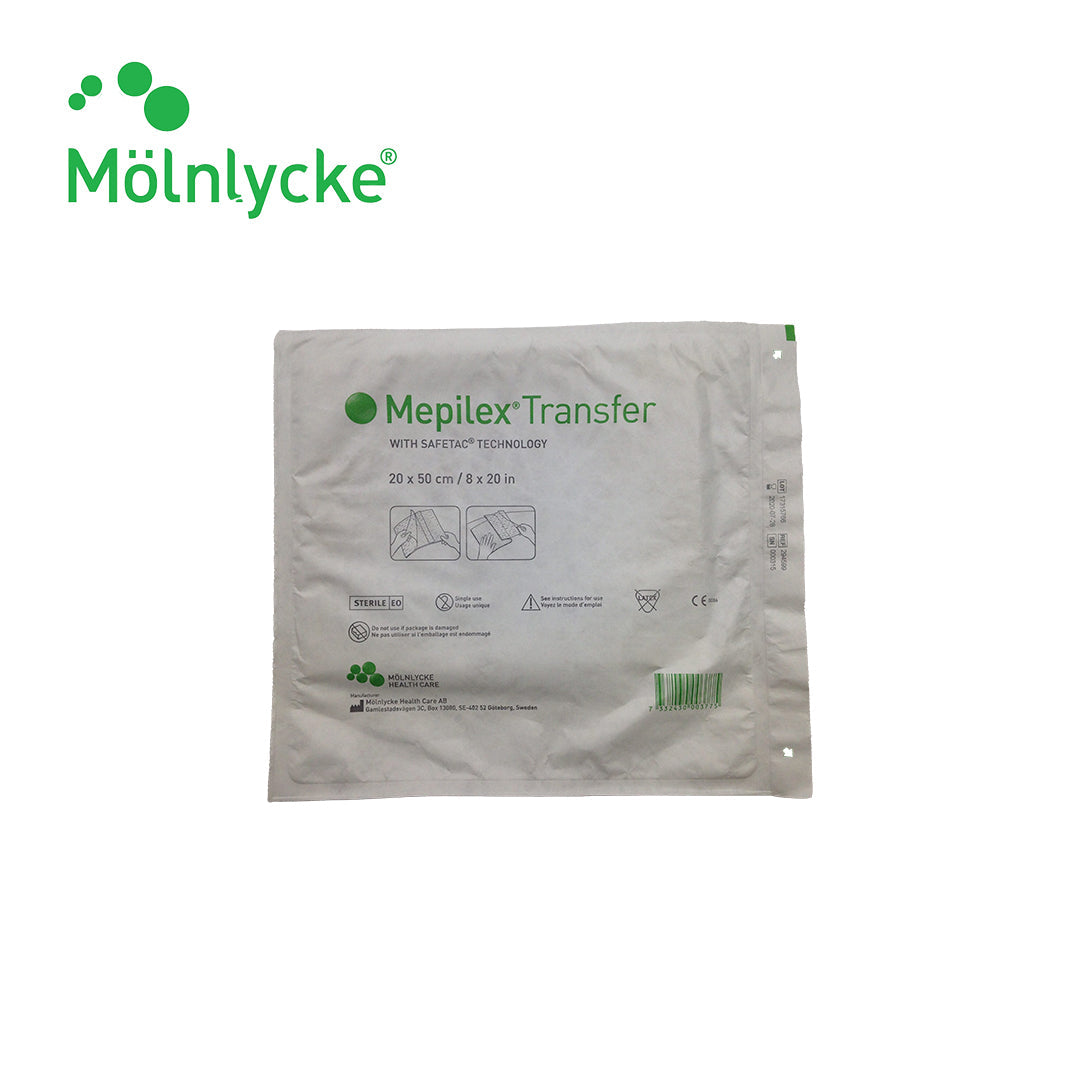
Molnlycke Mepilex Transfer – Box
Molnlycke Mepilex Transfer – Box
Couldn't load pickup availability
Mölnlycke Mepilex Transfer solves the clinical challenge of managing highly exuding wounds without causing pain or trauma at dressing change — a critical consideration in fragile-skin patient populations including the elderly, oncology patients on anticoagulants, and those with chronic venous insufficiency.
Technical Specifications
| Parameter | Specification |
|---|---|
| Dressing Type | Thin silicone foam wound contact/transfer layer |
| Wound Contact Technology | Safetac® soft-silicone (atraumatic removal, no epidermal stripping) |
| Exudate Management | Vertical wicking transfer to secondary absorbent dressing |
| Exudate Level | Moderate to high |
| Indications | VLU, DFU, skin tears, STSG donor sites, oncology wounds, fragile periwound skin |
| Secondary Dressing Required | Yes — any compatible foam, superabsorbent, or gauze secondary |
| Skin Adhesion | Gentle periwound adhesion; non-adherent to wound bed |
| Sterility | Sterile; single-use; individually packaged |
| Latex Content | Latex-free |
| Biocompatibility | ISO 10993 tested |
| Quality Management | ISO 13485:2016 |
| Singapore Registration | HSA-registered Class B medical device |
| Manufacturer | Mölnlycke Health Care AB, Gothenburg, Sweden |
Clinical Q&A
Q: How does Safetac® technology prevent pain and trauma at dressing removal?
A: Safetac® silicone adheres to intact dry skin with gentle cohesive bonding but does not bond to moist wound tissue. When the dressing contacts the wound surface, the silicone layer conforms without penetrating newly formed epithelium or granulation tissue. During removal, the dressing peels back along the intact skin surface without tearing the epidermal layer or disrupting the wound bed. This contrasts with traditional gauze or adhesive-coated dressings, which mechanically bond to wound exudate and newly formed cells.
Q: What secondary dressings are compatible with Mepilex Transfer?
A: Mepilex Transfer is designed as an open-system transfer layer compatible with any secondary absorbent dressing: Mepilex foam, superabsorbent dressings (e.g., Zetuvit Plus), compression bandage systems, gauze padding, or retention bandages. The choice of secondary dressing determines the total exudate management capacity. For high-output wounds, superabsorbent polymer secondaries maximise absorbent capacity between changes.
Q: At what frequency should Mepilex Transfer dressings be changed?
A: Change frequency is determined by secondary dressing saturation rather than a fixed schedule. The transfer layer itself may remain in place 3–7 days provided the wound bed is not infected and the secondary is changed as needed. This extended wear capability reduces cumulative trauma from frequent primary dressing changes — particularly beneficial in fragile-skin populations where each removal carries epidermal stripping risk.
Q: Is Mepilex Transfer appropriate for split-thickness skin graft (STSG) donor sites?
A: Yes. STSG donor sites are highly exuding in the first 48–72 hours and extremely pain-sensitive given the partial-thickness epidermal removal. Safetac technology allows atraumatic removal at first dressing change (day 3–5), preventing disruption of reepitheliasing cells. Multiple systematic reviews and RCTs confirm silicone soft-foam dressings reduce donor site pain scores by 30–50% versus traditional paraffin gauze dressings.
Q: What regulatory approvals and quality standards govern Mepilex Transfer?
A: Manufactured under ISO 13485:2016 quality management at Mölnlycke Health Care AB. ISO 10993 biocompatibility confirmed for silicone wound contact surface (cytotoxicity, sensitisation, intracutaneous reactivity). Registered with Singapore HSA as a Class B medical device under the Health Products Act.
Regulatory & Standards References
- ISO 13485:2016 — Medical devices quality management; Mölnlycke manufacturing certification
- ISO 10993 — Biological evaluation of medical devices; Safetac silicone biocompatibility confirmed
- HSA Singapore — Class B medical device registration; Health Products Act wound care dressing classification
- EWMA Position Document — Evidence base for atraumatic soft-silicone wound contact layers in chronic wound management
Share