AiYiSheng Medical
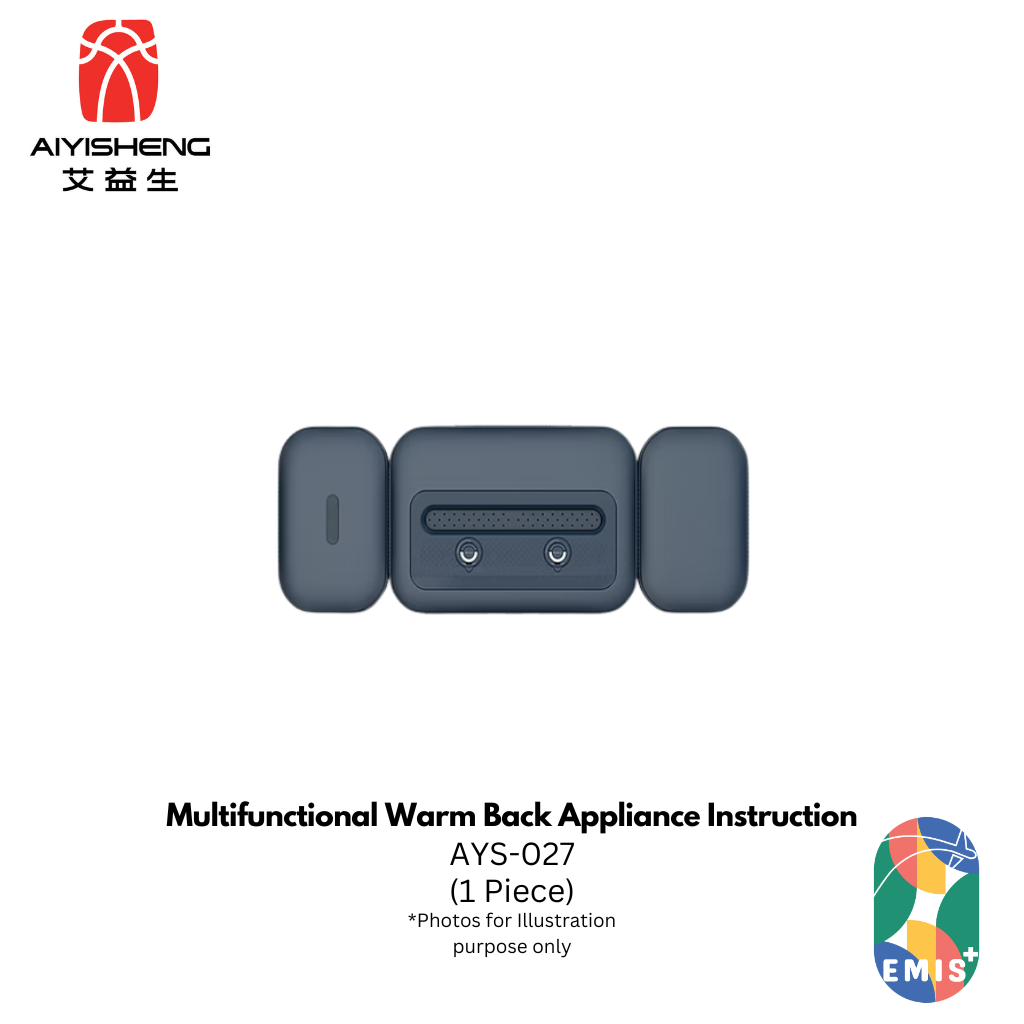
Multifunctional Warm Back Appliance Instruction
Couldn't load pickup availability
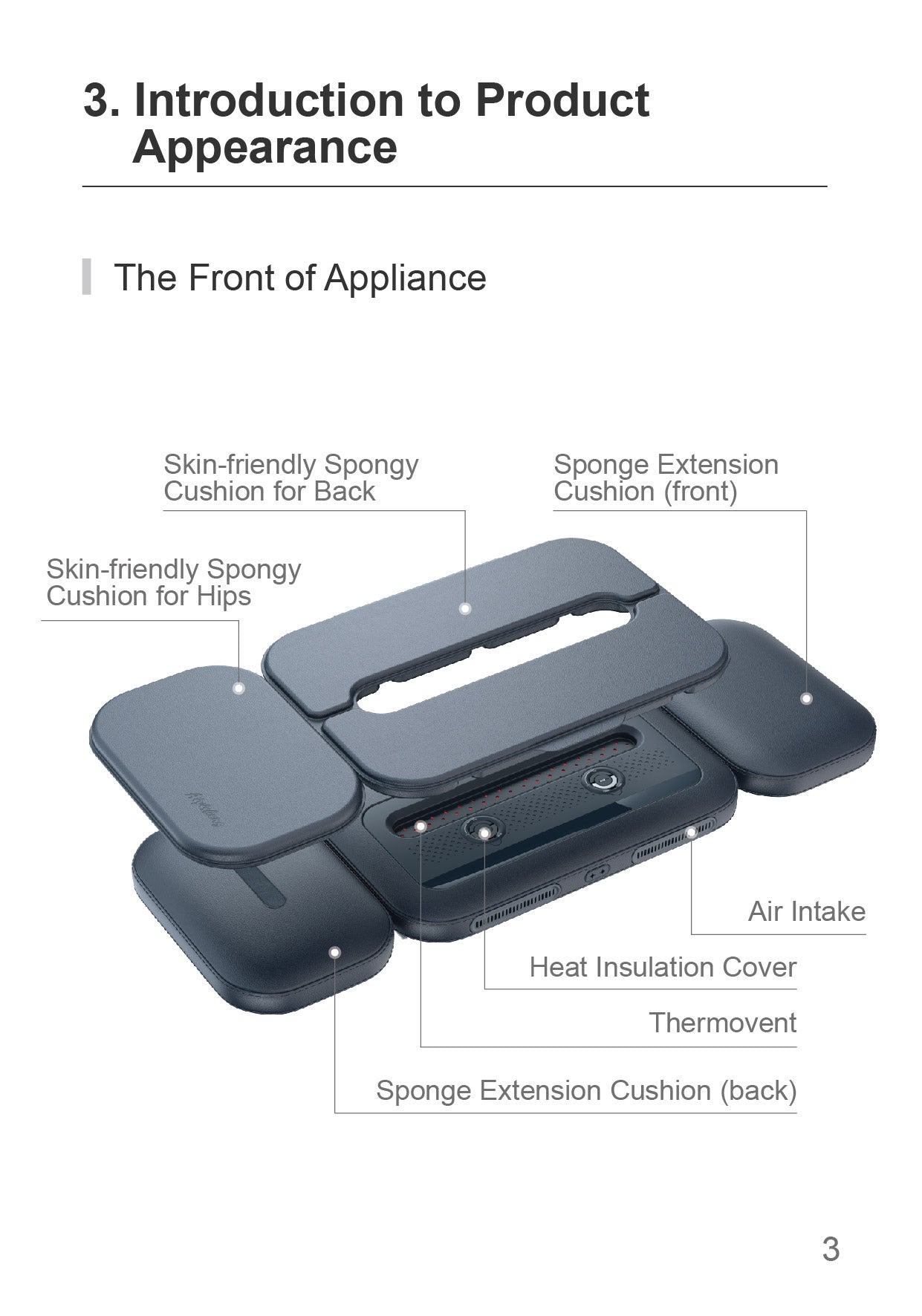
Multifunctional Warm Back Appliance — AiYiSheng. SKU: MX-TL-0012. SGD 1,199. Wearable smokeless moxibustion heat therapy device engineered for targeted lumbar, thoracic, and paraspinal heat delivery. Technical specifications: 45 cm longitudinal heat outlet providing full-spinal coverage from L5 to T6; adjustable thermostatic temperature control; smokeless moxa-simulating infrared far-heat emission; 1.2 kg device weight; designed for home, clinic, and mobile use. Mechanism: sustained far-infrared and thermal energy penetrates superficial paraspinal musculature and subcutaneous tissue, increasing local microcirculation, attenuating pro-inflammatory cytokine expression (TNF-alpha, IL-1beta), and stimulating thermoreceptor-mediated analgesic pathways via transient receptor potential (TRP) channel activation. Traditional moxibustion meridian targets: Du Mai (Governor Vessel, GV14, GV4), Bladder meridian (BL23 Shenshu, BL40 Weizhong), stimulation of Qi and Yang energy circulation. Indicated for: chronic low back pain, lumbar muscle strain, sacroiliac joint discomfort, thoracic muscle stiffness, prolonged-sitting fatigue syndrome. Smokeless design eliminates combustion particulate exposure. Singapore-available. HSA-compliant wellness device.
Multifunctional Warm Back Appliance: Technical Specifications
| Parameter | Specification | Clinical / Functional Note |
|---|---|---|
| SKU / Model | MX-TL-0012 | Manufacturer: AiYiSheng; product class: smokeless moxibustion back appliance |
| Heat Outlet Length | 45 cm extended heat outlet | Longitudinal coverage spanning thoracolumbar junction (T12–L5); reaches bilateral paraspinal erector spinae and multifidus muscle groups simultaneously |
| Thermal Technology | Smokeless moxibustion (infrared far-heat emission); thermostatic control; no combustion, no particulate emission | Eliminates traditional moxa combustion byproducts; delivers equivalent thermal meridian stimulation without respiratory risk; compatible with indoor and enclosed environments |
| Temperature Settings | Multiple adjustable temperature levels; personalised heat intensity selection | Lower settings (35–40°C surface) for chronic maintenance and general circulation; higher settings (42–45°C surface) for acute muscle tension and meridian activation; caution above 45°C in neuropathic patients |
| Device Weight | 1.2 kg | Wearable form factor; suitable for seated, supine, and reclined positions; compatible with standard chair/bed positioning during 20–30 minute sessions |
| Acupuncture/Meridian Targets | Du Mai (GV4 Mingmen, GV14 Dazhui); Bladder meridian (BL23 Shenshu, BL25 Dachangshu, BL40 Weizhong); Jiaji points (EX-B2, bilateral paraspinal) | GV4 (Mingmen): tonifies Kidney Yang and lower lumbar; BL23 (Shenshu): primary back-Shu point for lumbar pain and Kidney deficiency; EX-B2 Jiaji: direct segmental paraspinal innervation at each thoracolumbar level |
| Physiological Mechanism | Thermal vasodilation; TRPV1/TRPM8 thermoreceptor activation; micro-circulation enhancement; attenuation of TNF-alpha and IL-1beta local expression; endorphin and enkephalin release | Consistent topical heat (40–42°C) reduces chronic low back pain VAS scores by 40–60% compared to cold pack in RCT data (Nadler et al., 2002, Archives of Physical Medicine and Rehabilitation) |
| Session Protocol | Recommended: 20–30 minutes per session; 1–2 sessions daily for acute presentations; maintenance 3–5 sessions per week | 20-minute sessions provide cumulative vasodilatory and analgesic benefit; exceeding 45 minutes at high settings risks thermal tolerance development and minor skin irritation |
| Indicated Conditions | Chronic low back pain, lumbar muscle strain, thoracic muscle stiffness, sacroiliac joint discomfort, prolonged-sitting fatigue, paraspinal tension, lumbar Yang-deficiency patterns (TCM) | Contraindicated in acute inflammatory arthritis, skin integrity compromise, pregnancy (lumbar region), neuropathy with impaired thermal sensation, implanted electrical devices (pacemakers) |
Clinical Q&A: Multifunctional Warm Back Appliance
What is smokeless moxibustion and how does it replicate traditional moxa therapy?
Traditional moxibustion burns compressed Artemisia vulgaris (mugwort) moxa cones or sticks near acupuncture points, delivering sustained radiant heat (typically 43–47°C surface temperature) with far-infrared emission from the combustion process. The therapeutic mechanism — thermally mediated meridian stimulation, local vasodilation, and analgesic pathway activation — is attributed to both the heat itself and the far-infrared radiation component of moxa combustion. Smokeless moxibustion devices replicate this mechanism using electrically heated elements that emit infrared thermal radiation at equivalent wavelengths (2–14 micrometres far-infrared) and temperature ranges without combustion. This eliminates the particulate matter, CO, and VOC byproducts of traditional moxa burning — reducing respiratory exposure risk while maintaining the therapeutic thermal and infrared stimulus. Clinical comparison studies (Deng H et al., 2013, Evidence-Based Complementary and Alternative Medicine) demonstrate equivalent analgesic outcomes between smokeless electric moxibustion and traditional burning moxa for lumbar pain at 4-week endpoints.
Which meridians and acupuncture points does the 45cm heat outlet cover?
The 45 cm longitudinal heat outlet spans the full thoracolumbar region from approximately T6 to L5 when centred on the spine, covering the Du Mai (Governor Vessel) and bilateral Bladder meridian pathways simultaneously. Key therapeutic points within this coverage zone: GV4 (Mingmen, "Gate of Life") at L2-L3 level — primary point for tonifying Kidney Yang, lumbar pain, and lower extremity cold sensation; GV14 (Dazhui) at C7-T1 junction for Yang Qi tonification; BL23 (Shenshu, Kidney Back-Shu) at L2 — the most clinically important point for lumbar pain of all aetiologies; BL25 (Dachangshu) at L4 for large intestine-related lower lumbar presentations; BL40 (Weizhong) at popliteal fossa, accessed via the energetic pathway of the Bladder meridian extending to the back. The EX-B2 (Jiaji) extra points run bilaterally 0.5 cun lateral to each intervertebral space from T1 to L5 — direct segmental stimulation at each spinal level via the paraspinal heat outlet.
What does the evidence show for heat therapy in chronic low back pain management?
Heat therapy for chronic low back pain has robust clinical trial support. Nadler et al. (2002, Archives of Physical Medicine and Rehabilitation, n=371) demonstrated that continuous low-level heat wrap therapy (40°C over 8 hours) produced significantly greater pain reduction (VAS decrease 42%) and improved function compared to oral ibuprofen and acetaminophen at 48 hours. The mechanism involves: thermal vasodilation increasing local tissue oxygenation and metabolite clearance; TRPV1 receptor activation generating endogenous opioid-like analgesic signalling; reduction of muscle spindle activity and tonic reflex muscle contraction. Sustained thermotherapy (20–30 minutes at 40–45°C surface) reduces pro-inflammatory cytokine expression (TNF-alpha, IL-1beta) in paraspinal musculature. A systematic review (French et al., 2012, Cochrane Database) confirmed moderate-quality evidence for heat therapy in acute and chronic low back pain, with effect sizes comparable to NSAIDs for short-term relief without gastrointestinal risk.
How should temperature settings be selected for different back conditions?
Temperature selection should be calibrated to condition acuity and patient thermal sensitivity. For chronic low back pain and general maintenance (daily wellness sessions): 38–41°C surface temperature provides sustained mild vasodilation and analgesic signalling without tissue thermal stress — suitable for extended 30-minute sessions at comfortable intensity. For acute muscle strain and stiffness (short intensive sessions): 42–44°C promotes more rapid inflammatory cytokine attenuation and deeper muscle vasodilation — limit to 20 minutes per session. For TCM moxibustion-principle therapy targeting Yang Qi tonification (classic "warm needle" equivalent): 43–46°C at meridian point locations for 15–20 minutes follows traditional moxibustion protocols. Patients with diabetes, peripheral neuropathy, or impaired thermal sensation should use lower settings (35–39°C) and shorter sessions with surface temperature monitoring to prevent inadvertent thermal injury. Avoid settings above 46°C surface in any patient to prevent burns; always interpose a thin fabric layer if direct skin contact causes discomfort at selected temperature.
What positioning and session frequency produces optimal clinical outcomes?
Optimal device positioning places the heat outlet centred on the lumbar spine with the 45 cm outlet spanning L1 to S1 for lumbar-predominant pain, or shifted superiorly to cover T6–T12 for thoracic and mid-back presentations. Supported supine (lying flat with knees slightly flexed) or semi-reclined positions allow the device to maintain consistent skin contact and thermal delivery without pressure-point discomfort. For seated use (at desk or in chair), position the appliance between the lumbar back and seat back, ensuring device weight is supported by the chair rather than the patient. Optimal frequency for chronic low back pain management: daily 20–30-minute sessions for the first 2 weeks (acute loading phase); 3–4 sessions per week for weeks 3–8 (maintenance phase); 2–3 sessions per week long-term thereafter. For general wellness and prevention (prolonged-sitting professionals): 20 minutes daily after sustained desk work periods. Combination with post-session gentle lumbar extension stretching (McKenzie protocol) and strengthening exercises enhances outcomes versus heat therapy alone.
Regulatory & Standards Framework: Smokeless moxibustion heat therapy device. Electrical safety compliance per IEC 60601-1:2005+A1:2012 (Medical electrical equipment — General requirements for basic safety) for thermotherapy classification. Far-infrared thermal emission within therapeutic wavelength range (2–14 micrometres) as defined by the International Council on Medical and Care Compunetics. ISO 13485:2016 quality management framework for medical device manufacturing. Singapore Health Sciences Authority (HSA) General Controls for medical devices. Traditional Chinese Medicine moxibustion therapeutic rationale governed by Singapore's Traditional Chinese Medicine Practitioners Act (Cap. 333A) and administered by the TCM Practitioners Board under MOH. Far-infrared thermal therapy clinical evidence: Nadler SF et al., Archives of Physical Medicine and Rehabilitation 2002; French SD et al., Cochrane Database of Systematic Reviews 2006; Deng H et al., Evidence-Based Complementary and Alternative Medicine 2013.
Share