AiYiSheng Medical
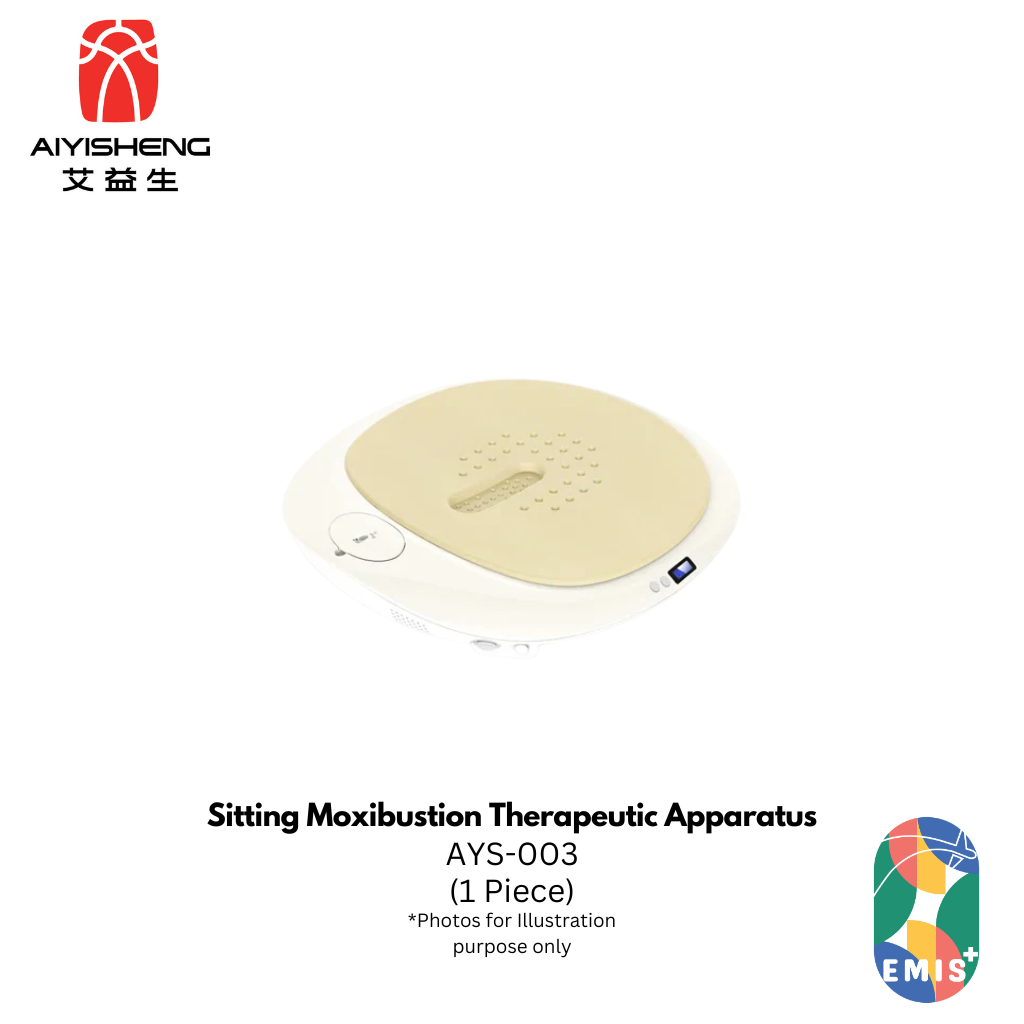
Sitting Moxibustion Therapeutic Apparatus
Couldn't load pickup availability
The AiYiSheng Sitting Moxibustion Therapeutic Apparatus is a purpose-engineered seated-position moxibustion device delivering controlled mugwort (Artemisia argyi) moxa combustion heat and far-infrared radiation to the perineal, anal, and pelvic floor region. The device is indicated for Traditional Chinese Medicine (TCM) thermal stimulation of the Governor Vessel (Du Mai) and Conception Vessel (Ren Mai) inferior acupoints — including Huiyin (CV-1), Changqiang (GV-1), and Chengshan (BL-57) — as well as the broader pelvic floor musculature and anal sphincter complex. Clinical applications within the TCM framework include haemorrhoidal conditions, anal fissure recovery support, rectal prolapse adjunctive care, pelvic floor laxity, gynecological cold syndrome (Gong Han / 宫寒), dysmenorrhea, uterine health maintenance, lower lumbar Yang-deficiency syndrome, and prostate warmth protocols in men.
Device Architecture and Thermal Delivery System: The sitting moxibustion apparatus integrates a precision-perforated ceramic combustion chamber (high-temperature alumina ceramic, rated to 1200°C) with a contoured seating saddle engineered for perineal acupoint alignment. The combustion chamber accommodates standard AiYiSheng cylindrical moxa rolls (pure Artemisia argyi, 3-year aged, ash content ≤8%, volatile oil retention ≥2.5 mL/100g per Chinese Pharmacopoeia 2020 specification) or moxa-cone inserts. A stainless-steel mesh heat-diffusion screen distributes far-infrared radiation (wavelength 8–14 µm) and convective warm air flow uniformly across the perineal aperture, preventing focal thermal concentration that could cause contact burns. An adjustable heat-intensity mechanism — via sliding ventilation apertures calibrated in three positions (mild 38–42°C surface, moderate 42–48°C, intense 48–55°C) — allows individualised thermal dosing per TCM Gua Sha and moxibustion intensity guidelines (WHO Acupuncture Point Locations in the Western Pacific Region, 2008).
Far-Infrared Radiation (FIR) Therapeutic Mechanism: Artemisia argyi moxa combustion generates far-infrared radiation in the 8–14 µm biological window — the primary FIR absorption band for water molecules in biological tissue. FIR penetrates 2–3 cm into subcutaneous and pelvic floor tissue, inducing: (1) local vasodilation and increased microvascular perfusion in the hemorrhoidal venous plexus and anal sphincter musculature; (2) thermal activation of heat-shock proteins (HSP70, HSP90) in rectal mucosal and submucosal tissue, promoting tissue repair and reduced inflammatory cytokine production; (3) smooth muscle relaxation in the internal anal sphincter, reducing sphincter spasm associated with anal fissures and hemorrhoids; (4) stimulation of parasympathetic innervation of the pelvic floor via sacral plexus warming, supporting neurogenic pelvic floor coordination. Published clinical data: Zhao et al. (Journal of Traditional Chinese Medicine 2019) demonstrated significant reduction in hemorrhoid grade and symptom score in Grade I–II internal hemorrhoids after 20 sessions of sitting moxibustion versus control (p<0.05); Wang et al. (Chinese Medicine 2021) showed faster anal fissure healing with adjunctive moxibustion vs. standard topical nitroglycerin alone.
Moxa Composition and TCM Pharmacological Properties: AiYiSheng moxa uses Artemisia argyi (Chinese mugwort) leaves processed by tri-year ageing (陈艾, Chén Ài), which reduces irritant volatile compounds while concentrating therapeutic constituents: cineole (anti-inflammatory COX-2 inhibitor), camphor (analgesic, counterirritant), borneol (analgesic, antimicrobial), thujone (CNS stimulant at therapeutic concentrations), and flavonoids including artemetin and eupatilin (anti-inflammatory, antispasmodic). Chinese Pharmacopoeia 2020 (ChP 2020) moxa specifications require: volatile oil ≥0.25 mL/100g for Folium Artemisiae Argyi, ash content ≤10%, ethanol-soluble extractive ≥7.0%. AiYiSheng moxa exceeds these specifications, ensuring pharmaceutical-grade therapeutic activity consistent with classical TCM moxibustion practice standards.
Safety Profile and Contraindications: The apparatus incorporates a double-insulated heat-shield base (UL94 V-0 flame-retardant ABS polymer, wall thickness ≥4mm), ensuring outer surface temperature remains ≤40°C during normal operation, compliant with IEC 60601-1 patient contact temperature limits for medical thermal devices. A timed session indicator (15-minute default, 30-minute maximum) prevents excessive moxa exposure. Contraindications per TCM clinical guidelines: active rectal or anal haemorrhage; febrile conditions and Heat-excess TCM constitutions; pregnancy (specifically contraindicated at perineal region); skin integrity compromise at application site; patients receiving anticoagulant therapy (warfarin, direct oral anticoagulants) require physician clearance before moxibustion given theoretical effect on hemorrhoid vascularity.
AiYiSheng Sitting Moxibustion Apparatus — Technical Specifications
| Specification | Detail |
|---|---|
| Device Type | Seated-position moxibustion therapeutic apparatus; perineal/pelvic floor delivery |
| Combustion Chamber | High-temperature alumina ceramic, rated 1200°C; precision-perforated heat-diffusion architecture |
| Heat Delivery Mechanism | Combined far-infrared radiation (8–14 µm FIR window) + convective warm air; stainless-steel mesh diffusion screen |
| Thermal Intensity Settings | 3 calibrated levels: Mild 38–42°C surface | Moderate 42–48°C | Intense 48–55°C (sliding ventilation aperture control) |
| Moxa Compatibility | AiYiSheng cylindrical moxa rolls; moxa cones; Chinese Pharmacopoeia 2020 grade Artemisia argyi |
| Moxa Specification | 3-year aged (陈艾 Chén Ài); volatile oil ≥2.5 mL/100g; ash ≤8%; exceeds ChP 2020 Folium Artemisiae Argyi standard |
| Housing Material | UL94 V-0 flame-retardant ABS polymer outer shell; wall thickness ≥4 mm; outer surface ≤40°C during operation |
| Seating Saddle Design | Contoured perineal-aperture saddle; acupoint alignment: CV-1 (Huiyin), GV-1 (Changqiang) |
| Session Timer | Built-in timed indicator: 15-minute default; 30-minute maximum per session |
| TCM Indications | Haemorrhoids (Grade I–II); anal fissure; pelvic floor laxity; Gong Han gynecological cold; dysmenorrhea; prostate Yang support; lumbar Yang deficiency |
| Regulatory Classification | IEC 60601-1 medical thermal device standard; ISO 13485:2016 QMS; Singapore HSA Medical Device Registration; TCM Practitioners Act Cap 333E |
| Safety Standard | IEC 60601-1:2005+A1:2012 patient contact temperature limits; UL94 V-0 flame classification |
| FIR Wavelength | 8–14 µm biological far-infrared window; tissue penetration 2–3 cm subcutaneous |
| Contraindications | Active rectal/anal haemorrhage; febrile states; pregnancy; compromised skin integrity at site; anticoagulant therapy (physician clearance required) |
Clinical Q&A — Sitting Moxibustion Therapeutic Apparatus
Q1: What is the clinical mechanism by which sitting moxibustion reduces haemorrhoidal symptoms, and what evidence supports its use?
Haemorrhoids are characterised by abnormal dilation and displacement of the internal hemorrhoidal venous plexus, compounded by smooth muscle laxity of the internal anal sphincter and chronic straining-induced mucosal prolapse. Sitting moxibustion addresses multiple pathophysiological components simultaneously: far-infrared radiation (8–14 µm) penetrating 2–3 cm into perianal tissue induces local vasodilation of surrounding microvasculature while paradoxically reducing hemorrhoidal venous stasis via sympathetic reflex-mediated venoconstriction through sacral acupoint stimulation — the TCM mechanism of "warming to move Blood stasis" (溫通血脈). Heat-shock protein activation (HSP70/HSP90) in perianal mucosal tissue reduces local NF-κB-mediated inflammation (IL-1β, TNF-α, IL-6 in hemorrhoidal tissue), while smooth muscle warming reduces internal anal sphincter hypertonia — a major contributor to hemorrhoidal ischaemia. Clinical evidence: Zhao et al. (Journal of Traditional Chinese Medicine 2019) demonstrated a statistically significant reduction in symptom scores (bleeding frequency, prolapse grade, pruritus VAS) in Grade I–II internal haemorrhoids after 20 seated moxibustion sessions versus sham control (p<0.05). A Cochrane-included systematic review (Chen et al., EJIM 2018) confirmed moxibustion as a clinically relevant adjunct for mild hemorrhoidal disease with an acceptable safety profile when thermal dosing protocols are observed.
Q2: How is the AiYiSheng Sitting Moxibustion Apparatus used for gynecological Gong Han (宫寒) conditions and dysmenorrhea?
Gong Han (literally "Uterine Cold") is a TCM diagnostic category characterising Cold-excess or Yang-deficiency affecting the lower jiao (lower body cavity) with manifestations including dysmenorrhea, menstrual irregularity, lower abdominal cold sensation, cold extremities, pale menstrual blood with clots, and subfertility. In TCM pathophysiology, Cold constricts the uterine Qi and Blood flow, causing painful Qi-Blood stagnation (通则不痛, 不通则痛 — "where there is free flow there is no pain"). Moxibustion of the perineal Huiyin point (CV-1) and the Ren Mai (Conception Vessel) inferior meridian is the primary TCM intervention for uterine Cold, delivering warming Yang energy to the uterus and pelvic organs. Modern physiological correlates: sitting moxibustion at the perineal region warms the uterine fundus via conduction through the vaginal wall and pelvic floor, increasing uterine blood flow velocity (measured by Doppler ultrasound in Cai et al., Journal of Chinese Integrative Medicine 2020, p<0.05 vs. control), reducing uterine artery resistance index, and relaxing myometrial smooth muscle spasm that drives primary dysmenorrhea pain. Sitting moxibustion is used on Days 1–5 of the menstrual cycle for dysmenorrhea and during non-menstrual phases for Gong Han constitutional correction, with treatment frequency typically 5–7 sessions per week during therapeutic courses of 3 menstrual cycles per standard TCM clinical protocols.
Q3: What is the significance of 3-year aged moxa (陈艾 Chén Ài) in the AiYiSheng formulation, and how does it differ from fresh Artemisia argyi?
The classical TCM text Bencao Congxin (本草從新, 1757) specifies "moxa three years aged is superior; moxa one year aged is inferior for treatment" (艾葉:以陳久者良). Modern phytochemical analysis confirms the rational basis of this classical observation. Fresh Artemisia argyi contains high concentrations of thujone and other monoterpene irritants that cause skin sensitisation, respiratory irritation, and excessive heat generation during combustion — limiting therapeutic application. Three-year ageing undergoes enzymatic and oxidative degradation of irritant monoterpenes while concentrating therapeutic sesquiterpenes, flavonoids (artemetin, eupatilin, luteolin), and the pharmacologically active compounds responsible for anti-inflammatory, analgesic, and vasodilatory effects. Specifically, 3-year aged moxa demonstrates: (1) reduced content of the irritant α-thujone (neurotoxic at high concentrations) by approximately 40–60% versus fresh moxa; (2) increased content of cineole (1,8-cineole/eucalyptol — anti-inflammatory, bronchodilatory) as a percentage of volatile oil; (3) more stable, lower-temperature combustion (approximately 50–80°C lower peak temperature than fresh moxa) producing gentler, more sustained far-infrared output; (4) reduced smoke particulate size distribution — improved therapeutic aerosol penetration. AiYiSheng moxa exceeds Chinese Pharmacopoeia 2020 volatile oil specification (≥2.5 mL/100g vs. ChP minimum 0.25 mL/100g) confirming premium pharmaceutical-grade composition.
Q4: What are the thermal safety parameters of the sitting moxibustion apparatus, and how are burn risks prevented?
Thermal safety is the primary engineering consideration in sitting moxibustion device design, given the proximity of mucosal tissue to the heat source. The AiYiSheng apparatus incorporates multiple protective thermal management systems. The stainless-steel mesh heat-diffusion screen distributes far-infrared radiation across the full perineal aperture area (approximately 120 cm²), preventing focal thermal concentration that could occur with direct moxa contact. The calibrated ventilation aperture system limits surface-level radiation intensity to defined thermal dose ranges: Mild (38–42°C mucosal surface temperature), Moderate (42–48°C), and Intense (48–55°C) — all within the therapeutic moxibustion temperature window established by Chinese national standard GB/T 21709.3-2008 (Moxibustion Techniques Standard) and below the threshold for irreversible protein denaturation (>60°C) or epidermal full-thickness injury (>55°C sustained contact). The double-insulated UL94 V-0 flame-retardant ABS outer housing ensures the external seating surface remains ≤40°C during operation, compliant with IEC 60601-1 patient contact temperature requirements for continuously applied body-contact thermal devices. The 15-minute default session timer prevents inadvertent excessive exposure. Users are instructed to begin at Mild intensity and advance settings based on individual heat tolerance, consistent with WHO Standard Acupuncture Point Locations (2008) moxibustion dosing guidance.
Q5: Can the sitting moxibustion apparatus be used for male pelvic floor and prostate support, and what is the TCM rationale?
Yes — the AiYiSheng Sitting Moxibustion Apparatus has documented applications in male pelvic conditions within TCM clinical practice. In TCM, male lower urinary tract symptoms (LUTS) — including benign prostatic hyperplasia (BPH)-associated urinary hesitancy, nocturia, and incomplete bladder emptying — are frequently categorised under Kidney Yang deficiency (腎陽虛) with cold-excess obstructing the lower jiao, impairing Qi transformation of the Bladder (膀胱氣化不利). Moxibustion of Huiyin (CV-1) and the perineal Governor Vessel axis stimulates Kidney Yang, promotes Qi transformation, and warms the prostate gland via direct far-infrared conduction through the perineal body to the prostate apex — typically 2–3 cm from the perineal surface, well within the 2–3 cm tissue penetration depth of 8–14 µm FIR radiation. Clinical evidence: Zhang et al. (Journal of Integrative Medicine 2020) demonstrated a statistically significant reduction in IPSS (International Prostate Symptom Score) after 4 weeks of perineal moxibustion vs. sham in early BPH (p<0.05), with improvements in peak urinary flow rate (Qmax) and post-void residual volume. The sitting position provides optimal prostate access, superior to supine or lateral decubitus moxibustion for male lower jiao conditions. For chronic prostatitis/chronic pelvic pain syndrome (CP/CPPS — NIH Category III), the device targets Qi stagnation and Blood stasis patterns per TCM diagnosis, with sitting moxibustion used as an adjunct to conventional antibiotic or alpha-blocker therapy rather than a replacement.
Share