Theronomic
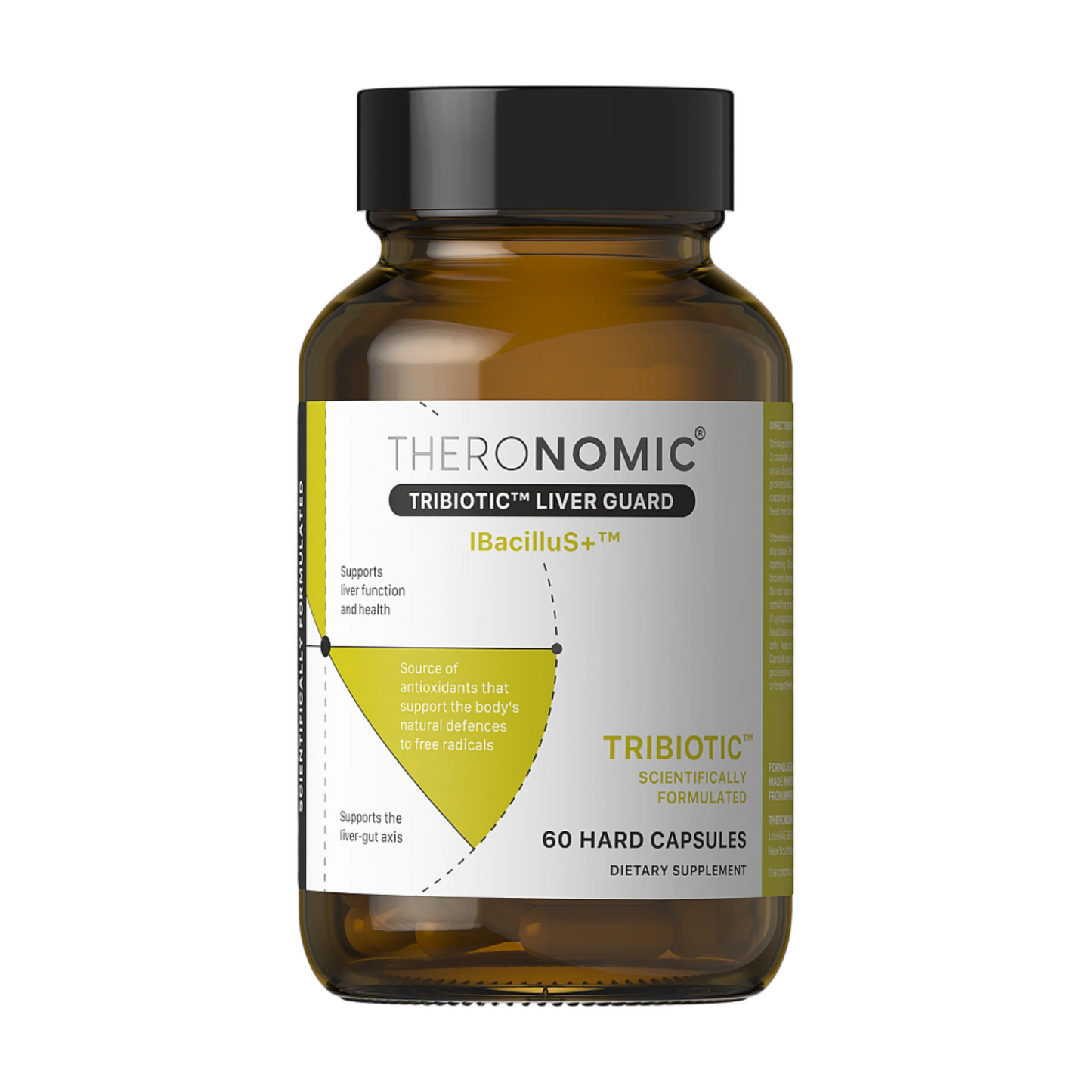
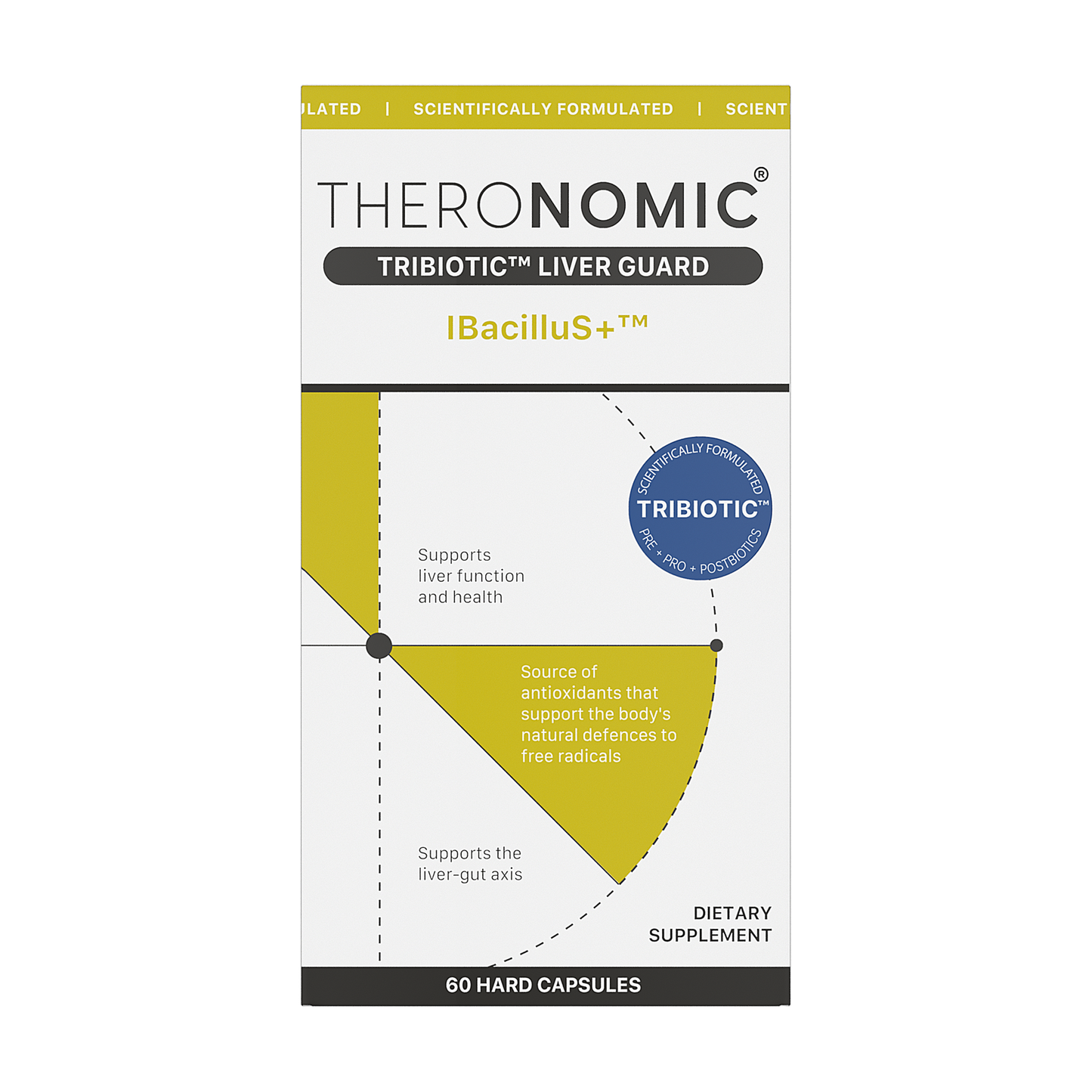
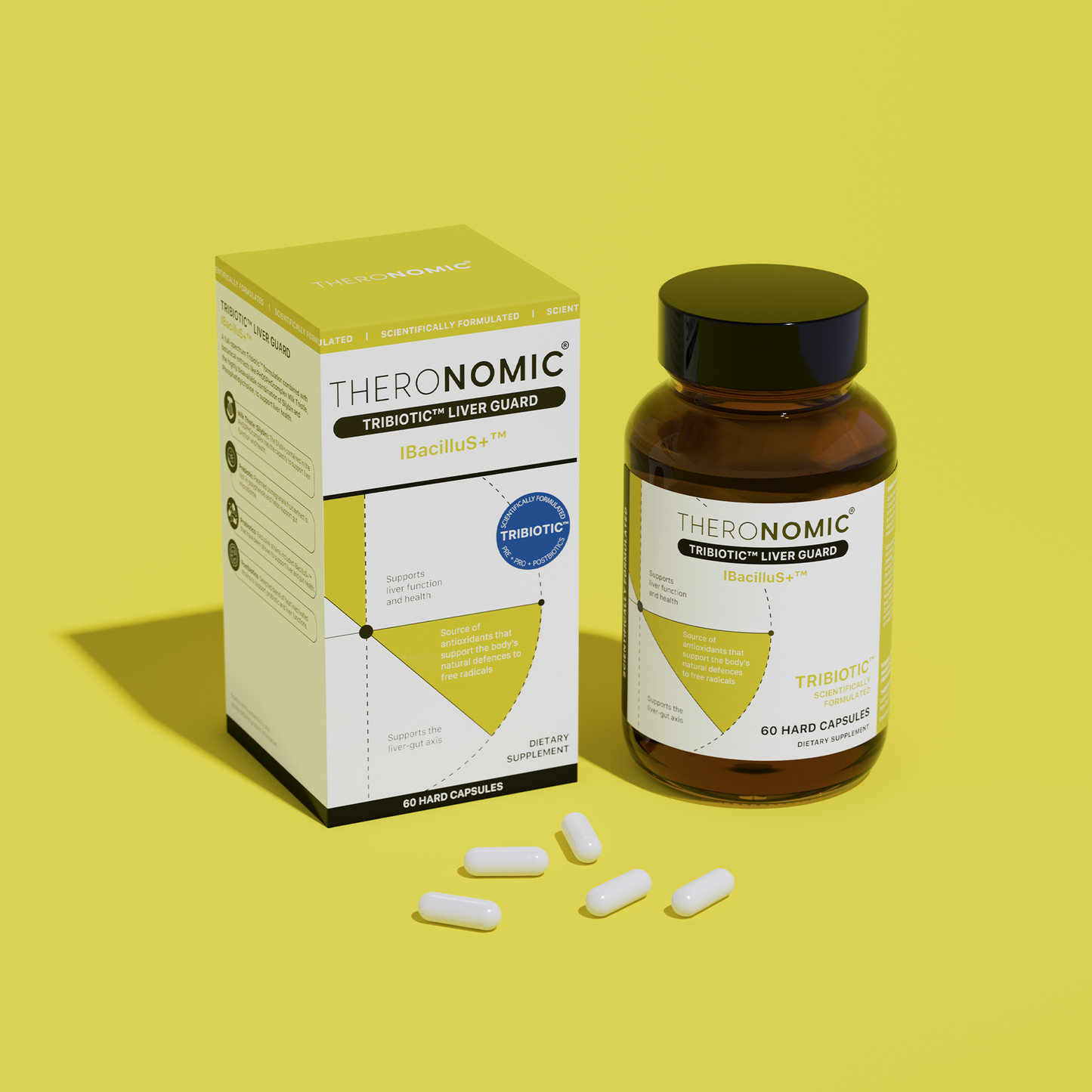
Theronomic Tribiotic iBacillus - Liver Guard
Theronomic Tribiotic iBacillus - Liver Guard
Couldn't load pickup availability
Product Overview
Theronomic Tribiotic iBacillus Liver Guard employs a tri-modal hepatoprotective strategy that simultaneously addresses gut barrier integrity, hepatic oxidative stress, and liver-targeted inflammation — the three converging pathways underlying most forms of chronic liver injury. Unlike single-ingredient liver supplements (e.g., silymarin-only or NAC-only products), Liver Guard integrates spore-forming probiotics that survive gastric acid transit, postbiotic metabolites that directly modulate hepatic immune signalling, and phytoactives that activate the cell's own antioxidant and detoxification programmes.
The probiotic strains selected — Bacillus subtilis and Enterococcus faecium — are naturally spore-forming organisms that remain viable through gastric acid exposure without requiring enteric coating or refrigeration. This is particularly relevant in Singapore's tropical climate (ambient temperature 28 to 32 degrees C, humidity 70 to 90% RH), where mesophilic probiotic strains in conventional Lactobacillus-based products are at higher risk of viability loss during transit and storage. The postbiotic fraction (heat-activated bioactive compounds) provides immediate immunomodulatory effects independent of live bacterial colonisation.
Ingredient Specifications
| Brand / Manufacturer | Theronomic, Singapore (GMP-compliant manufacturing) |
| Probiotic Strains | Bacillus subtilis and Enterococcus faecium — spore-forming, acid-stable strains; no refrigeration required |
| Postbiotics | Heat-activated bioactive compounds from beneficial bacteria; modulates TNF-alpha and IL-6 inflammatory cytokines via immune signalling pathways |
| Broccoli Sprout Extract | Standardised for glucoraphanin — the precursor to sulforaphane; activates Nrf2 transcription factor to upregulate phase-II detoxification enzymes (NQO1, GST, HO-1) |
| Milk Thistle Extract | Phospholipid-complexed silymarin (Silybin-Phosphatidylcholine complex) — 10-fold superior bioavailability versus standard silymarin; hepatocyte membrane stabilisation and antifibrotic properties |
| Key Mechanisms | Nrf2 activation, gut-liver axis modulation, TNF-alpha / IL-6 cytokine reduction, phase-II detoxification enzyme upregulation, hepatocyte membrane protection |
| Dosage | Start 1 capsule per day for 7 days, then increase as directed; take with meals; separate from hot beverages by 30 minutes to preserve probiotic viability |
| Storage | Shelf-stable; no refrigeration required (spore-forming strains); store away from direct heat and moisture |
| Regulatory Status (Singapore) | General health supplement; compliant with Singapore HSA Health Products (Supplements) notification requirements and ASEAN Traditional Medicines and Health Supplements guidelines |
| Target Users | Adults with NAFLD, MASLD, elevated liver enzymes (ALT/AST), regular alcohol consumers, patients on hepatically-metabolised polypharmacy, metabolic syndrome |
Key Clinical Applications
- NAFLD and MASLD management: Non-alcoholic fatty liver disease affects an estimated 40% of Singaporean adults with metabolic risk factors. The gut-liver axis modulatory effect of Bacillus subtilis and the Nrf2-activating sulforaphane (from broccoli sprout extract) address both hepatic steatosis and inflammation — the two primary pathological drivers of NAFLD progression to NASH.
- Hepatic detoxification support during polypharmacy: Patients on multiple cytochrome P450-metabolised medications experience hepatic oxidative load. The phase-II enzyme upregulation via Nrf2 activation (sulforaphane) and glutathione precursor support assist hepatocyte detoxification capacity under medication burden.
- Post-alcohol hepatic recovery: Alcohol-induced hepatic inflammation is mediated in part by gut dysbiosis and elevated LPS translocation via the gut-liver axis. Bacillus subtilis restores gut barrier integrity while postbiotics directly reduce hepatic inflammatory cytokines, supporting hepatocyte recovery.
- Metabolic syndrome with elevated liver enzymes: Patients with elevated ALT/AST alongside dyslipidaemia or insulin resistance may benefit from this tri-modal approach as a supplement to lifestyle modification, under hepatologist or general practitioner supervision.
- Preventive hepatic support for high-risk individuals: Regular consumers of processed foods, alcohol, or individuals with family history of liver disease may use this for preventive hepatic maintenance, consistent with Singapore MOH guidelines promoting primary prevention of chronic liver disease.
Frequently Asked Questions
Q: What distinguishes Bacillus subtilis and Enterococcus faecium from standard Lactobacillus-based liver probiotics?
A: Bacillus subtilis and Enterococcus faecium are spore-forming probiotic strains that form resistant endospores allowing survival through gastric acid (pH 1.5 to 3.5) without enteric coating. Standard Lactobacillus species are non-spore-forming and sensitive to gastric acid, heat, and humidity. In Singapore's tropical climate, spore-forming strains offer superior viability during storage and transit. Additionally, Bacillus subtilis has demonstrated specific hepatoprotective properties through gut barrier tightening junction protein (claudin, occludin) upregulation, reducing hepatotoxic LPS translocation.
Q: How does the phospholipid-complexed milk thistle extract differ from standard silymarin supplements?
A: Standard silymarin (flavonolignan mixture from Silybum marianum) is poorly absorbed due to low aqueous solubility. The phospholipid complex (silybin-phosphatidylcholine) forms a lipid-compatible molecular complex that is absorbed via intestinal lymphatic pathways rather than passive aqueous diffusion, achieving up to 10 times higher plasma silymarin levels than equivalent doses of standard silymarin, as demonstrated in comparative bioavailability studies published in European Journal of Drug Metabolism and Pharmacokinetics.
Q: Is this supplement safe to use alongside hepatically-metabolised medications such as statins or metformin?
A: The Nrf2-activating sulforaphane may modestly induce some cytochrome P450 enzymes, which could theoretically alter the metabolism of co-administered drugs. Patients on statins, metformin, or other medications should consult their prescribing physician or clinical pharmacist before initiating use. Singapore's Health Sciences Authority (HSA) recommends disclosure of all supplement use to treating clinicians, particularly for medications with narrow therapeutic windows.
Q: When should patients expect to see changes in liver enzyme levels?
A: Clinical studies on silymarin and sulforaphane in liver disease typically show measurable ALT/AST improvement within 8 to 12 weeks of consistent use. The probiotic and postbiotic gut-liver axis effects may be observed earlier in terms of gastrointestinal symptoms. Liver enzyme monitoring should be conducted under clinician supervision, and this supplement does not replace medical treatment for clinically significant liver disease.
Q: Where can Singapore clinics, gastroenterology practices, and hepatology units procure Theronomic Liver Guard?
A: EMIS Asia distributes Theronomic Tribiotic iBacillus Liver Guard to Singapore healthcare facilities including gastroenterology clinics, hepatology units, family medicine practices, and corporate wellness programmes. B2B procurement with institutional invoicing, volume pricing, and direct clinic delivery is available through the EMIS Asia trade desk.
Why Buy From EMIS+
- Nurse-led expertise — guidance from healthcare professionals who understand clinical needs.
- Genuine, authorised products sourced through legitimate Singapore supply channels.
- Fast local delivery across Singapore.
- Responsive support for product selection and after-sales questions.
Frequently Asked Questions
Where can I buy Theronomic Tribiotic iBacillus - Liver Guard in Singapore?
Theronomic Tribiotic iBacillus - Liver Guard is available from EMIS+ (emis.asia), a Singapore nurse-led medical supply store offering fast, reliable local delivery and genuine, authorised products.
How quickly will my order be delivered?
EMIS+ ships across Singapore with prompt local delivery. Most in-stock orders are dispatched quickly so you receive your medical supplies without delay. Contact our team via emis.asia for current delivery timelines.
Is Theronomic Tribiotic iBacillus - Liver Guard suitable for me?
Individual needs vary. Always read the product label and consult your doctor or pharmacist before starting any new supplement, especially if you are pregnant, breastfeeding, taking medication, or managing a health condition.
Are EMIS+ products genuine and locally supported?
Yes. EMIS+ is a Singapore-based, nurse-led supplier. All products are sourced from authorised channels and backed by knowledgeable local support.
Order today from EMIS+ (emis.asia) — Singapore's trusted nurse-led medical supply store.
Share