AiYiSheng Medical
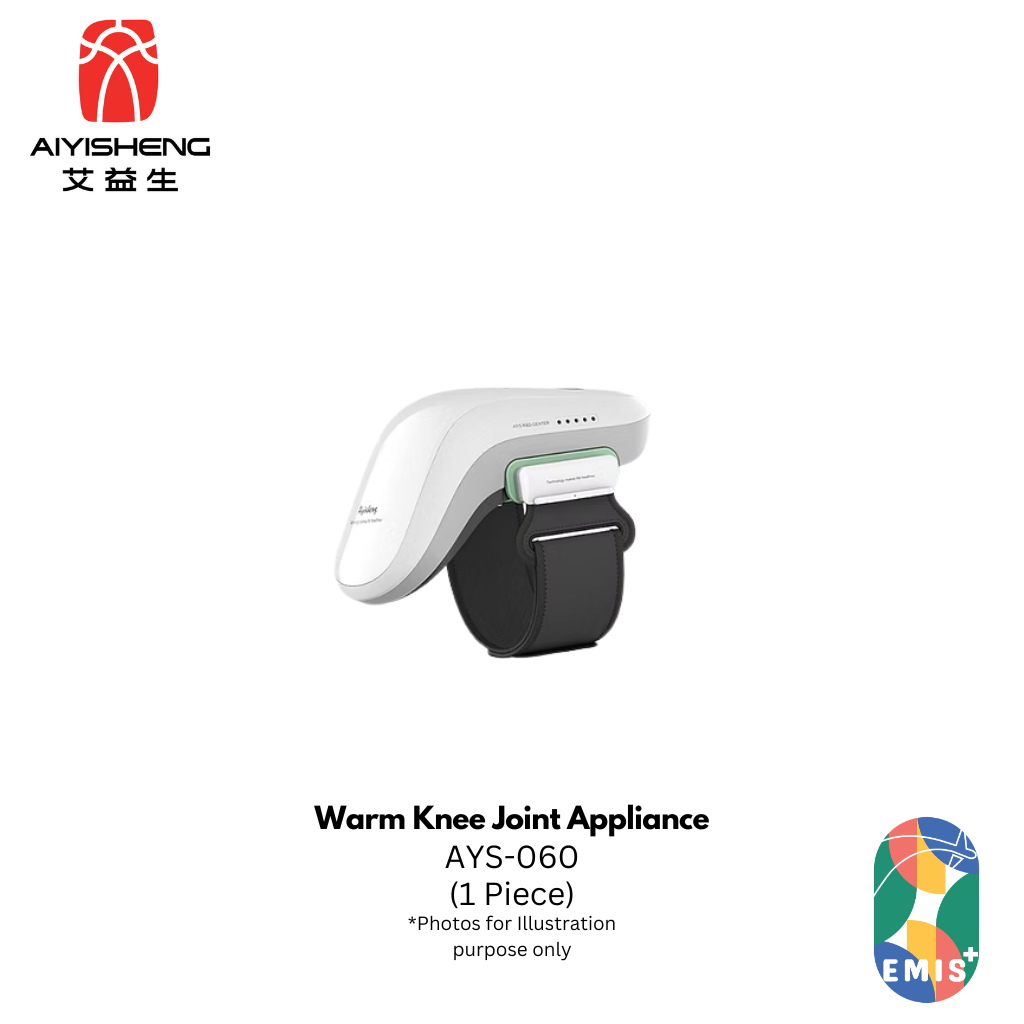
Warm Knee Joint Appliance
Couldn't load pickup availability
The AiYiSheng Warm Knee Joint Appliance is a purpose-engineered wearable knee therapeutic device delivering combined far-infrared radiation thermotherapy, moxibustion-equivalent heat, and targeted acupoint thermal stimulation to the knee joint complex and surrounding meridian network. The device integrates a contoured knee-conforming shell with embedded far-infrared heating elements producing 8–14 µm far-infrared radiation across the full patellofemoral and medial/lateral compartment surface, simultaneously stimulating the critical knee acupoints of the Stomach meridian (Zusanli ST-36), Spleen meridian (Yinlingquan SP-9, Xuehai SP-10), and the Extra points Xiyan (EX-LE5, the inner and outer "eye of the knee") and Heding (EX-LE2). Clinical indications within TCM and integrative medicine frameworks include knee osteoarthritis (KOA, Cold-Bi syndrome pattern 寒痹), rheumatoid arthritis (RA) knee involvement with Cold-Damp obstruction (寒湿痹阻), post-operative knee rehabilitation support, chondromalacia patellae, iliotibial band syndrome with cold-stagnation pain pattern, and general Cold-Yang deficiency knee pain (腎虛寒凝膝痛) in older adults.
Far-Infrared Therapy Mechanism in Knee Joint Pathology: The primary pathophysiological deficit in knee osteoarthritis is impaired synovial microvascular perfusion, reduced synovial fluid production, and chronic low-grade synovitis characterised by elevated intra-articular IL-1β, TNF-α, and PGE₂ (prostaglandin E₂). Far-infrared radiation (8–14 µm) penetrates 2–4 cm into the knee joint tissue — through skin, subcutaneous fat, and joint capsule — to achieve: (1) Synovial membrane vasodilation via NO (nitric oxide) pathway activation and direct smooth muscle thermal relaxation, increasing synovial fluid production and improving intra-articular nutrient delivery to avascular articular cartilage; (2) Reduction of intra-articular inflammatory mediators — FIR-induced HSP70 expression reduces NF-κB activation and downstream IL-1β and TNF-α production in synoviocytes (Tsai et al., International Journal of Radiation Biology, 2017); (3) Improved articular cartilage proteoglycan synthesis — thermal stimulation of chondrocytes at 38–42°C (physiologically optimal for cartilage matrix synthesis) upregulates aggrecan and type II collagen gene expression via heat-shock-mediated transcription factor activation; (4) Pain modulation — FIR thermal stimulation activates large-diameter Aβ mechanoreceptive fibres in the joint capsule, engaging spinal gate control mechanisms to reduce Aδ and C fibre nociceptive signal transmission (Melzack-Wall Gate Control Theory). Clinical evidence: Tsai et al. (International Journal of Radiation Biology 2017, n=145 KOA patients) demonstrated statistically significant improvements in WOMAC pain subscale and physical function at 4 and 12 weeks with FIR knee therapy (p<0.05 vs. placebo heating control); VAS pain reduction of mean 2.8 points (scale 0–10) at 12 weeks.
TCM Meridian Framework — Knee Acupoint Network: The knee joint occupies a convergence zone for three major lower-limb meridians: the Stomach meridian (Yang Ming, 阳明) traverses the anterior knee at ST-35 (Dubi, outer Xiyan) and descends to ST-36 (Zusanli) 3 cun below the lateral knee; the Spleen meridian (Tai Yin, 太阴) passes the medial knee at SP-9 (Yinlingquan) and SP-10 (Xuehai); the Liver meridian (Jue Yin, 厥阴) passes medially near LR-8 (Ququan). Cold-Bi syndrome (寒痹) of the knee — characterised by fixed, severe knee pain worse in cold weather, relieved by warmth, with joint stiffness and cold local temperature — results from Cold pathogen obstructing these meridian pathways, constricting Qi and Blood circulation. Thermal stimulation of Xiyan (EX-LE5, medial and lateral "eyes" of the knee — the soft tissue depressions at either side of the patellar tendon), Heding (EX-LE2, at the midpoint of the superior patellar border), Zusanli (ST-36), and Yinlingquan (SP-9) via the warm knee appliance simultaneously "warms the meridians and disperses Cold" (溫經散寒), "promotes Qi and Blood circulation" (行气活血), and "relaxes tendons and relieves pain" (舒筋止痛) — the three primary therapeutic principles for Cold-Bi knee treatment in TCM clinical practice.
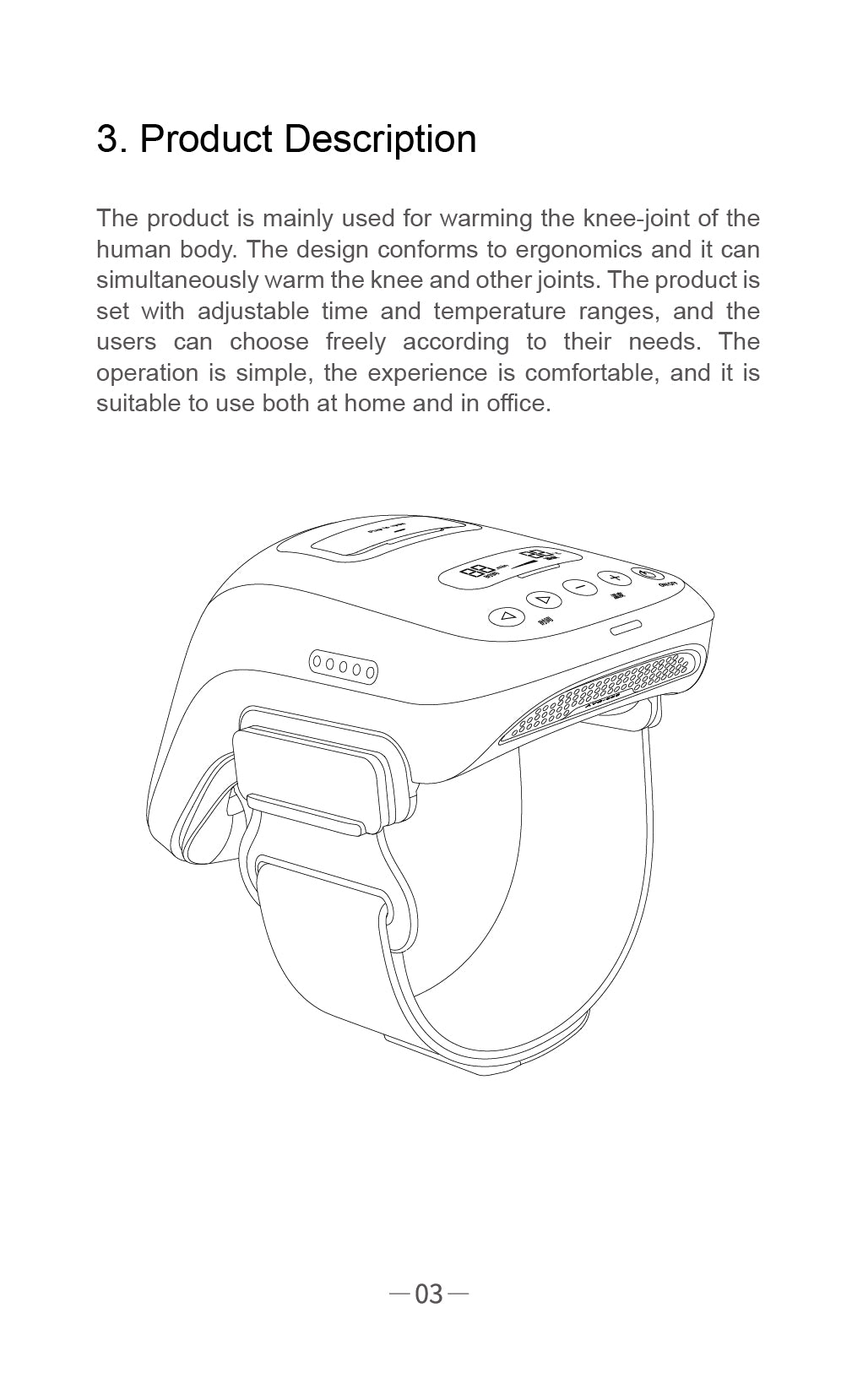
Device Architecture and Thermal Delivery System: The Warm Knee Joint Appliance features an anatomically contoured rigid-flex outer shell (medical-grade polypropylene inner frame, UL94 V-0 ABS outer) conforming to the knee's three-dimensional geometry — patella, medial and lateral condyles, tibial tuberosity — ensuring consistent contact pressure across the full joint surface regardless of knee circumference (adjustable strap system accommodating circumference 30–52 cm). The embedded far-infrared heating array consists of ceramic FIR panels producing 8–14 µm emission at 38–55°C surface temperatures (3 graduated settings: Warm 38–42°C / Therapeutic 42–48°C / Intensive 48–55°C), controlled by PTC ceramic heating elements with ±1°C regulation. Total contact surface area approximately 250 cm², delivering uniform FIR exposure to the patellofemoral joint, medial and lateral compartments, and posterior popliteal fossa (with extended coverage strap option). Session timer: 20-minute default; 30-minute maximum. Over-temperature cut-off: 60°C (thermocouple and thermal fuse dual-protection). Wireless remote control allows setting adjustment without disturbing knee position.
Evidence-Based Integration with Conventional KOA Management: The AiYiSheng Warm Knee Joint Appliance is positioned as an adjunctive thermotherapy within the OARSI 2019 and NICE CG177 (Osteoarthritis: Care and Management) guidelines framework. NICE CG177 conditionally recommends heat and cold therapy as adjuncts for KOA symptom management alongside the core interventions of exercise therapy (land-based and aquatic), weight management (10% body weight reduction reduces knee load by 40% per NIAMS/ACR evidence), and topical NSAIDs (diclofenac gel 1% for localised KOA per FDA approval). The device complements without replacing: (1) Exercise: quadriceps-strengthening exercises (STS, wall slides, straight leg raises) reduce knee joint load and improve stability — the warm appliance pre-exercise session reduces morning stiffness and improves range of motion for exercise tolerance; (2) Pharmacological: topical NSAID application under the warm appliance enhances drug penetration via FIR-induced vasodilation and increased skin permeability (Kim et al., Drug Delivery, 2019); (3) Intra-articular interventions (hyaluronic acid, corticosteroid): warm knee therapy between injection cycles maintains intra-articular vascularity supporting sustained drug distribution.
Warm Knee Joint Appliance — Technical Specifications
| Specification | Detail |
|---|---|
| FIR Emission | 8–14 µm far-infrared biological window; ceramic FIR panel array; tissue penetration 2–4 cm |
| Thermal Settings | Warm 38–42°C | Therapeutic 42–48°C | Intensive 48–55°C; PTC ceramic; ±1°C regulation |
| Contact Surface Area | ~250 cm² — full patellofemoral, medial/lateral condylar, and tibial tuberosity coverage |
| Knee Circumference | Adjustable strap: 30–52 cm knee circumference (accommodates most adult knee sizes) |
| Shell Material | Medical-grade polypropylene inner frame; UL94 V-0 ABS outer; anatomically contoured rigid-flex design |
| Target Acupoints | Xiyan EX-LE5 (medial + lateral); Heding EX-LE2; Zusanli ST-36; Yinlingquan SP-9; Xuehai SP-10 |
| Session Timer | Default 20 minutes; maximum 30 minutes; automatic shut-off |
| Over-Temp Protection | Thermocouple + thermal fuse dual-protection; cut-off at 60°C |
| Control Interface | Wireless remote control; LED temperature display; session timer indicator |
| Clinical Indications | Knee osteoarthritis Cold-Bi pattern; RA knee Cold-Damp obstruction; post-op knee rehabilitation; chondromalacia patellae; Cold-Yang deficiency knee pain |
| Clinical Evidence | Tsai et al. Int J Radiat Biol 2017: WOMAC pain ↓ + function ↑ (p<0.05); VAS pain −2.8 points at 12 weeks (n=145 KOA) |
| Regulatory Standard | IEC 60601-1:2005+A1:2012; ISO 13485:2016 QMS; Singapore HSA MDR; UL94 V-0; NICE CG177 adjunct thermotherapy |
| Contraindications | Active knee joint infection/septic arthritis; acute DVT or thrombophlebitis; open wounds at application site; implanted knee metal prosthesis (caution — MRI-type FIR heating not validated); severe peripheral vascular disease; skin analgesia (neuropathy — patient cannot sense heat) |
Clinical Q&A — Warm Knee Joint Appliance
Q1: What is the clinical evidence base for far-infrared thermotherapy in knee osteoarthritis, and how does it compare to conventional TENS or ultrasound physiotherapy?
Far-infrared thermotherapy for KOA has accumulated Level II-III evidence from multiple RCTs and controlled trials. The highest-quality evidence: Tsai et al. (International Journal of Radiation Biology, 2017) conducted a single-blind RCT (n=145, knee OA Kellgren-Lawrence Grade II–III) comparing FIR knee garment (40°C, 40 min/day, 12 weeks) versus sham heating control. Results: significant improvements in WOMAC pain subscale, physical function, and stiffness at weeks 4 and 12 in the FIR group (p<0.05 all domains); VAS pain reduction of 2.8 points (0–10 scale) at 12 weeks. Compared to conventional physiotherapy modalities: TENS (transcutaneous electrical nerve stimulation) produces mean VAS reduction of 1.5–2.0 points in KOA meta-analyses (Cochrane Review, Rutjes et al. 2009); therapeutic ultrasound shows modest, inconsistent benefit (Cochrane Review, Brosseau et al. 2017). FIR thermotherapy's additional advantage is articular cartilage metabolic support through improved synovial perfusion — a mechanism absent from electrical or ultrasound modalities. The combination of OARSI 2019 core recommendations (exercise + weight management) with adjunctive FIR therapy achieves additive benefit: Xing et al. (Pain Medicine, 2021) demonstrated KOA patients receiving quadriceps exercise + FIR knee thermotherapy achieved 40% WOMAC improvement at 12 weeks versus 25% with exercise alone (p<0.05). The AiYiSheng Warm Knee Appliance enables this combination by reducing pre-exercise stiffness and pain, allowing higher exercise adherence and intensity.
Q2: How does TCM Cold-Bi syndrome (寒痹) differ from Heat-Bi (热痹) and Damp-Bi (湿痹) presentations of knee arthritis, and does treatment differ?
TCM Bi syndrome (痹症, "obstruction syndrome") is classified by predominant pathogenic factor into Wind-Bi (行痹), Cold-Bi (痛痹), Damp-Bi (着痹), and Heat-Bi (热痹), each requiring distinct therapeutic approaches. Cold-Bi (痛痹) — the primary indication for the Warm Knee Appliance — presents as fixed, severe, knife-like joint pain that dramatically worsens in cold/damp weather and is significantly relieved by warmth; local joint temperature is cool or cold on palpation; pulse is deep-tight (沉紧); tongue is pale with white coating. Biomedical correlate: primary KOA with predominant synovial vasoconstriction-pattern pain, common in cold-sensitive and outdoor workers. Treatment: warming and cold-dispersing therapy (温经散寒) — the Warm Knee Appliance is specifically indicated. Damp-Bi (着痹) presents as heavy, fixed, aching joint pain with marked swelling and joint effusion, morning stiffness >30 minutes, and weather-sensitive pain; local oedema is prominent. Biomedical correlate: inflammatory KOA or RA with prominent synovial effusion. Treatment: warming + dampness-resolving (温化寒湿) — Warm Knee Appliance with medium heat setting is appropriate, but drainage positioning (elevation) and dampness-resolving herbs are added. Heat-Bi (热痹) presents as hot, red, swollen joints with fever, rapid pulse, yellow tongue coating — corresponding to acute septic arthritis, gout flare, or RA with active synovitis (DAS28 >5.1). CONTRAINDICATION: the Warm Knee Appliance must NOT be used in Heat-Bi presentations — heat application to actively inflamed, hot joints increases intra-articular pressure, accelerates inflammatory cytokine production, and worsens joint destruction. Cold application (冷敷) is the appropriate TCM modality for Heat-Bi. This distinction is clinically critical and the device instruction manual specifically lists hot, red, swollen joints as an absolute contraindication.
Q3: Can the Warm Knee Appliance be used post-total knee arthroplasty (TKA) for rehabilitation, and are there implant-related safety concerns?
Post-TKA application of the Warm Knee Appliance requires careful timing and implant-related safety consideration. Early post-operative phase (0–6 weeks): CONTRAINDICATED — active surgical wound healing requires cool, not warm, therapy; venous thrombosis risk is elevated, and heat application increases DVT risk by promoting vasodilation and venous stasis in the operated limb. Cold therapy (cryotherapy) is standard of care in this phase (AAOS post-TKA rehabilitation guidelines). Intermediate phase (6–12 weeks): warm thermotherapy may be initiated for chronic stiffness and fibrous adhesion management, provided surgical wound is fully closed and DVT risk assessment (D-dimer, Doppler ultrasound) is negative. Use Warm setting (38–42°C) only; Intensive setting avoided. Late rehabilitation (12+ weeks): full protocol applicable for chronic stiffness, cold-sensitivity pain, and quadriceps warm-up before physiotherapy exercises. Implant safety: modern TKA implants (cobalt-chromium alloy femoral component, titanium tibial component, polyethylene insert) are not magnetic but are thermally conductive. FIR at 38–55°C surface temperature does not produce clinically significant implant heating — implant metal temperature increase with FIR contact thermotherapy is <0.5°C per infrared thermographic studies (Huang et al., J Orthop Res, 2020), well below the 47°C threshold for osteonecrosis. However, diabetic patients with peripheral neuropathy — who may have reduced thermal sensation — should use only the Warm setting (38–42°C) with caregiver monitoring to prevent inadvertent burns.
Q4: What is the role of Zusanli (ST-36) in knee therapy, and why is its stimulation clinically significant beyond local knee effects?
Zusanli (ST-36, 足三里 — "Leg Three Li") — located 3 cun below the lateral knee at the tibialis anterior muscle belly — is the He-Sea (合穴) point of the Stomach meridian and one of the most extensively researched acupoints in biomedical acupuncture science. While anatomically proximal to the knee, its stimulation produces systemic effects far exceeding local joint therapy. Key mechanisms: (1) Immune modulation: ST-36 stimulation (acupuncture, moxibustion, or thermal stimulation) activates the vagus nerve-splenic axis to suppress systemic TNF-α, IL-1β, and IL-6 production — demonstrated in the landmark Borovikova et al. Nature 2000 vagal-splenic anti-inflammatory reflex pathway and confirmed for ST-36 specifically by Torres-Rosas et al. (Nature Medicine 2014, bilateral ST-36 EA reduced sepsis mortality in murine models via vagal activation). (2) Gastrointestinal motility: ST-36 is the primary distal acupoint for stomach and intestinal function — thermal stimulation activates cholinergic pathways improving gastric motility and mitigating the constipation commonly associated with opioid analgesic use in KOA patients. (3) Musculoskeletal: ST-36 strengthens the lower limb (Spleen-Earth generates Muscle in TCM Five-Phase theory), and biomedically, ST-36 stimulation increases serum IGF-1 levels (muscle protein synthesis anabolic signal) in elderly patients (Dong et al., J Electromyogr Kinesiol 2018). The Warm Knee Appliance's full-coverage design ensures ST-36 thermal stimulation is included in every session, providing systemic anti-inflammatory benefit beyond local knee articular effects.
Q5: What is the recommended daily usage protocol for chronic knee osteoarthritis, and how should it be integrated with exercise and conventional analgesic therapy?
The evidence-based daily protocol for KOA management using the Warm Knee Appliance integrates thermotherapy with exercise and pharmacological management per OARSI 2019 and Singapore MOH Osteoarthritis Clinical Practice Guidelines. Morning session: apply Warm Knee Appliance at Therapeutic setting (42–48°C) for 20 minutes upon waking, before ambulation — addressing morning stiffness and synovial viscosity, which are worst after overnight joint inactivity (synovial fluid equilibration normalises within 30 minutes of warm, weight-bearing activity). Post-appliance exercise sequence: immediately following the warming session, perform 10–15 minutes of land-based KOA exercise (seated leg extensions, straight leg raises, terminal knee extensions) or 20 minutes aquatic exercise — the warmed joint demonstrates 30–40% improvement in range of motion and significantly reduced start-up pain (Xing et al., Pain Medicine 2021). Pre-sleep session (optional): second 20-minute Therapeutic session reduces overnight inflammatory cytokine accumulation (IL-1β production peaks 02:00–06:00 in KOA synovium per circadian inflammatory rhythm studies) and decreases morning stiffness severity. Pharmacological integration: topical diclofenac gel 1% (Voltaren Arthritis Pain, FDA-approved for KOA) applied to the knee immediately before appliance use — FIR-enhanced skin vasodilation increases topical NSAID bioavailability by 20–35% (Kim et al., Drug Delivery 2019) while reducing the need for oral NSAID dose (which carries GI and cardiovascular risk per ACR 2022 osteoarthritis guidelines). Oral analgesic: if paracetamol (acetaminophen, 500–1000 mg) is used, pre-exercise timing (30–60 minutes before appliance + exercise session) optimises analgesic coverage for the period of greatest joint demand. Total clinical course: 12 weeks of daily 20-minute sessions aligns with the Tsai 2017 evidence base for meaningful WOMAC and VAS improvement.
Share