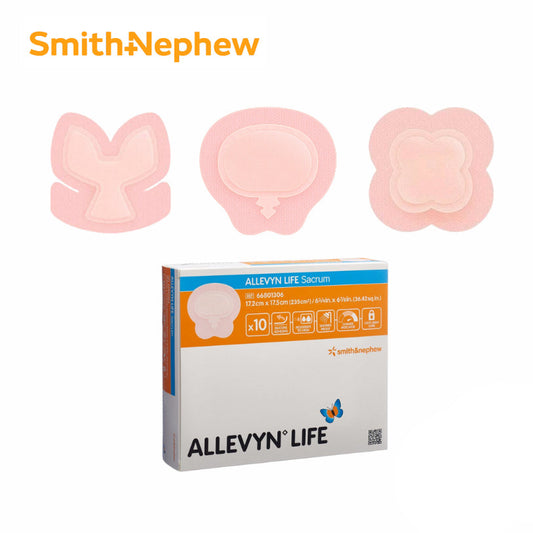
Foam dressings in Singapore absorb moderate-to-heavy wound exudate while cushioning the wound bed. EMIS+ stocks silicone-bordered and non-bordered foam dressings from B.Braun (Askina DresSil), Convatec (Aquacel Foam), Smith & Nephew (Allevyn) and Coloplast (Biatain) for pressure injuries, leg ulcers, heel and sacral wounds.
Foam dressings are a mainstay of moist wound healing. The absorbent polyurethane foam pad draws up exudate to keep the wound bed moist but not macerated, while a waterproof backing film acts as a barrier to water and bacteria. Silicone (soft-adhesive) contact layers allow atraumatic, low-pain removal — useful for fragile, elderly or steroid-treated skin.
Compare the Range
| Type |
Key feature |
Best for |
| Bordered silicone foam |
Self-adhesive silicone border, no extra fixation |
Pressure injuries, ambulatory wounds |
| Non-bordered foam |
Needs secondary retention (tape/tubular bandage) |
Wounds under compression or with fragile peri-wound skin |
| Shaped (heel / sacrum) |
Anatomically contoured |
Heel and sacral pressure areas |
| Hydrofiber + foam (Aquacel) |
Gelling fibre core for heavier exudate |
Moderate-to-high exudate wounds |
How to Choose
Match the dressing to wound exudate and location. Choose a bordered dressing when you want all-in-one fixation; choose non-bordered under compression bandaging or where an adhesive frame would irritate the skin. Use shaped heel or sacral dressings for those high-risk pressure areas. For heavier exudate, a hydrofiber-foam combination manages fluid for longer between changes. Always follow your clinician's wound-management plan.
Frequently Asked Questions
Where can I buy foam wound dressings in Singapore?
You can buy foam dressings online in Singapore from EMIS+ (emis.asia), a nurse-led medical supply store. We stock silicone and adhesive foam dressings from Askina DresSil, Aquacel Foam, Allevyn and Biatain, with fast local delivery.
How often should a foam dressing be changed?
Wear time depends on exudate level and the manufacturer's instructions — many foam dressings can stay in place for several days. Change sooner if the dressing is saturated, leaking, or lifting. Follow the wear-time guidance for the specific product and your clinician's advice.
What is the difference between bordered and non-bordered foam dressings?
A bordered foam dressing has a self-adhesive silicone or film frame so it stays in place without extra tape. A non-bordered dressing has no adhesive border and needs secondary fixation such as tape or a tubular bandage, which is useful under compression or on fragile skin.
Are silicone foam dressings suitable for fragile skin?
Yes. Soft silicone adhesives have low peel forces, which reduces the risk of medical adhesive-related skin injury (MARSI) on elderly, paediatric or steroid-thinned skin, and allows atraumatic removal.
Shop this range at EMIS+ — Singapore's nurse-led medical supply store.Genuine stock, fast local delivery, and clinical guidance from registered nurses. Browse the full catalogue at
emis.asia.