Fortune Medical
Silicone Nasogastric Tube Detachable Type for Long Term Enteral Feeding
Silicone Nasogastric Tube Detachable Type for Long Term Enteral Feeding
无法加载取货服务可用情况
Product Overview
The Fortune Medical Silicone Nasogastric Tube Detachable Type represents an advancement in long-term enteral feeding access. Unlike conventional single-piece PVC nasogastric tubes that must remain fully assembled during and between feedings, this device features a proprietary two-section design comprising an internal nasal-gastric segment and a detachable external extension tube. The internal tube is secured by a T-shaped retention structure at the nasal bridge, preventing migration within the nasal cavity while maintaining a low-profile appearance when the extension is disconnected.
Constructed from 100% medical-grade silicone, the tube offers biocompatibility advantages over PVC alternatives, including resistance to gastric acid degradation, absence of phthalate plasticisers, and reduced mucosal irritation during extended placement periods. The silicone construction permits an indwelling duration of up to 90 days, compared to the 7-14 day replacement cycle typical of PVC nasogastric tubes. This product received the 11th Taiwan National Innovation Award for its contribution to patient comfort and clinical safety in long-term enteral feeding management.
Specifications
| Manufacturer | Fortune Medical Instrument Corp., Taiwan |
| Product Type | Two-Piece Detachable Nasogastric Feeding Tube |
| Material | 100% Medical-Grade Silicone (Platinum-Cured) |
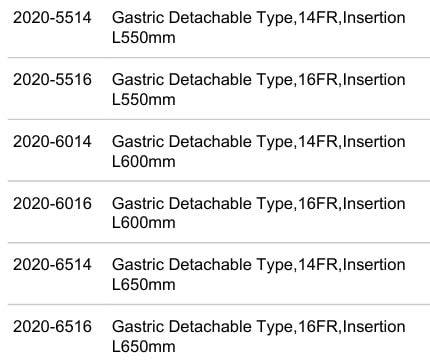
| Available Sizes | 14 Fr, 16 Fr, 18 Fr, 20 Fr |
| Internal Tube Length | 550 mm, 600 mm, 650 mm (selectable by patient height) |
| External Extension Length | 600 mm (detachable) |
| Connector Type | Luer Lock Connector |
| Radiopacity | Integrated X-ray opaque line for fluoroscopic confirmation |
| Depth Markings | Graduated centimetre markings along tube length |
| Sterility | Sterile, Single-Use, EO Sterilised |
| Latex Content | Latex-Free |
| Phthalate Content | DEHP-Free / Phthalate-Free |
| Indwelling Duration | Up to 90 days (per institutional protocol) |
| Regulatory Compliance | CE Marked (EU MDR 2017/745 Class IIa), ISO 13485:2016 certified manufacturing, ISO 10993 biocompatibility tested, HSA Singapore Class B Medical Device |
| Awards | 11th Taiwan National Innovation Award |
| Packaging | Individually packaged in sterile peel-open pouch with attached plug |
Clinical Indications
- Long-term enteral nutrition delivery in patients with neurogenic dysphagia secondary to cerebrovascular accident (stroke), traumatic brain injury, or neurodegenerative disease
- Post-operative nutritional support following head and neck surgery, oesophageal procedures, or maxillofacial reconstruction where oral intake is contraindicated
- Gastric decompression and drainage in patients with gastroparesis or small bowel obstruction requiring prolonged nasogastric access
- Palliative nutritional support in oncology patients with oropharyngeal or oesophageal malignancies compromising oral feeding
- Supplemental enteral feeding in geriatric patients in long-term care facilities where repeated tube reinsertion poses aspiration and mucosal trauma risks
- Compatible with concurrent oxygen therapy (nasal cannula or mask), tracheal intubation, and central venous catheterisation without interference
Frequently Asked Questions
What is the clinical advantage of a detachable nasogastric tube over a conventional single-piece design?
The detachable two-piece design allows patients to disconnect the external extension tube between feeding sessions, leaving only a low-profile internal segment secured at the nasal bridge. This reduces visible tubing, lowers the incidence of accidental tube removal (particularly in confused or agitated patients), and permits concurrent therapies including oxygen delivery and rehabilitation exercises. The T-shaped retention mechanism at the nasal junction prevents inward migration, a common complication with conventional tubes secured only by adhesive tape. Published clinical data on detachable NG systems demonstrates reduced reintubation rates compared with standard single-piece tubes.
How long can the silicone nasogastric tube remain in situ before replacement?
Medical-grade silicone construction permits an indwelling duration of up to 90 days, subject to institutional clinical protocols and regular assessment of tube patency and positioning. This represents a significant reduction in tube changes compared to PVC nasogastric tubes, which typically require replacement every 7-14 days due to material degradation from gastric acid exposure. Fewer tube changes translate to reduced patient discomfort, lower aspiration risk during reinsertion, and decreased nursing workload. Per ESPEN (European Society for Clinical Nutrition and Metabolism) guidelines, tube position should be verified radiographically after initial placement and clinically before each feeding session.
Which tube size should be selected for adult patients?
Size selection follows standard nasogastric tube sizing protocols. For most adult patients, 14 Fr or 16 Fr tubes provide adequate flow rates for standard enteral formulas while minimising nasopharyngeal discomfort. Larger bore sizes (18 Fr, 20 Fr) may be indicated when viscous formulations or medication administration through the tube is required. Internal tube length (550 mm, 600 mm, or 650 mm) should be selected based on the NEX measurement (Nose-Ear-Xiphoid process) to ensure correct gastric positioning. Healthcare professionals in Singapore can consult with the EMIS clinical support team for sizing guidance specific to their patient population.
Is the Fortune Medical detachable NG tube available for institutional procurement in Singapore?
Yes. EMIS (Essential Medical International Supplies Pte Ltd) is an authorised distributor of Fortune Medical enteral feeding devices in Singapore. The product is classified as a Class B medical device under the Health Sciences Authority (HSA) Singapore regulatory framework. Institutional purchasers including hospitals, nursing homes, and home care agencies can arrange bulk procurement through EMIS with documentation including Certificates of Analysis and product registration details. GST-registered healthcare institutions may qualify for applicable medical device tax provisions.
Can this tube be used simultaneously with oxygen therapy or other respiratory equipment?
Yes. The low-profile detachable design was specifically engineered for compatibility with concurrent respiratory therapies. When the external extension is disconnected between feedings, the remaining internal tube segment does not interfere with nasal cannula placement, oxygen mask positioning, or non-invasive ventilation interfaces. This compatibility extends to concurrent tracheal intubation and central venous catheterisation, making it suitable for ICU patients and those undergoing complex rehabilitation programmes.
分享