SRW
SRW Cel123 Cellular Rejuvenation Series Complete Anti Aging and Vitality System
SRW Cel123 Cellular Rejuvenation Series Complete Anti Aging and Vitality System
无法加载取货服务可用情况
SRW Cel123 Cellular Rejuvenation Series — Product Overview
SRW Laboratories (Science Research Wellness) is a New Zealand-based nutraceutical company founded by longevity researchers with the stated mission of developing evidence-based supplements targeting the hallmarks of ageing as defined by López-Otín et al. (Cell, 2013). The Cel123 system is a three-product bundle designed to be taken concurrently, with each formulation addressing distinct yet interconnected biological processes that decline with age.
The clinical rationale for a multi-target approach rests on the interconnected nature of cellular ageing mechanisms — mitochondrial dysfunction accelerates genomic instability; telomere shortening activates cellular senescence; accumulation of senescent cells drives chronic inflammation (inflammaging); and impaired proteostasis compromises all downstream pathways. The Cel123 system's three formulations are designed to be deployed in parallel, with clinical outcomes assessed at 3, 6, and 12 months. Published evidence from a 12-month single-arm clinical trial (PMC11984428) conducted with SRW Laboratories' full Cel system showed statistically significant improvements in grip strength, gait speed, body composition, and epigenetic clock analysis indicating reduced biological age.
Product Specifications
| Component | Key Actives | Mechanism | Hallmarks Targeted |
|---|---|---|---|
| Cel1 (Repair) | Hobamine (2-HOBA) 100mg, Astragaloside IV 16mg, Rutin (Sophora japonica) 450mg, Vitamin C, Levomefolic acid, B12, Zinc, Selenium | DNA damage protection (2-HOBA scavenges isolevuglandins); telomere maintenance (astragaloside IV activates telomerase); epigenetic support (folate/B12 methylation cycle) | Genomic instability, Telomere attrition, Epigenetic alterations |
| Cel2 (Nourish) | NMN (β-Nicotinamide Mononucleotide) 300mg, Pterostilbene 50mg, Astaxanthin 12mg | NAD+ precursor supplementation (NMN via Slc12a8 transporter); sirtuin activation (pterostilbene); mitochondrial antioxidant protection (astaxanthin) | Mitochondrial dysfunction, Loss of proteostasis, Deregulated nutrient sensing |
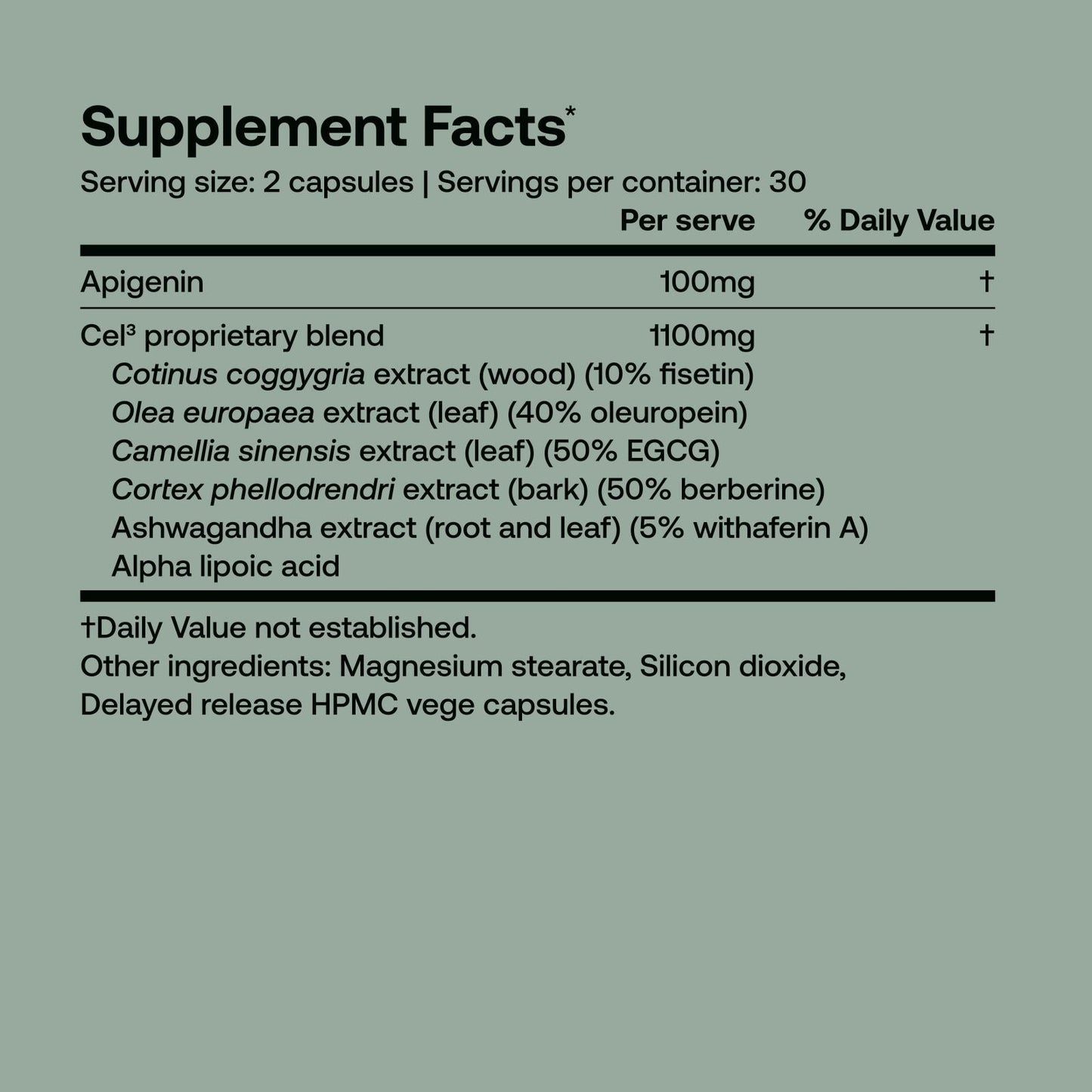
| Cel3 (Protect) | Fisetin 100mg, Quercetin 400mg, EGCG (green tea extract) 400mg, Spermidine 1mg, Resveratrol 100mg, Piperine 5mg | Senolytic activity (fisetin, quercetin selectively clear senescent cells); mTOR modulation (EGCG, resveratrol); autophagy induction (spermidine); bioavailability enhancement (piperine) | Cellular senescence, Disabled macroautophagy, Chronic inflammation |
| Manufacturer | SRW Laboratories Ltd, Auckland, New Zealand | ||
| Manufacturing Standard | GMP-certified facility; TGA-compliant ingredient grade | ||
| Singapore Regulatory | Classified as health supplement (not a drug); HSA Health Products Regulations Chapter 122D, Schedule 1 supplement provisions apply; individual ingredients are permitted under HSA Permitted List for health supplements | ||
| Dosage Form | Cel1: Capsules (taken once daily). Cel2: Capsules (taken once daily with meal). Cel3: Capsules (taken once daily or as senolytic pulse protocol) | ||
| Allergens | Free from gluten, dairy, soy, and artificial colours; vegetarian capsule shell | ||
| Retail Price (Singapore) | SGD 454 for the complete Cel123 bundle (Cel1 + Cel2 + Cel3, 30-day supply each) | ||
Key Applications
- Longevity and preventive health programmes: Integration into executive longevity protocols alongside epigenetic age testing (TrueAge, Horvath clock) and comprehensive metabolic panels to monitor biological ageing trajectory.
- Mitochondrial and energy optimisation: Addressing age-related NAD+ decline (estimated 50% decrease between ages 40–60) that drives mitochondrial dysfunction, fatigue, metabolic slowing, and impaired DNA repair capacity.
- Post-COVID and long-COVID recovery: Emerging evidence (ongoing trials) suggests NMN and mitochondrial-targeted supplements may support recovery from persistent fatigue and cognitive symptoms associated with long-COVID via NAD+ pathway restoration.
- Athletic performance and recovery in masters athletes: Support for muscle mitochondrial biogenesis, reduced oxidative stress, and improved recovery in athletes aged 40+ where age-related decline in NAD+ and mitochondrial function limits training adaptation.
- Cellular senescence reduction: Senolytic protocol with Cel3 (fisetin and quercetin) provides a scheduled approach to clearing senescent cells — a strategy validated in preclinical models and early human trials as a potential strategy for reducing age-related tissue inflammation and functional decline.
Frequently Asked Questions
Q: What is the clinical evidence base for the SRW Cel123 system?
A: A 12-month, single-arm, open-label clinical trial (PMC11984428, 2025) conducted on 51 participants using the full SRW Cel system demonstrated statistically significant improvements in grip strength, 30-second chair stand test performance, gait speed, and body composition (reduced fat mass, increased lean mass). Epigenetic clock analysis using the DunedinPACE biological age clock showed a measurable slowing of the pace of ageing over 12 months. The trial aligns with the TARGET (Targeting Aging with Resveratrol GEne expression and Telomere length) evidence framework for multi-target longevity interventions.
Q: How does NMN in Cel2 compare to nicotinamide riboside (NR) or direct NAD+ supplementation?
A: NMN (β-nicotinamide mononucleotide) enters cells via the dedicated Slc12a8 transporter and is converted to NAD+ in one enzymatic step. NR requires conversion to NMN first. Direct NAD+ has poor cellular membrane permeability. A 2023 published randomised controlled trial demonstrated that oral NMN supplementation at 300mg/day increased blood NAD+ levels in older adults over 60 days. Pterostilbene in Cel2 activates SIRT1 and SIRT3 sirtuins — NAD+-consuming enzymes that mediate longevity-associated gene expression changes when NAD+ levels are restored.
Q: Is SRW Cel123 safe to use concurrently with prescription medications in Singapore?
A: As a multi-component high-dose supplement system, interactions with certain medications should be reviewed by a prescribing physician. Key interactions to assess: Quercetin and fisetin may inhibit CYP3A4 and P-glycoprotein, potentially affecting drug metabolism of immunosuppressants, statins, and anticoagulants. Resveratrol may potentiate antiplatelet and anticoagulant effects. Patients on warfarin, cyclosporine, statins, or chemotherapy agents should obtain medical clearance before commencing Cel3. Cel1 and Cel2 have a more favourable drug interaction profile at standard doses.
Q: How should the Cel123 system be incorporated into a Singapore longevity health programme?
A: EMIS+ recommends pairing the Cel123 system with a baseline epigenetic age assessment (TrueAge Cellular Baseline) and a comprehensive blood panel including NAD+ levels, inflammatory markers (hsCRP, IL-6), and metabolic biomarkers. The Cel123 system is initiated after baseline testing, with a 6- and 12-month re-assessment to objectively measure response. Corporate and clinic wellness programmes can access EMIS+ institutional pricing for cohort-based longevity programmes.
分享