LactoGG
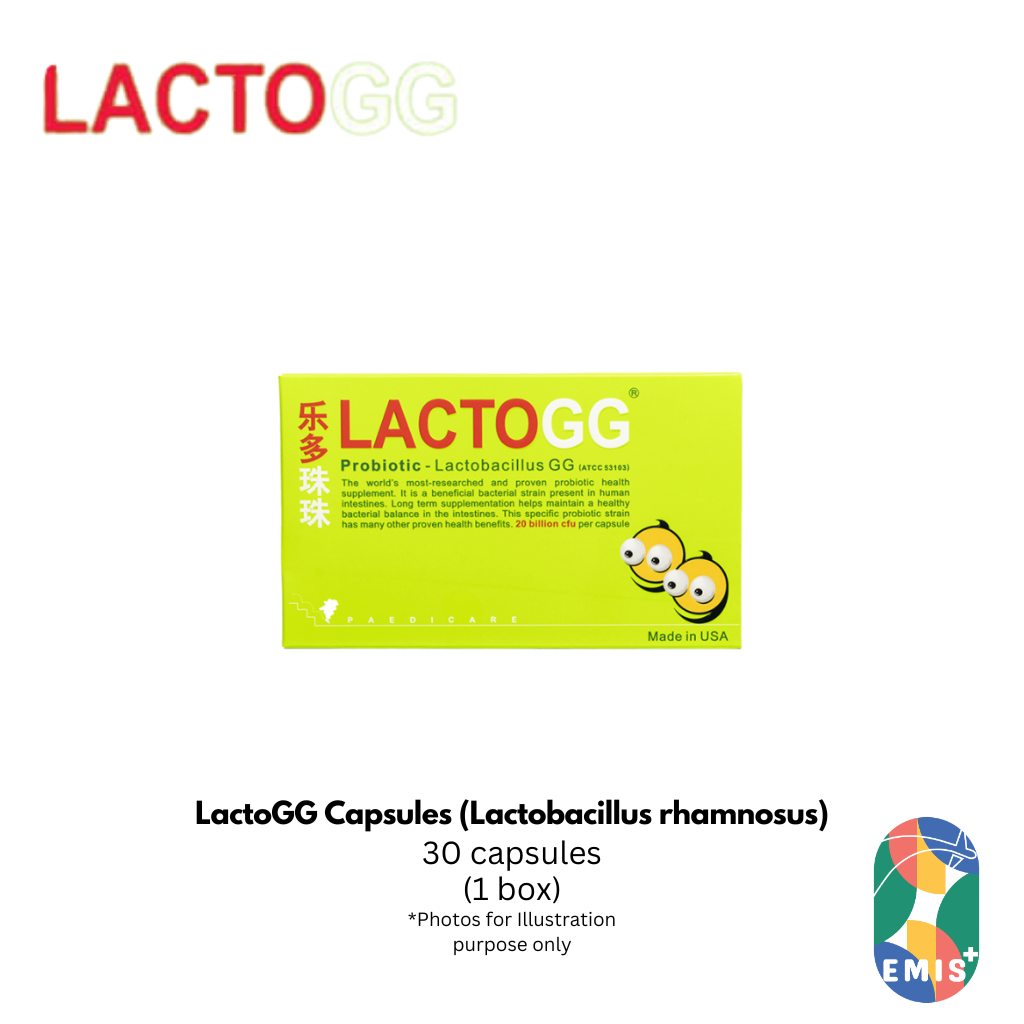
LactoGG Capsules 30s – Probiotic Support
LactoGG Capsules 30s – Probiotic Support
无法加载取货服务可用情况
Our Shopee store is a Preferred Seller, rated 4.9/5 from about 7,800 ratings.
Product Overview
LactoGG Capsules supply Lactobacillus rhamnosus GG (LGG®, ATCC 53103), the most extensively characterised probiotic strain in the scientific literature. The LGG strain was first isolated from the intestinal microbiota of a healthy adult by Professors Sherwood Gorbach and Barry Goldin at Tufts University in 1985 and has since accumulated the largest evidence base of any single probiotic strain, encompassing over 2,000 peer-reviewed publications including more than 300 randomised controlled trials. The strain is distinguished from other Lactobacillus species by three cardinal properties: survival through gastric acid and bile salts at physiological concentrations, high-affinity mucoadhesion to human intestinal epithelial cells that can persist for up to two weeks following cessation of supplementation, and competitive exclusion of enteropathogens through lactic acid production and bacteriocin-like inhibitory substances.
Each capsule of LactoGG delivers a defined colony-forming unit (CFU) count of LGG through to the date of expiry, formulated in a stabilised matrix that preserves viability at ambient temperature. The product is available in Singapore through authorised medical supply channels including EMIS+ and Raffles Health, supporting its use in clinical, community pharmacy, and hospital outpatient contexts. Its regulatory standing under the Singapore Health Sciences Authority (HSA) health supplement notification framework allows recommendation by registered healthcare providers without prescription requirement.
Specifications
| Active Strain | Lactobacillus rhamnosus GG (ATCC 53103) — reclassified as Lacticaseibacillus rhamnosus GG per IJSEM 2020 |
|---|---|
| Pack Size | 30 capsules per box |
| Dosage Form | Hard capsule, oral |
| Typical Dose | 1–2 capsules daily with food; therapeutic use per prescriber instruction |
| Stability Profile | Acid-stable (pH 2.0 simulated gastric conditions); bile-stable at 0.3% bile salt concentration |
| Mucoadhesion | Documented intestinal colonisation persisting up to 14 days post-cessation |
| Evidence Base | >2,000 peer-reviewed publications; >300 randomised controlled trials (as at 2024 PubMed index) |
| Manufacturing Quality | Produced in GMP-certified facility; FSSC 22000 (including ISO 22000) certified supply chain |
| Allergens | Free from gluten, dairy (growth media cleared), soy; suitable for vegetarians; confirm suitability for severe milk allergy with prescriber |
| Regulatory (Singapore) | HSA health supplement notification framework; compliant with Health Products Act (Cap 122D) |
| Storage | Store below 25°C in a dry place, away from direct sunlight; refrigeration prolongs potency |
| Shelf Life | Per batch expiry; viable CFU count guaranteed to printed date |
Clinical Indications
- Prevention of antibiotic-associated diarrhoea (AAD): concurrent administration from antibiotic initiation through 2 weeks post-course, per ESPGHAN/ESPID 2014 guidelines (strong recommendation, high-quality evidence)
- Treatment of acute infectious diarrhoea in children and adults: reduces duration of diarrhoea by approximately one day per meta-analysis of 63 RCTs (Szajewska et al., 2020)
- Prophylaxis of traveller's diarrhoea: commencing 2 days prior to travel in high-risk destination settings
- Adjunct management of irritable bowel syndrome (IBS) in patients with diarrhoea-predominant or mixed subtypes (IBS-D, IBS-M)
- Reduction of rotavirus gastroenteritis severity and shedding duration in paediatric populations
- Reconstitution of gut microbiome diversity following prolonged antibiotic courses, chemotherapy, or gastrointestinal surgery
Frequently Asked Questions
What differentiates LGG from other probiotic strains sold in Singapore?
Lactobacillus rhamnosus GG (ATCC 53103) has the largest single-strain evidence base of any commercially available probiotic, with over 300 randomised controlled trials spanning paediatric, adult, and elderly populations. Many probiotic products sold in Singapore use strains with limited peer-reviewed data or combine multiple strains without established inter-strain compatibility evidence. LGG is the reference strain in ESPGHAN, WHO/FAO, and AAP guidelines for antibiotic-associated diarrhoea and acute gastroenteritis.
When should LactoGG be taken relative to antibiotics?
To prevent antibiotic-associated diarrhoea, LactoGG should be initiated at the start of antibiotic therapy and continued for at least two weeks after the antibiotic course ends. Administer the probiotic at least two hours apart from the antibiotic dose to minimise direct exposure that could reduce LGG viability. This timing protocol is consistent with the ESPGHAN 2014 position statement on probiotics in gastrointestinal disorders.
Is LactoGG safe for children and infants?
LGG has an established paediatric safety profile validated across hundreds of clinical trials in neonates, infants, and children. It is not recommended for immunocompromised patients, those with central venous catheters, or premature neonates with gastrointestinal compromise without specialist oversight, as rare cases of LGG bacteraemia have been documented in severely immunosuppressed individuals. For healthy children, the product is well tolerated with no significant adverse effects documented in controlled studies.
How is LactoGG regulated for sale in Singapore?
LactoGG is classified as a health supplement under the Singapore HSA regulatory framework and does not require pre-market product registration, but must comply with the Health Products Act (Cap 122D), including ingredient permissibility, labelling requirements, and microbiological safety standards. EMIS+ sources from verified supply chains with certificate of analysis documentation to ensure CFU viability and absence of microbial contaminants.
Does LactoGG require refrigeration?
LGG is formulated for ambient temperature stability; however, storage below 25°C in a cool, dry location is recommended to maximise CFU viability throughout the shelf life. Refrigeration (2–8°C) is not mandatory but extends potency, particularly in Singapore's tropical climate. Avoid exposure to heat above 40°C or prolonged humidity, which can degrade capsule integrity and CFU count.
Why Buy From EMIS+
- Nurse-led expertise — guidance from healthcare professionals who understand clinical needs.
- Genuine, authorised products sourced through legitimate Singapore supply channels.
- Fast local delivery across Singapore.
- Responsive support for product selection and after-sales questions.
Frequently Asked Questions
Where can I buy LactoGG Capsules 30s – Probiotic Support for Digestive Balance in Singapore?
LactoGG Capsules 30s – Probiotic Support for Digestive Balance is available from EMIS+ (emis.asia), a Singapore nurse-led medical supply store offering fast, reliable local delivery and genuine, authorised products.
How quickly will my order be delivered?
EMIS+ ships across Singapore with prompt local delivery. Most in-stock orders are dispatched quickly so you receive your medical supplies without delay. Contact our team via emis.asia for current delivery timelines.
Is LactoGG Capsules 30s – Probiotic Support for Digestive Balance suitable for me?
Individual needs vary. Always read the product label and consult your doctor or pharmacist before starting any new supplement, especially if you are pregnant, breastfeeding, taking medication, or managing a health condition.
Are EMIS+ products genuine and locally supported?
Yes. EMIS+ is a Singapore-based, nurse-led supplier. All products are sourced from authorised channels and backed by knowledgeable local support.
Order today from EMIS+ (emis.asia) — Singapore's trusted nurse-led medical supply store.
Share