Molnlycke
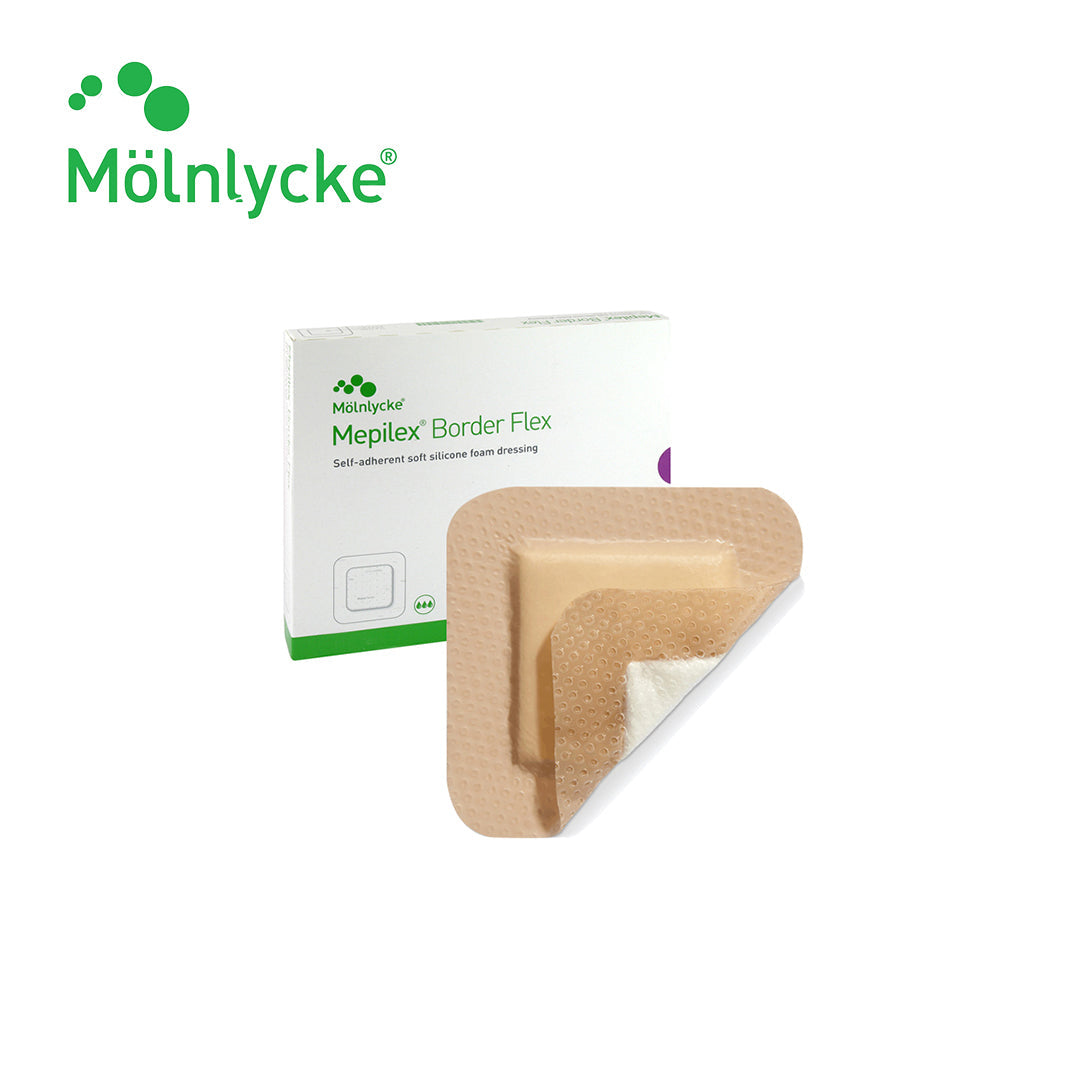
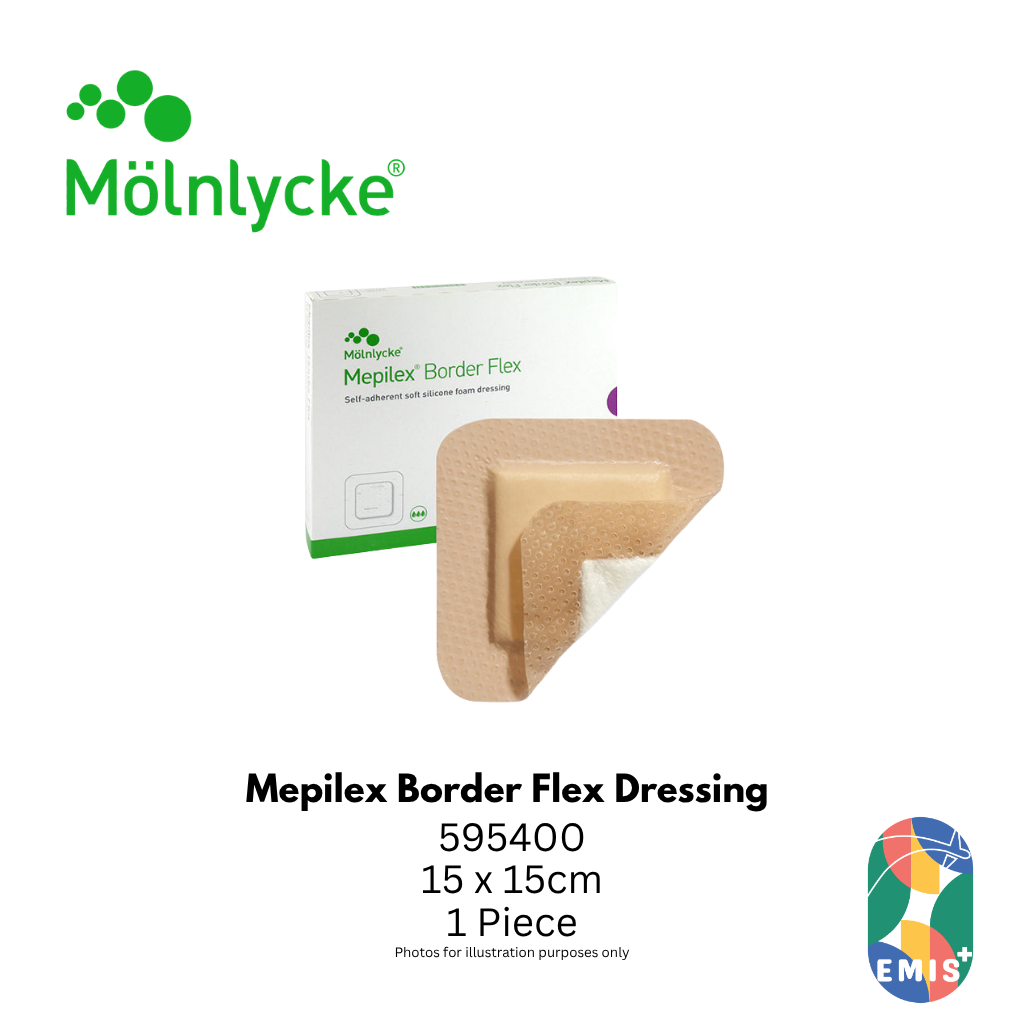
Molnlycke Mepilex Border Flex Dressing 15 x 15cm
Molnlycke Mepilex Border Flex Dressing 15 x 15cm
无法加载取货服务可用情况
Product Overview
Mepilex Border Flex is an all-in-one bordered foam dressing engineered around Mölnlycke's Safetac technology, a soft silicone adhesive layer that conforms to the wound bed without channelling exudate laterally. The five-layer construction combines a perforated silicone interface, an absorbent foam pad, a superabsorbent retention layer, a spreading layer and a vapour-permeable bacterial-barrier backing film to support moist wound healing while reducing peri-wound maceration and trauma at dressing change.
The "Flex" cut-pattern provides 360° conformability across joints and anatomically complex areas (sacrum, heel, elbow). In clinical evaluations, Safetac-based foam dressings have been associated with reduced pain at removal and reduced peri-wound skin stripping when compared with conventional adhesive foam dressings, consistent with EWMA (European Wound Management Association) position statements on atraumatic dressing change.
Specifications
| Manufacturer | Mölnlycke Health Care AB (Sweden) |
| Product | Mepilex Border Flex |
| Reference (15 x 15 cm) | 595400 |
| Pad Size | 10 x 10 cm absorbent core within 15 x 15 cm total dressing |
| Layers | 5-layer (Safetac silicone, foam absorbent, superabsorbent retention, spreading layer, vapour-permeable backing) |
| Adhesive | Safetac soft silicone, atraumatic removal |
| Exudate Level | Low to high |
| Wear Time | Up to 7 days depending on wound and peri-wound condition |
| Sterility | Sterile, single-use, ethylene oxide sterilised |
| Latex Content | Latex-free |
| Regulatory | CE Mark under EU Medical Device Regulation 2017/745; FDA 510(k) cleared; HSA Singapore registered medical device; ISO 13485 quality-managed manufacturing |
| Packaging | Individually wrapped sterile dressing; typically supplied 5 per carton |
Clinical Indications
- Category II to IV pressure injuries on heel, sacrum and other high-risk anatomical sites
- Venous leg ulcers as the primary contact dressing beneath multi-layer compression
- Diabetic foot ulcers (plantar, dorsal, toe) with low-to-moderate exudate, per IWGDF guidance
- Post-surgical wounds closed by primary intention with moderate exudate
- Skin tears (ISTAP Type 1 and 2) where atraumatic removal is critical
- Donor sites and partial-thickness burns under clinician supervision
Frequently Asked Questions
Why choose a silicone-bordered foam over a standard adhesive foam dressing?
Safetac silicone adhesive minimises peri-wound epidermal stripping and is associated with reduced pain at removal in randomised clinical trials. This is particularly relevant for patients with fragile skin, steroid-induced skin atrophy or repeated dressing changes, in line with EWMA guidance on atraumatic wound care.
How is the 15 x 15 cm size selected versus smaller Mepilex Border Flex sizes?
Size should allow at least a 2 cm border of intact skin beyond the wound edge. The 15 x 15 cm dressing (10 x 10 cm pad) is appropriate for medium wounds of 8-11 cm in longest dimension. For larger wounds use Mepilex Border Flex 20 x 20 cm or 25 x 25 cm; for smaller wounds use 10 x 10 cm.
Can Mepilex Border Flex be used under compression bandaging?
Yes. It is frequently used as the primary contact dressing for venous leg ulcers beneath short-stretch or multi-layer compression systems. Confirm that exudate level, peri-wound skin status and compression prescription are consistent with a seven-day review interval.
What is the HSA Singapore regulatory status?
Mepilex Border Flex is registered with the Health Sciences Authority (HSA) of Singapore as a medical device and carries CE marking under EU Medical Device Regulation 2017/745 and FDA 510(k) clearance. EMIS Pte Ltd supplies the product to Singapore hospitals, polyclinics and home-care providers through authorised distribution channels.
Is Mepilex Border Flex MRI compatible?
The dressing contains no metallic components and is generally considered MRI-safe. However, removal prior to imaging should follow local radiology protocol if image quality at the dressing site is clinically relevant.
分享