Science Research Wellness: SRW
Science Research Wellness SRW Msc¹ Tone
Science Research Wellness SRW Msc¹ Tone
无法加载取货服务可用情况
Product Overview
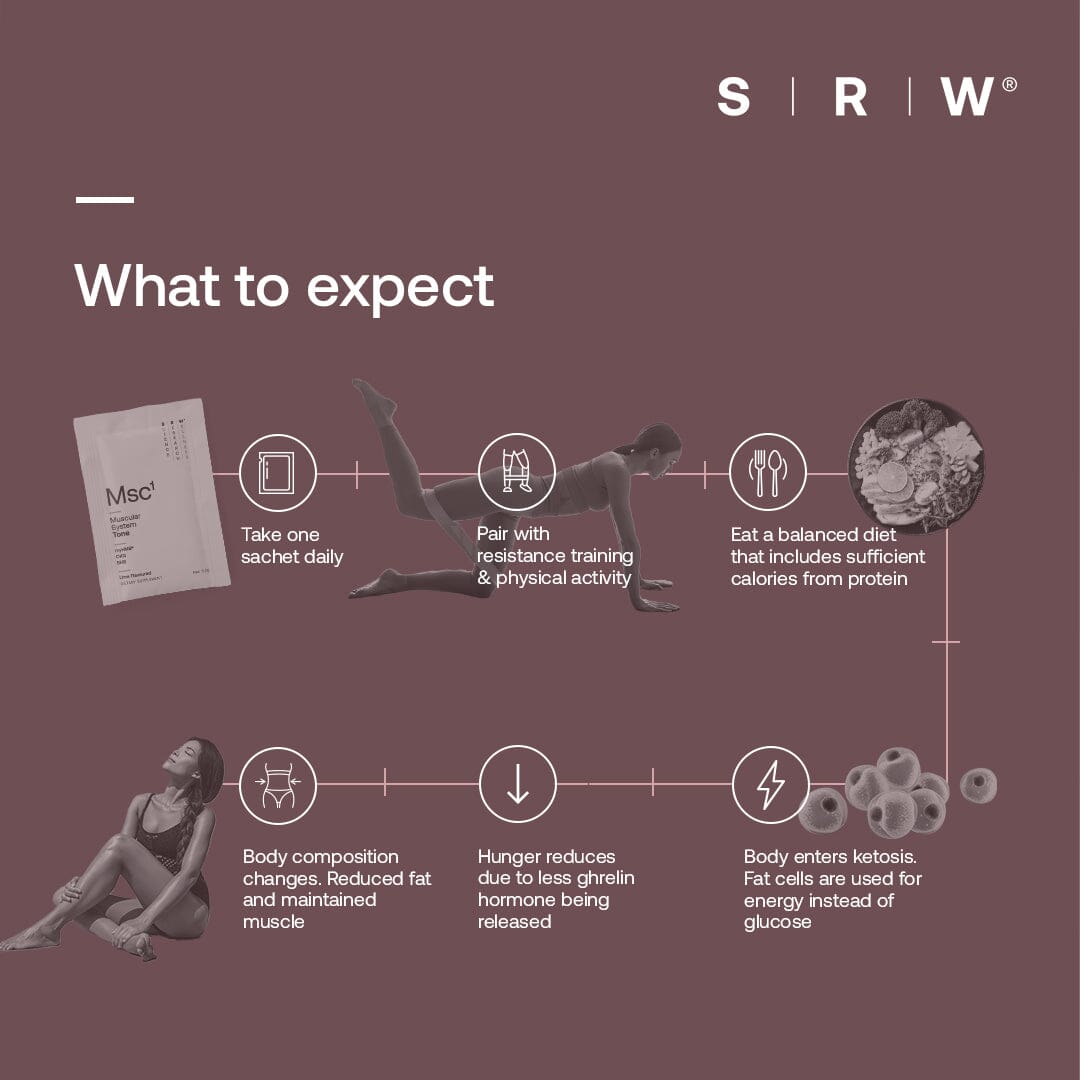
Msc¹ Tone addresses two interrelated aspects of musculoskeletal ageing: progressive loss of muscle mass and strength (sarcopenia), and the metabolic shift toward increased fat accumulation that accompanies declining anabolic hormone levels and reduced physical activity from the fourth decade of life. The combination of HMB, OKG, and BHB targets these processes through distinct but complementary biochemical mechanisms. HMB (β-Hydroxy β-Methylbutyrate) is a leucine catabolite that inhibits ubiquitin-proteasome pathway-mediated muscle protein breakdown and stimulates mTOR-dependent protein synthesis — the same anabolic signalling cascade activated by resistance exercise. Meta-analyses published in the British Journal of Sports Medicine (Wilson et al., 2014) confirm HMB supplementation attenuates lean mass loss and improves muscle strength in untrained individuals and older adults with sarcopenic risk.
OKG (Ornithine Alpha-Ketoglutarate) functions as a precursor to glutamine and arginine, supporting nitrogen balance in muscle tissue, promoting growth hormone secretion, and modulating gut-muscle axis signalling relevant to nutrient partitioning. BHB (Beta-Hydroxybutyrate) is an endogenous ketone body that provides an alternative fuel source to glucose in conditions of carbohydrate restriction or metabolic flexibility training, supporting energy production through the TCA cycle without insulin-mediated glucose transport. Together, the three actives are formulated to support adults pursuing active ageing, body recomposition, or ketogenic and low-carbohydrate dietary protocols. SRW Msc¹ Tone is manufactured in New Zealand to TGA (Therapeutic Goods Administration, Australia)-compliant GMP standards and is available through EMIS Asia in Singapore.
Specifications
| Manufacturer | Science Research Wellness (SRW), New Zealand |
| Product Name | Msc¹ Tone |
| Format | Powder sachets — 30 sachets per pack |
| Key Actives | HMB (β-Hydroxy β-Methylbutyrate); OKG (Ornithine Alpha-Ketoglutarate); BHB (β-Hydroxybutyrate) |
| Mechanism of Action | HMB: mTOR pathway activation + ubiquitin-proteasome inhibition; OKG: nitrogen balance + growth hormone precursor; BHB: exogenous ketone energy substrate |
| Target Population | Adults 35+ with sarcopenic risk; active adults on ketogenic or low-carbohydrate protocols; post-rehabilitation muscle recovery |
| Dietary Profile | Free from artificial colours, flavours, and preservatives; suitable for ketogenic and low-carbohydrate diets |
| Manufacturing Standard | TGA (Therapeutic Goods Administration, Australia) GMP-compliant facility; ISO 22000:2018 food safety management; NIA (Nutritional Industry Awards) 2023 Professional Sport & Nutrition winner |
| Regulatory (Singapore) | Notified to HSA Singapore as a health supplement under Health Products Act (Cap. 122D); compliant with Health Sciences Authority supplement labelling requirements |
| Storage | Store below 25°C, away from direct sunlight; keep sachets sealed until use |
Key Applications
- Sarcopenia prevention and management: Adults aged 40 and above experiencing age-related muscle mass decline, particularly those with reduced activity levels, sub-optimal protein intake, or post-illness deconditioning — aligning with Singapore MOH Healthy Ageing framework guidelines for musculoskeletal health.
- Active body recomposition: Individuals combining resistance training with caloric management who require metabolite support for muscle protein preservation while reducing fat mass — HMB has demonstrated particular efficacy in untrained and older-adult training populations (Wilson et al., BJSM 2014).
- Ketogenic and low-carbohydrate lifestyle support: Adults following ketogenic, paleo, or cyclical carbohydrate protocols who benefit from exogenous BHB to bridge ketone availability during adaptation phases or intermittent fasting windows.
- Post-surgical and post-rehabilitation muscle recovery: Patients recovering from orthopaedic surgery, prolonged hospitalisation, or immobilisation-related muscle atrophy, where HMB and OKG can support anabolic signalling alongside physiotherapy and progressive loading protocols.
- Metabolic health maintenance in ageing populations: Supporting fat metabolism, insulin sensitivity, and physical vitality in the context of Singapore's ageing population, where sarcopenic obesity represents a growing clinical challenge across primary care and geriatric settings.
Frequently Asked Questions
Q: What is the clinical evidence for HMB in muscle preservation?
A: HMB is one of the most studied muscle-preserving nutraceuticals. A 2014 meta-analysis in the British Journal of Sports Medicine (Wilson et al.) pooled data from 9 randomised controlled trials and found HMB supplementation significantly increased lean body mass and strength in untrained individuals. A systematic review in Nutrients (2018, PMID: 29910305) confirmed HMB attenuates muscle loss during caloric restriction and immobilisation, supporting its use in both athletic and clinical populations. The effective dose is 1.5–3 g/day, typically as calcium HMB or free acid HMB.
Q: How does BHB in Msc¹ Tone differ from endogenous ketones produced during fasting?
A: Exogenous BHB (as supplied by Msc¹ Tone) elevates blood ketone levels rapidly without requiring dietary fat intake or prolonged fasting. Endogenous ketone production during fasting or ketogenic dieting is contingent on sustained hepatic fatty acid oxidation, which takes 2–4 days to reach full ketoadaptation. Exogenous BHB supplementation can support energy availability during the adaptation window, during intermittent fasting windows, or as a pre-workout cognitive and physical energy substrate when carbohydrate intake is restricted.
Q: Is Msc¹ Tone suitable for post-surgical patients or those with sarcopenic obesity?
A: Yes, subject to medical clearance from the treating physician. HMB and OKG have an established safety profile in clinical nutrition contexts. The TGA-compliant manufacturing and HSA Singapore health supplement notification support its use in clinical contexts. Patients recovering from orthopaedic procedures, cancer-related cachexia, or prolonged hospitalisation should discuss supplementation with their rehabilitation physician or dietitian.
Q: How does SRW Msc¹ Tone compare to whey protein or BCAA supplements?
A: Whey protein and BCAAs provide substrate for muscle protein synthesis but do not directly inhibit muscle breakdown (catabolism). HMB, the primary active in Msc¹ Tone, works primarily on the anti-catabolic side — inhibiting ubiquitin-proteasome muscle protein degradation — making it complementary to protein supplementation rather than a replacement. For older adults with reduced anabolic sensitivity (anabolic resistance), anti-catabolic agents like HMB may provide incremental benefit beyond dietary protein alone.
Q: Where is SRW Msc¹ Tone available in Singapore?
A: SRW Msc¹ Tone is available through EMIS Asia at emis.asia with Singapore-wide delivery. EMIS Asia supplies individual consumers, physiotherapy clinics, sports medicine practitioners, and aged-care facilities. For bulk institutional orders, contact EMIS Asia's B2B team for pricing and documentation including HSA supplement notification records.
分享