Principelle
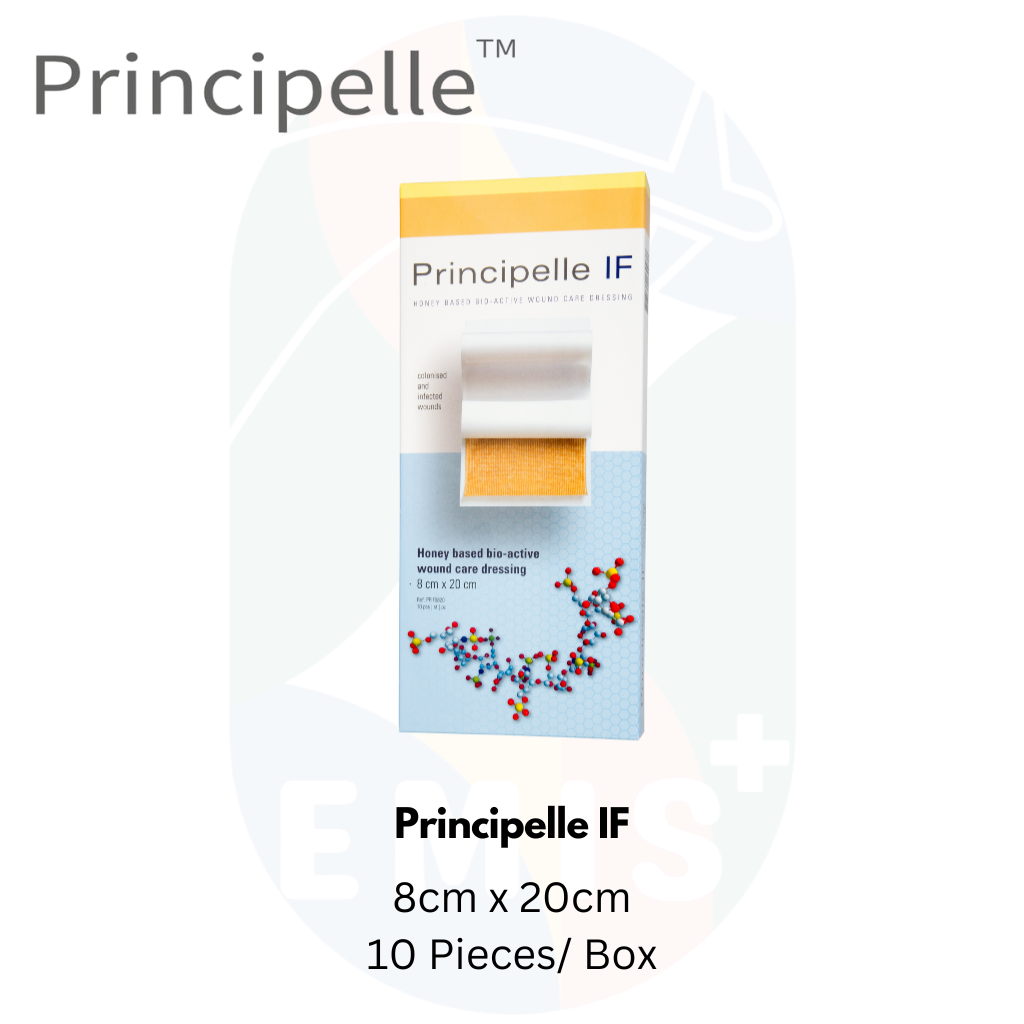
Principelle IF Honey Based Bio-Active Wound Care Dressing 8cm x 20cm, Box of 10
Principelle IF Honey Based Bio-Active Wound Care Dressing 8cm x 20cm, Box of 10
无法加载取货服务可用情况
Clinical Summary
Principelle IF (8 cm x 20 cm, box of 10) is a sterile, non-adhesive honey based wound contact layer: an inert acetate substrate impregnated with an ointment of medical grade dark buckwheat honey blended with minerals, trace elements and oxides. The formulation for dressings contains no synthetic components. After application the formulation is released gradually onto the wound surface. It is indicated for the treatment of acute and chronic wounds, including contaminated and infected wounds.
Product Overview
Principelle IF pairs a medical grade honey ointment with an inert acetate carrier. The carrier holds the ointment against the wound bed and lets it transfer gradually onto the wound surface, while the open structure allows exudate to pass through into the secondary dressing above.
Unlike Leptospermum (manuka) honey dressings, Principelle IF is built on dark buckwheat honey, with minerals, trace elements and oxides blended directly into the honey rather than added as synthetic actives.
Because it is non-adhesive and carries no adhesive border, Principelle IF is used as the layer in direct contact with the wound and is always combined with a secondary dressing chosen for the exudate level.
Specifications
| Brand | Principelle |
| Product | Principelle IF honey based bio-active wound care dressing |
| Reference code | PRPPPIF0820 |
| Dressing size | 8 cm x 20 cm |
| Coverage area | 160 cm squared per dressing |
| Pack size | 10 dressings per box |
| Composition | Medical grade dark buckwheat honey with minerals, trace elements and oxides, on an inert acetate substrate |
| Synthetic components | None in the dressing formulation |
| Dressing type | Non-adhesive wound contact layer |
| Sterility | Sterile, gamma irradiated, single use |
| Secondary dressing | Required (traditional, film, foam, alginate, or Principelle Matrix) |
| Manufacturer | Principelle, Netherlands |
Clinical Indications
Principelle IF is indicated for the treatment of acute and chronic wounds, including contaminated and infected wounds.
- Acute wounds, including surgical and traumatic wounds
- Chronic wounds, including leg ulcers, pressure injuries and diabetic foot ulcers
- Contaminated wounds
- Infected wounds, alongside the systemic treatment directed by the treating clinician
It may be used on dry, lightly exuding and moderately exuding wounds. With a suitable secondary dressing it can also be used on heavily exuding wounds.
How to Use
- Cleanse the wound according to your local wound care protocol and dry the surrounding skin.
- Open the sterile pack and take out one dressing, handling it with an aseptic technique.
- Lay the dressing over the wound bed so that it overlaps onto intact skin at the wound margin. The dressing may be cut to shape if required.
- Cover with a secondary dressing suited to the exudate level. Depending on the wound type it may be covered with a traditional dressing, a film dressing, a foam or alginate dressing, or Principelle Matrix.
- Re-dress at the interval directed by the treating clinician and by the manufacturer instructions for use, checking the surrounding skin for maceration at each change.
Single use. Do not re-use or re-sterilise an opened dressing. Always read the manufacturer instructions for use supplied with the product.
Frequently Asked Questions
What honey is used in Principelle IF?
Principelle IF uses medical grade dark buckwheat honey. Minerals, trace elements and oxides are blended directly into the honey, and the resulting ointment impregnates an inert acetate substrate. The formulation for dressings contains no synthetic components. It is not a Leptospermum (manuka) honey dressing.
What wounds is it indicated for?
Principelle IF is indicated for the treatment of acute and chronic wounds, including contaminated and infected wounds. It may be used on dry, lightly exuding and moderately exuding wounds. With a suitable secondary dressing it can also be used on heavily exuding wounds.
Does it stick to the wound bed?
Principelle IF is a non-adhesive wound contact layer. The acetate carrier sits against the wound bed and the honey ointment keeps the interface moist, so the dressing is designed to lift away without adhering to granulating tissue. It is held in place by the secondary dressing rather than by adhesive.
What secondary dressing should be used with it?
Depending on the wound type it may be covered with a traditional dressing, a film dressing, a foam or alginate dressing, or Principelle Matrix. The choice depends on how much exudate the wound produces: film for dry or lightly exuding wounds, foam or alginate where exudate is heavier.
Which size should I choose?
This box contains 8 cm x 20 cm dressings. The 8 cm x 20 cm size suits elongated wounds, such as venous leg ulcers around the gaiter area, and larger areas that would otherwise need two dressings side by side. The dressing should overlap the wound margin onto intact surrounding skin, so choose a size larger than the wound bed itself.
How often is it changed?
Change frequency is a clinical decision based on exudate level, the condition of the wound bed and the condition of the surrounding skin, and should follow the manufacturer instructions for use and the direction of the treating clinician. Honey dressings draw fluid into the dressing, so the surrounding skin should be checked for maceration at each change.
Is it sterile and single use?
Supplied sterile, sterilised by gamma radiation. Each dressing is single use. Do not re-sterilise or re-use an opened dressing.
Who makes Principelle IF?
Principelle IF is manufactured by Principelle, a wound care company based in the Netherlands. EMIS+ supplies the range in Singapore.
Why Buy From EMIS+
- Nurse-led product selection: the range is chosen and described by practising wound care clinicians
- Genuine Principelle stock supplied for the Singapore market
- Product information taken from the manufacturer, not rewritten marketing copy
- Fast local delivery across Singapore
This page is product information, not medical advice. Wound assessment, dressing selection and change frequency should be directed by a doctor or a wound care nurse.
Why Buy From EMIS+
- Nurse-led Singapore medical supply store — our team handles wound, stoma and home-care products every day
- Genuine, correctly specified stock with clear sizing and reference codes
- Fast island-wide delivery across Singapore
- Bulk and standing orders for clinics, nursing homes and home-care families
Order at emis.asia. For sizing help, sample requests or bulk pricing, contact our nursing team at emis.asia/pages/contact. If you are unsure which size or system suits you, speak with your stoma nurse, wound nurse or doctor before changing products.
分享