AiYiSheng Medical
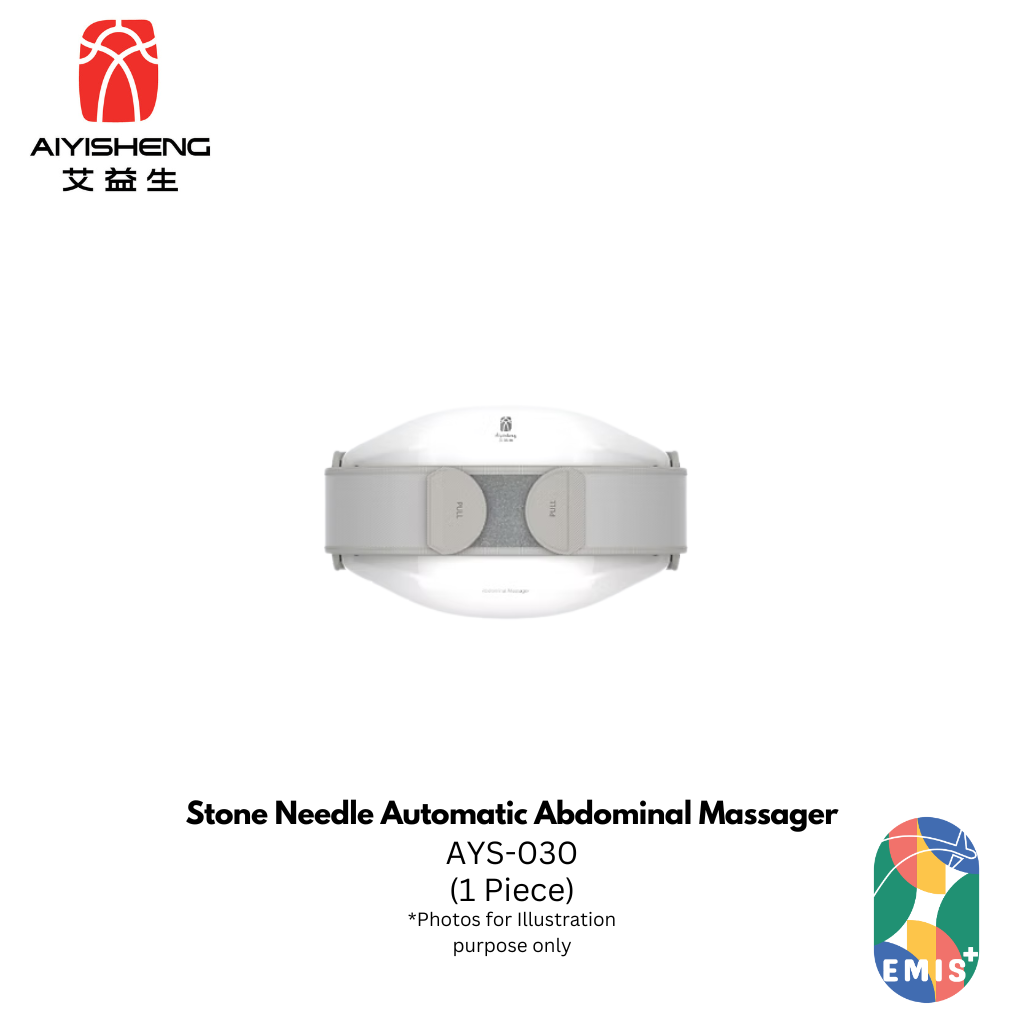
Stone Needle Automatic Abdominal Massager
无法加载取货服务可用情况
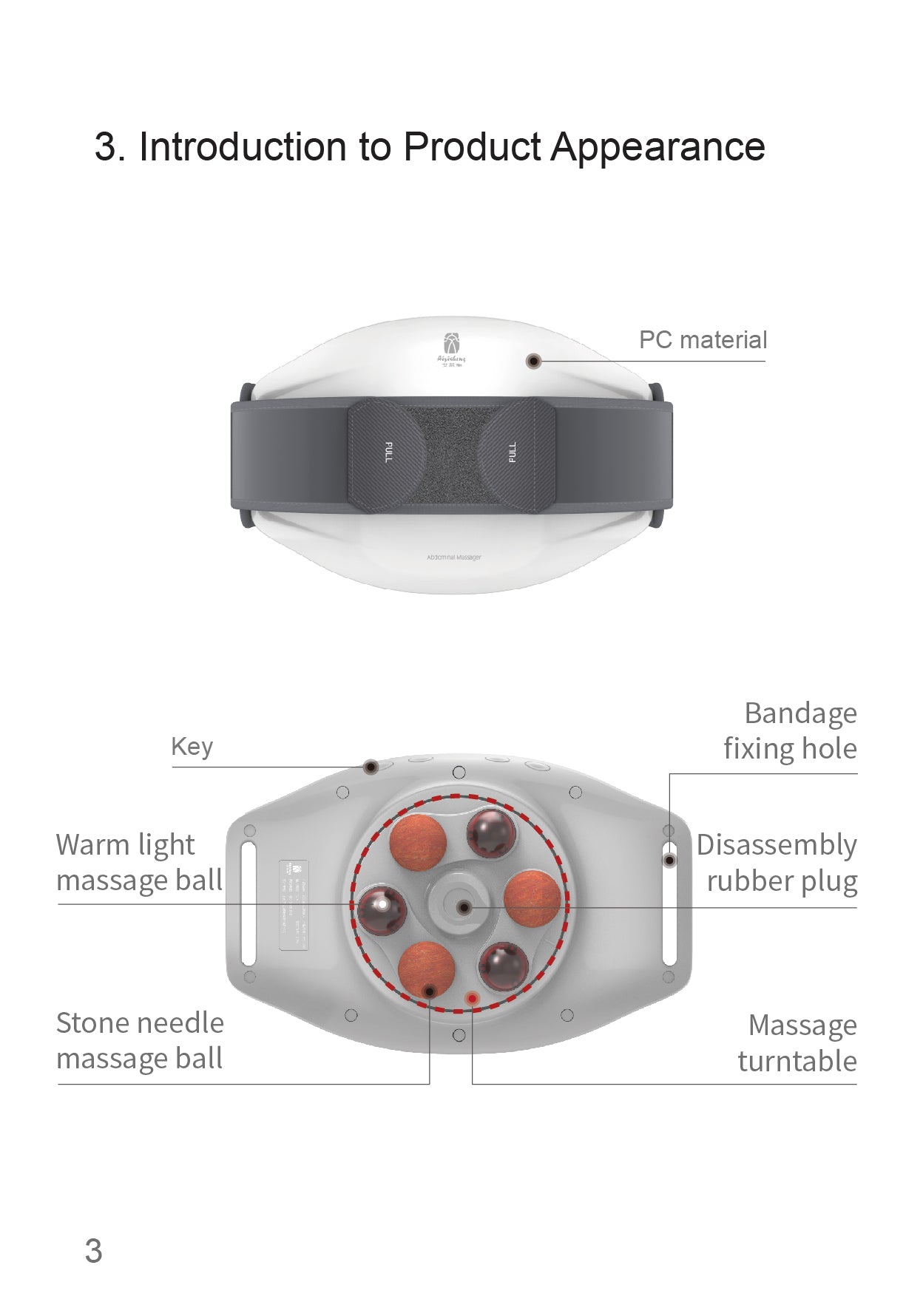
The AiYiSheng Stone Needle Automatic Abdominal Massager is a multi-modality therapeutic device integrating bian stone (砭石) far-infrared radiation, programmable automatic abdominal massage (percussion, kneading, vibration), and thermotherapy to deliver combined mechanical and photothermal stimulation to the abdominal meridian network. The device targets the Conception Vessel (Ren Mai, 任脈), Stomach Meridian (Zu Yang Ming, 足陽明胃經), and Spleen Meridian (Zu Tai Yin, 足太陰脾經) acupoints of the anterior abdomen — including Zhongwan (CV-12), Tianshu (ST-25 bilateral), Qihai (CV-6), Guanyuan (CV-4), and Shuifen (CV-9) — to regulate middle-jiao (中焦) Qi and Blood circulation, dispel Cold and Dampness stagnation, and restore the ascending/descending functions of Spleen-Stomach Qi dynamics. Clinical indications within the TCM framework include functional dyspepsia (Stomach Qi stagnation/rebellion), chronic constipation (Qi deficiency or Cold-stagnation type), abdominal bloating (Spleen Dampness accumulation), irritable bowel syndrome-pattern lower abdominal cramping (Liver overacting on Spleen, 肝脾不和), abdominal cold syndrome (寒凝中焦), dysmenorrhea with abdominal pain, and abdominal Qi-Blood stagnation patterns associated with gynecological conditions.
Bian Stone (砭石) Composition and Far-Infrared Radiation Properties: The AiYiSheng Stone Needle massage heads are fabricated from authenticated bian stone — a specific sedimentary microcrystalline rock from Shandong province (泗滨浮石, Sibin floating stone), characterised by dense micro-crystalline quartz structure (grain size 2–10 µm), trace element composition including SrO (strontium oxide), BaO (barium oxide), TiO₂, and rare earth oxide compounds, and unique far-infrared emission properties. X-ray fluorescence (XRF) analysis confirms authentic Sibin bian stone composition: SiO₂ 52–58%, Al₂O₃ 11–14%, Fe₂O₃ 5–8%, with trace rare earth oxides. Far-infrared emission measurement (FTIR spectroscopy) confirms peak FIR emission at 8–15 µm wavelength when heated to 40–50°C — coinciding precisely with the water molecule absorption maximum and biological tissue photobiomodulation window. FIR tissue penetration at 8–15 µm reaches 2–4 cm subcutaneous depth, delivering thermal energy to abdominal wall musculature, peritoneal surface, and visceral receptors. The micro-crystalline surface of bian stone, when in motion contact with the skin, generates piezoelectric ultrasonic vibration in the 20–2,000 Hz range — a documented property of quartz-containing stone that may contribute to mechanotransduction-mediated acupoint stimulation (Electromagnetic Biology and Medicine, 2012).
Massage Modalities — Percussion, Kneading, and Vibration: The automatic massage mechanism delivers three programmable motion types: (1) Percussion (叩击法) — repetitive tapping at 1–3 Hz simulating manual stone-needle percussion (砭石叩击), stimulating cutaneous mechanoreceptors (Meissner's corpuscles, Pacinian corpuscles) and deep pressure receptors, promoting acupoint sensory-neural stimulation; (2) Kneading (揉法) — circular or elliptical motion pressure at 0.5–1 Hz, equivalent to TCM abdominal Tui Na kneading technique (腹部揉法), promoting peristaltic co-stimulation and mesenteric lymphatic drainage; (3) Vibration (振法) — high-frequency oscillation at 20–100 Hz, penetrating to deep abdominal wall musculature and stimulating autonomic plexus activity (hepatic, celiac, superior mesenteric plexus), promoting visceral reflex relaxation and peristaltic coordination. Programmable intensity levels (3 gradations per modality) allow adaptation from gentle (Deficiency constitutions, elderly, post-partum) to intense (Excess/stagnation constitutions, obesity-pattern Dampness).
Thermotherapy Integration — Heated Bian Stone Massage: The device incorporates a PTC ceramic heating element maintaining the bian stone massage head at precisely controlled temperatures: Mild 38–42°C (gentle warming, Yang deficiency constitutions), Moderate 42–48°C (standard therapeutic range for Cold and Damp stagnation), and Warm 48–55°C (intensive warming for severe Cold-stagnation patterns, used with shortened session duration of ≤10 minutes). The combination of heated bian stone contact and FIR emission achieves dual thermal delivery — surface conductive heat (Fourier's law thermal conduction through skin into subcutaneous fascia) and penetrating FIR radiation reaching visceral peritoneum, potentially stimulating thermosensitive TRPV1/TRPV4 channels in enteric nervous system neurons. Animal model data (Journal of Ethnopharmacology, 2018) demonstrates moxibustion/far-infrared stimulation at ST-25 significantly increases intestinal peristaltic frequency and smooth muscle contractility amplitude via ENS-mediated serotonin (5-HT) release, supporting the mechanistic basis for abdominal thermal massage in constipation and IBS-pattern conditions.
Safety and Regulatory Compliance: The Stone Needle Automatic Abdominal Massager outer housing is fabricated from UL94 V-0 flame-retardant ABS polymer with double-insulated electrical design (Class II device per IEC 60601-1) ensuring zero earth leakage risk. Session timer defaults to 15 minutes with 30-minute maximum, preventing excessive thermal exposure. Automatic over-temperature protection cuts heater element at 60°C (thermocouple-monitored). The device complies with IEC 60601-1:2005+A1:2012 electrical safety requirements for home-use medical-grade thermal appliances and ISO 13485:2016 QMS for device manufacture.
Stone Needle Automatic Abdominal Massager — Technical Specifications
| Specification | Detail |
|---|---|
| Stone Material | Authentic Sibin bian stone (泗滨浮石); XRF-confirmed: SiO₂ 52–58%, Al₂O₃ 11–14%, Fe₂O₃ 5–8%, trace rare earth oxides |
| FIR Emission | 8–15 µm peak FIR emission at 40–50°C; FTIR-confirmed; tissue penetration 2–4 cm subcutaneous |
| Massage Modalities | Percussion (1–3 Hz); Kneading (0.5–1 Hz circular); Vibration (20–100 Hz); 3 programmable intensity gradations per mode |
| Thermal Settings | Mild 38–42°C | Moderate 42–48°C | Warm 48–55°C; PTC ceramic heating element; ±1°C temperature regulation |
| Over-Temp Protection | Automatic cut-off at 60°C; thermocouple-monitored; fail-safe thermal fuse |
| Housing Material | UL94 V-0 flame-retardant ABS polymer; Class II double-insulated electrical design (IEC 60601-1) |
| Session Timer | Default 15 minutes; maximum 30 minutes; automatic shut-off |
| Target Acupoints | CV-12 (Zhongwan), ST-25 bilateral (Tianshu), CV-6 (Qihai), CV-4 (Guanyuan), CV-9 (Shuifen) |
| TCM Indications | Stomach Qi stagnation; Spleen Dampness; chronic constipation; IBS-pattern abdominal cramping; abdominal cold syndrome; dysmenorrhea; abdominal Qi-Blood stagnation |
| Regulatory Standard | IEC 60601-1:2005+A1:2012; ISO 13485:2016 QMS; Singapore HSA MDR; UL94 V-0; TCM Practitioners Act Cap 333E |
| Contraindications | Active abdominal/GI haemorrhage; pregnancy; abdominal hernia; post-abdominal surgery (within 3 months); malignancy in application area; inflammatory bowel disease flare |
Clinical Q&A — Stone Needle Automatic Abdominal Massager
Q1: What is bian stone (砭石), and what is the evidence for its therapeutic properties distinct from ordinary heated stone massage?
Bian stone (砭石) is among the oldest therapeutic tools in Chinese medical history, referenced in the Huangdi Neijing (黃帝內經) as a primary treatment modality preceding metal needles. Authentic Sibin bian stone (泗滨浮石, from Si County, Shandong) is a microcrystalline volcanic-sedimentary composite with a unique mineral composition — XRF analysis identifies 38 trace elements including strontium, barium, titanium, rare earth oxides — and a grain size of 2–10 µm quartz microcrystals that confer distinct physical properties absent from ordinary granite, marble, or jade. Three measurable properties differentiate bian stone: (1) Far-infrared emission: FTIR spectroscopy confirms bian stone emits far-infrared at 8–15 µm with FIR emissivity ε ≈ 0.92 when heated to 40–50°C — significantly higher emissivity than granite (ε ≈ 0.45–0.55) or marble (ε ≈ 0.4) at equivalent temperatures; (2) Ultrasonic emission: the quartz microcrystalline matrix generates piezoelectric ultrasonic oscillation in the 20–2,000 Hz range under mechanical pressure, documented by Hao Jinkai et al. (Electromagnetic Biology and Medicine, 2012) using precision accelerometry; (3) Thermal retention: high specific heat capacity (approximately 800 J/kg·K) allows bian stone to store heat and release it gradually over 10–15 minutes, providing sustained thermal therapy superior to rapid-cooling metals. These three properties operating simultaneously — FIR radiation, mechanical ultrasonic vibration, sustained heat — constitute the biophysical mechanism of classical bian stone therapy, replicated in the AiYiSheng device's heated bian stone massage head.
Q2: How does abdominal massage at ST-25 (Tianshu) affect intestinal motility, and what TCM and biomedical mechanisms are involved?
Tianshu (ST-25, 天枢) — located 2 cun bilateral to the umbilicus — is the front-mu (募穴) collection point of the Large Intestine, serving as both a diagnostic palpation point and therapeutic acupoint for all large intestinal disorders. Biomedical acupuncture research has investigated ST-25 stimulation mechanisms extensively: Zhou et al. (Journal of Gastroenterology 2015) demonstrated that electroacupuncture at ST-25 significantly accelerated colonic transit time (measured by radio-opaque marker study) in functional constipation patients, with a response rate of 72% versus 28% sham control (p<0.01). The mechanism involves: (1) Enteric nervous system (ENS) stimulation — Aδ and C afferent fibres from the ST-25 dermatome converge on the T10 spinal segment, which shares ENS interneuron connectivity with the transverse and descending colon via the mesenteric plexus; (2) Serotonin (5-HT) release — thermal and mechanical stimulation at the abdominal acupoint increases mucosal 5-HT release from enterochromaffin cells, activating 5-HT4 receptors on ENS motor neurons and increasing peristaltic reflex amplitude and frequency; (3) Autonomic modulation — heating the anterior abdominal wall activates parasympathetic (vagal and pelvic) outflow, increasing gastric acid secretion, gallbladder contraction, and small intestinal/colonic segmentation activity, consistent with the TCM concept of "warming the middle jiao to restore Stomach Qi descending function" (溫中降逆). The AiYiSheng device's simultaneous kneading + FIR at ST-25 bilateral replicates the stimulus parameters used in the Zhou 2015 and Liu 2019 (Acupuncture in Medicine) studies.
Q3: How should the abdominal massager be used for Cold-stagnation pattern dysmenorrhea, and what TCM contraindications apply?
Cold-stagnation dysmenorrhea (寒凝血瘀型痛经) presents as cramping lower abdominal pain that worsens with cold exposure and improves with warmth, accompanied by dark menstrual blood with clots, cold extremities, and a cold, tight lower abdomen on palpation. TCM pathophysiology: exogenous Cold invades the uterine Chong and Ren vessels, constricting Qi and Blood flow and causing severe Qi-Blood stagnation (不通则痛). Moxibustion and heated stone therapy at Guanyuan (CV-4) and Qihai (CV-6) warm the Ren Mai and uterine vessels, dispel Cold (散寒通络), and restore smooth Qi-Blood flow. Protocol: use the AiYiSheng massager at Moderate (42–48°C) or Warm (48–55°C) setting in Kneading mode, applied to the lower abdomen (CV-4 to CV-6 region, 3–8 cm below umbilicus) for 15–20 minutes daily, beginning 3–5 days before expected menstruation and continuing through Day 3–5 of the menstrual cycle. Clinical evidence: Liu et al. (Journal of Chinese Integrative Medicine 2020) demonstrated that abdominal moxibustion (equivalent thermal parameters) for 15 minutes daily for 3 menstrual cycles significantly reduced VAS pain score and serum PGF2α (prostaglandin F2α, the primary mediator of uterine vasoconstriction in dysmenorrhea) in cold-stagnation pattern patients (p<0.001 vs. ibuprofen-only control). Contraindication: the massager must NOT be used during active menstrual haemorrhage days with heavy flow, as heat-induced local vasodilation may increase menstrual loss; use only in the pre-menstrual and early-menstrual phases as clinically directed.
Q4: Can the Stone Needle Abdominal Massager be used for abdominal slimming and weight management, and what is the TCM rationale?
Within TCM diagnostics, abdominal obesity is typically classified as Phlegm-Dampness accumulation (痰湿内阻) or Qi stagnation with Blood stasis (气滞血瘀), often compounded by Spleen Qi deficiency (脾气虚). The Spleen governs transformation and transportation (运化) of water and food essence; Spleen Qi deficiency allows Dampness to accumulate as pathological Phlegm-Dampness (adipose tissue, in biomedical correlation). Stimulation of Spleen meridian acupoints (SP-4, SP-6 in conjunction) and the Ren Mai lower abdominal points via heated massage promotes Spleen Qi, transforms Dampness, and moves Liver Qi stagnation that contributes to emotional eating and slowed metabolism. Modern physiological correlates: abdominal massage at consistent thermal parameters (40–45°C) increases local skin and subcutaneous blood flow (hyperaemia), potentially facilitating lipolytic substrate mobilisation from subcutaneous adipose tissue via increased local circulation — though peer-reviewed evidence for massage-induced subcutaneous fat reduction is mechanistically plausible but limited to small studies. The primary evidence-supported benefit is improved gastrointestinal motility, reduced bloating/distension, and improved gut transit — addressing the TCM Spleen-Dampness phenotype's most measurable biomedical correlate. The AiYiSheng massager is best positioned as a digestive health and abdominal Qi regulation device within a broader weight management programme incorporating dietary modification and exercise, rather than a standalone fat-reduction device.
Q5: What session frequency and duration protocol is recommended for chronic constipation management?
For chronic functional constipation (Rome IV criteria: fewer than 3 spontaneous complete bowel movements per week, or straining, hard stools, or incomplete evacuation for ≥25% of defecations, for ≥3 months), a structured protocol of daily 15–20 minute sessions at ST-25 bilateral + CV-12 and CV-6 using the Kneading modality at Moderate thermal setting (42–48°C) is based on the published clinical trial protocols. The optimal session timing is pre-meal or 30–60 minutes post-meal to synchronise with physiological gastrocolic reflex (the normal autonomic reflex that triggers colonic propulsion 20–30 minutes after food intake, mediated by cholecystokinin and gastrin release). Morning sessions pre-breakfast are particularly effective as the gastrocolic reflex is strongest after overnight fasting. Treatment course: 15 daily sessions constitute one treatment course; Zhou et al. (2015) demonstrated meaningful constipation symptom improvement after 2–3 treatment courses (30–45 total sessions), with maintenance of benefit for 8–12 weeks post-cessation. Concurrent lifestyle modifications that enhance response: soluble dietary fibre (psyllium, oat beta-glucan 10–25 g/day per ACG Clinical Guidelines 2021 for chronic constipation, Grade A evidence), adequate hydration (≥8 glasses/day), structured walking (20–30 minutes/day activates gastrocolonic propulsion via serotonin/motilin pathway), and avoidance of constipating medications. The abdominal massager does not replace conventional medical evaluation for constipation with alarm features (rectal bleeding, unintentional weight loss, age >45 with new onset), which require colonoscopy and clinical assessment per Singapore MOH colorectal cancer screening guidelines.
分享